Episode Transcript
[00:00:00] Speaker A: The one that they. They say is the most famous is one from War Games when Matthew Broderick comes into the war room and pushes that major off the computer. The guy he pushed away was a guy who was on. He was our technical advisor. He was actually an Air Force major. He said, wait a minute. I'd never let this kid into my computer unless I had a direct order from the general. John Badham turned to me and said, can you think of a colorful way to order the kid into the computer? I said, yeah, I believe I can. So he said, okay. Action. God damn it. I'd piss on the spark plug if I thought it'd do any good. Let that boy in there. Major. Somebody asked me how I came up with it. I said, well, I had a cousin. One day, we're out on the tractor with granddad, and he got off to do something, left running in neutral. I told Ronnie, I said, you know, I got to a dime in my pocket here, I'll give it to you. You'll pee on that thing right there. I didn't know what was going to happen, but I knew it'd be exciting.
So he peed on that spark plug, knocked him off about two rows over. He cried. I thought maybe it gelded him and he wouldn't ever have any children. But he had two or three children.
[00:01:19] Speaker B: Well, it's the land of the brilliant, home of the brave. Stay us in the house of the community.
Leave them alone and what they're gonn.
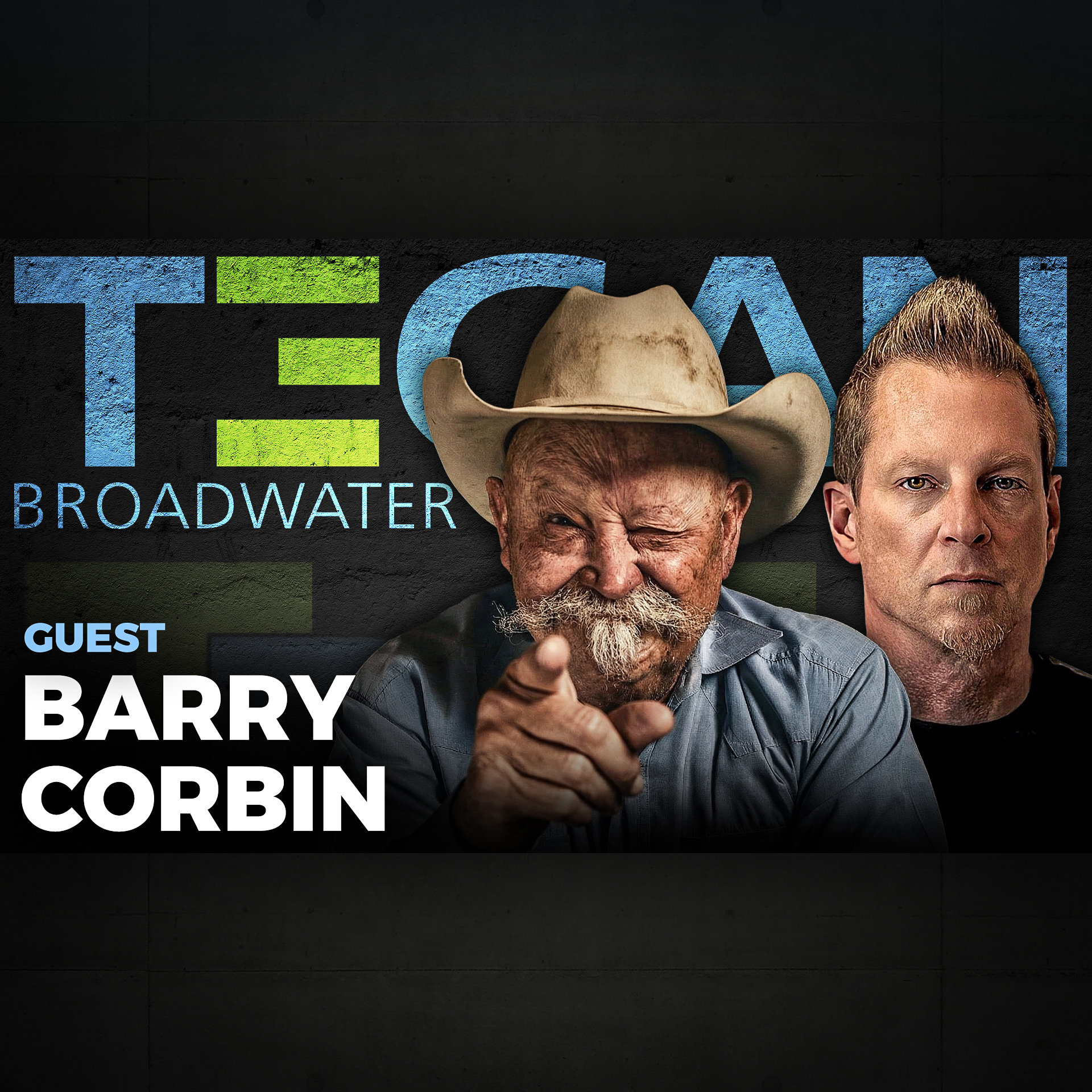
[00:01:49] Speaker C: Today, we get a glimpse into the man behind iconic characters in movies and television shows such as Killers of the Flower Moon, Urban Cowboy, Northern Exposure, Tulsa King, Lonesome Dove, War Games, no Country for Old Men, and Yellowstone, just to name a few. We discuss AI and the entertainment industry and where it's going to go from here. We talk about a cutthroat industry that's so difficult to get in and make a living for anyone for even a year or a decade, let alone the six decades that he's had success in the movie and television industry.
Yet he stays humble. I've been chasing this guy down for over a year trying to get this interview, and I hope you're half as excited as I am to hear his wisdom. And he has plenty to share. So without further ado, please help me in welcoming my new friend to the show, Mr. Barry Corbin. So do you want to mention this surgery? I mean, I think that's kind of a significant point to start.
[00:02:50] Speaker A: I don't really care. I mean, I tried to keep it quiet until we got it. Till we realized that I wasn't. You're going to be okay, you know.
[00:02:59] Speaker C: Yeah.
[00:03:00] Speaker A: Obviously I kind of like to surprise people with my death, but.
[00:03:06] Speaker C: But it is not going to be. Not going to be here.
[00:03:08] Speaker A: It's not going to be soon.
[00:03:10] Speaker C: Well, and you've. You've conquered cancer before and then you had this crazy scare and have been in and out of the hospital for a month, which was of a significant concern.
And only six days ago you got out of surgery and you're here.
[00:03:24] Speaker A: Yeah.
[00:03:25] Speaker C: So does it changed? It's been a, you know, you've been in the hospital for that long. Does it change your perspective on.
[00:03:32] Speaker A: Well, I'm done mourning my, my, my dead gallbladder.
My, my gallbladder died in me and wouldn't, Wouldn't quit.
It was trying to take me with it.
[00:03:47] Speaker C: You gonna auction that off?
[00:03:49] Speaker A: No. My brother said I ought to go plate it like, like Trump does all his crap. He gold plate stuff and sells it on the tv.
[00:03:59] Speaker C: Yeah.
[00:03:59] Speaker A: I said, well, I ain't Trump and he ain't me.
[00:04:03] Speaker C: That's true.
That's. I was just curious if you pitched it any sentimental value to something you've carried all these years and if it changes the way you look at life. I mean.
[00:04:13] Speaker A: No, it makes me feel.
What I've decided now. I didn't realize we just die piecemeal.
So what I'm going to do now, in about six months, I'm going to check into the hospital again, get them give me all those MRIs and everything.
If they find anything that's either either sick or dying or dead, then take it out and throw it away.
[00:04:39] Speaker B: Right.
[00:04:40] Speaker A: Because all I need really is my brain, my heart and my lungs.
[00:04:44] Speaker C: Right.
[00:04:45] Speaker A: Everything else I can do without.
[00:04:48] Speaker C: Well, I know we, when we talked before we. We got rolling, you're talking about kind of the old school version of you. And has that attitude changed now that you've recognized, hey, it's not so manly necessarily to ignore that stuff because if you want to live, you're going to have to go.
[00:05:05] Speaker A: It's probably a good idea to kind of pay attention to, to something. If you're not feeling good, you might want to go to the doctor after a week or so. Not, not keep on doing whatever it is you're doing because it might be more important to save your life.
[00:05:23] Speaker C: Right?
[00:05:24] Speaker A: Yeah.
[00:05:24] Speaker C: I mean, that's important lesson in it. But it's. It's. Usually I've been at the verge of death a couple of times too, and it's always just changed different things and different things.
[00:05:34] Speaker A: One of them was my. My, My death never occurred to me before this.
Well, even with this, I didn't think. I mean, it didn't occur to me that I might die of it.
You know, I thought, well, I'll get over this.
[00:05:52] Speaker C: Yeah, well, that's probably helpful, actually taking that attitude. Anyway, I wouldn't encourage you to change that.
[00:05:58] Speaker A: Yeah, yeah, no.
I had talking to a heart surgeon one time. He said, well, the first indication most people have when they have a heart attack is death.
He said, most time, there's no warning. You just.
[00:06:17] Speaker C: That's it.
[00:06:18] Speaker A: And I had a friend of mine visiting me one time about a year and a half ago.
He just dropped over dead in my.
He went to get a beer and dropped over dead, going back to his chair. Oh, man, it's hard to hear that. It was a.
Well, it was kind of a surprise.
Yeah. I mean, if anybody was going to die, it be him, because he was.
He was overweight and he was always half drunk, you know, so they kind.
[00:06:56] Speaker C: Of expect it to come a little sooner for some of us.
[00:06:59] Speaker A: Well, he's probably going to go before I do.
[00:07:01] Speaker C: Understood.
Well, I'm glad you're here. And, and I, And I appreciate.
[00:07:06] Speaker A: Well, I'm glad it was him and not me.
[00:07:08] Speaker C: Yes. That's usually what we think without saying it so much, but.
[00:07:12] Speaker A: Yeah, yeah, I'm. I'm.
I'm pretty comfortable saying I'm glad you're.
[00:07:20] Speaker C: Here too, because I don't know if he would have been as interesting to interview, but, I mean, he could have come back.
[00:07:24] Speaker A: Well, he would have been an interesting interview, but. But nobody'd give a.
[00:07:31] Speaker C: So if I, If I kind of go in an order. I don't want to necessarily spend too much time in one particular area, but it is interesting to know your background, your. Your father. And I've heard you talk about your father's as somebody that you did like to have conversation, bounce ideas from and take direction from. And he was a state senator, and with all the. The crazy extremism and madness around here. Does. Did his experience doing that while you were growing up give you any different insight into how politics work or what are your thoughts on all this?
[00:08:02] Speaker A: Not really.
He was elected county judge when I was one year old.
It was right after Pearl Harbor.
I'd been born in 40 and Pearl harbor was 41, and so he was in politics from the time I remember.
So I thought everybody's dad was. I thought everybody's dad, right hand, was crippled because he had polio when he was a kid and his right hand was like that.
I thought everybody thought when you get grown, grown men have hand like that.
And I wonder when miners going to do that.
[00:08:54] Speaker C: Yeah.
[00:08:55] Speaker A: And it never did so.
[00:08:57] Speaker C: Yeah. And then once you came to maturity did it. I mean, and certainly after all this time you see other. And. And we don't do politics necessarily. So I'm not asking specifically political views other than has it given you insight into kind of how things work as you see all this madness unfold?
[00:09:16] Speaker A: Yeah, yeah. It.
Because I was.
My grandfather was.
He was a staunch Roosevelt Democrat.
And back in those days the Democrats were the Republicans and the Republicans were the Democrats. That's different way.
Apparently that's what happened because now Texas is pretty much Republican. And when I was a kid, oh, you know, they wasn't, you know, only people Republicans was bankers.
You know, nobody liked bankers.
[00:10:01] Speaker C: Yeah.
[00:10:03] Speaker A: So it was all of a sudden then Connolly changed over and then all of a sudden everybody's a Republican.
So I didn't, you know, I'm what I always was kind of in the middle somewhere, middle of the road where you could dodge in semis and all kinds of dangerous stuff.
They said, well, if you don't choose a side, then you're going to be left out. I said, well, I'm left out.
[00:10:36] Speaker C: Then that's an interesting way to approach it. I mean that's certainly where I am too. But I think not a lot of us get heard because we don't have anything.
[00:10:45] Speaker A: Well, we, we do because we. We give somebody. I never have been a one to.
To publicize what I. What my political beliefs are, because I might be wrong.
Yeah, but why would I try to convince you that you're wrong when I might be wrong?
[00:11:04] Speaker C: Sure, you reserve the right to change.
[00:11:06] Speaker A: Your mind, but no, my. Somebody asked me who I voted for in the last presidential election and I knew where she was going with this because I knew who she voted for. She didn't know who I voted for.
And I said, well, you know, I'm kind of like Jesus along those lines. I believe in praying in my closet rather than in public square.
[00:11:39] Speaker C: Says.
[00:11:39] Speaker A: What does that mean? It means I keep my vote in the voting booth.
You know, it's not none of your business how I vote.
[00:11:48] Speaker C: That's wise. And I think that's. That's kind of old school too.
[00:11:52] Speaker A: Yeah.
[00:11:52] Speaker C: My parents.
[00:11:54] Speaker A: You don't say, well, I vote voted for so and so because he might turn out to be the biggest crook in the world, which is kind of what happens.
[00:12:04] Speaker C: You Know, too often. Too often.
Well, what is. What are. So you grew up in rural Texas.
[00:12:14] Speaker A: Yeah.
[00:12:14] Speaker C: And we're.
All this stuff about being classically trained and all this stuff. The. The fact that you grew up in a rural town and in and out of Lubbock during those formative years.
[00:12:27] Speaker A: Yeah.
[00:12:28] Speaker C: Is also kind of contradictory or counterintuitive when you think about where you went in terms of a classically trained actor. How did you square that in in your mind? How did. How'd that transition?
[00:12:42] Speaker A: Well, it was a slow process.
I started out going to the B Westerns, you know, in La Mesa.
La Mesa, Texas.
They had a debate when they named the town, and I think they were incorporated in 1904.
And they had a big debate whether to.
Because La Mesa means the table in Spanish. Right.
And they wondered whether to have capital L, little A, and then capital M, E, S A, or put one word, L, A, M A, S A.
[00:13:32] Speaker C: Americanize it.
[00:13:34] Speaker A: And they decided they didn't want to speak Spanish.
So rather than La Mesa, they call it Lamisa.
And, you know, if somebody's from there, because they don't say La Mesa, they say lamisa, but still spelled like.
Yeah, but if. Except there's no capitalization.
[00:13:57] Speaker C: Right.
[00:13:58] Speaker A: Now, if you go to La Mesa, Nevada, which is right across the border from Utah, it's La Mesa, Nevada, Nevada, Nevada.
[00:14:14] Speaker C: Let's call the whole thing off.
[00:14:16] Speaker A: Whatever.
But Lamisa, Texas is. Lamisa Texas because all our teeth are stained, we have a lot of fluoride in the water, and we speak Texan. We don't speak English. We don't speak Spanish. We speak Texan or Tex Mex or something like that.
[00:14:40] Speaker C: Sure.
Which again, is counterintuitive to. Then you go somehow from weaning in. In that realm. Your parents.
And then what inspired you to. To pick up acting outside? You said you went to the Westerns.
[00:14:57] Speaker A: Yeah, I looked at it. I. I kind of. I kind of liked Wild Bill Elliot because he had a voice like this.
I'm a peaceable man unless I'm riled.
And I found out later that he was a tennis player and Ben Johnson taught him to ride a horse.
So he said he was the best pupil he ever had who had never ridden the horse before because within a year, he was competing in the Cut Norse contest.
[00:15:40] Speaker C: Sometimes that's better because you're not unlearning habits, right? Yeah, maybe that's.
[00:15:45] Speaker A: Well, I had to unlearn how to ride a horse before I knew how to ride a cutting horse, you know, because that.
[00:15:52] Speaker C: You're Significant difference in the way you do that.
[00:15:56] Speaker A: Yeah, yeah. There's a difference in the way you set the horse, you know, because normally you don't have horse trying to jump out from under you. You know, if.
Unless you've got a pretty bad horse, you're going to be ready. Yeah, yeah.
But it's, you know, I learned to ride before. I mean, I rode my granddad's horses and stuff when I. Before I could walk really. You know, I knew how to, you know, get from one place to another on the horse.
[00:16:36] Speaker C: Yeah.
[00:16:38] Speaker A: But I never really learned except just what I picked up watching people and things, you know.
And then when I got to California and started messing with the westerns and doing, you know, got interested in cutting horses and all that, then I really studied how to ride, what. What I need to do to help the horse where we're partners rather than I'm telling some animal what to do right the ways.
[00:17:17] Speaker C: Ten times as much.
So. And then. So now you can actually ride.
You're kind of visually stimulated via the westerns. The.
[00:17:29] Speaker A: The old bad.
I knew cowboys, you know, because with their ranches around there when I was a kid, now there's. It's all cotton fields, but they had several big ranches when I was a kid around there. And the cowboys had come into town on Saturday to watch the movies. They weren't much older than we were, you know, we were kids and they were 19. 18, 19, 20 years old. So they were barely adults.
[00:18:03] Speaker C: Yeah.
[00:18:04] Speaker A: And so we all sat there and watched the movies.
But, you know, I knew they had to get up real early in the morning and had to work real hard all day.
Now, getting up real early in the morning wasn't to my taste, and working has never been to my taste at all.
Anything that involves shovels or tools, I don't want to have anything to do with.
[00:18:31] Speaker C: Yeah, that kind of work is different from other kinds of work. That's legit work.
[00:18:35] Speaker A: Yeah, yeah. My work is thinking about how to get out of work.
So that's.
That's the secret right there. You got to get to start out.
[00:18:50] Speaker C: Lazy and then figure it out backward.
[00:18:53] Speaker A: And then figure it out backwards because we get up early and.
But there's very little work involved in my work.
[00:19:03] Speaker C: You know, I beg to differ, but maybe we get to that because I actually would love to. To dive in further in that. Because obviously there's a lot of work. There's a lot of. There's a lot of hustle.
And I mean, even in. I mean, even when we take from where we left off. When you're, you're taking off to New York from Texas. Was that, Was that following college? Was that after college you left?
[00:19:32] Speaker A: No. Well, I went into the Marine Corps and went through boot camp and advanced infantry training and just before we went into Vietnam. So everything was kind of confused in the Marine Corps at that time because we were sending advisors to Vietnam and we were training Vietnamese officers in California for jungle warfare and Southern California, which makes absolutely no sense. They could have. Could have sent him South Carolina and would. Made a little more sense, but it was, you know, it was very kind of confused time. And I.
They didn't know where to put me.
They. They finally just.
I got a. Discharge early for some reason that I never understood.
[00:20:38] Speaker C: You'd still know.
[00:20:39] Speaker A: Yeah.
[00:20:40] Speaker C: How early? You did a couple of years, right.
[00:20:42] Speaker A: I was a couple of years in there and then I was out.
And they sent me a request when we were really embroiled in Vietnam to, To reenlist. And I sent him a letter saying that I was.
That I've begun a career. By this time. I was at the, at the American Shakespeare Festival in Stratford, Connecticut. And I said, I'm.
I'm really kind of busy right now.
[00:21:26] Speaker C: And that was a choice they let you have then because they drafted folks.
[00:21:32] Speaker A: They wanted people that. Who already had the training.
[00:21:35] Speaker C: Right, of course.
[00:21:37] Speaker A: And so they would. They. They get people who were recently discharged want to know if they would.
[00:21:44] Speaker C: Yeah.
[00:21:45] Speaker A: Get a sign in bonus or something. I don't remember exactly what it was.
[00:21:50] Speaker C: But it was, you know, not enticing enough.
[00:21:53] Speaker A: Not. Not enticing.
[00:21:55] Speaker C: That resembles more like the work type stuff too, especially going into war. I can't imagine where you'd be now if you had to go experience that. That was a rough one.
[00:22:05] Speaker A: No, I. Well, you know, I didn't.
I don't. I. It was just a very confused time in our. In our history.
You know, it's the first time in our history we got involved in.
We were always involved in foreign affairs, but this was the first time we got really embroiled in something we couldn't get out of somebody else's war. Yeah, yeah.
[00:22:43] Speaker C: And you saw that then.
[00:22:46] Speaker A: Yeah, because we were training Vietnamese officers at Camp Pendleton, and I got to know some of them. They were, they were kids. They were. They were like majors and colonels. But they were my age, you know, like 20. Yeah, 21, 22.
And they spoke French.
They didn't speak Vietnamese, of course.
[00:23:15] Speaker C: I mean, what else would they speak?
[00:23:17] Speaker A: And, you know, like 10% of the population was ruling the country.
They were all educated in France.
[00:23:28] Speaker C: Wow.
[00:23:29] Speaker A: So they were.
They were really French.
[00:23:32] Speaker C: Yeah.
[00:23:34] Speaker A: And 90% of the population was Buddhist and 10% was Catholic, you know, so.
[00:23:42] Speaker C: Avoiding that was kind of key. And I think maybe a stroke of luck, too, because you weren't too old to be drafted by that time, right? No, but they. But you were able to say, look, I've established myself. How did you manage to. Actually.
[00:23:55] Speaker A: Well, I was. I'd already.
I'd already gone through two years and been.
[00:24:02] Speaker C: You've done your time, technically, been.
[00:24:07] Speaker A: Discharged.
[00:24:08] Speaker C: Right.
[00:24:09] Speaker A: So.
[00:24:11] Speaker C: So when you got out of there, what. What spawned this. How in the world did you go from the rural Texas, you love, the cowboy westerns, then you go to college first?
[00:24:23] Speaker A: Well, I got. When I was in high school, I. I had a teacher who was the theater teacher. Theater speech and theater teacher in high school, and he was a big classics fan. And so I started reading Shakespeare and got very interested in it.
I got. So I could read it in such a way that people could. That modern people can understand it and it.
[00:25:14] Speaker C: With intonation and stuff like that. You mean, as opposed to just reading?
[00:25:17] Speaker A: Because the words. The words mean different things now, you know, from.
From 1590 and 1600, you know, it's.
It's a big, huge difference in the way the language has evolved, of course, so that now it's almost like speaking Greek or Latin. You know, they're based in. English is based on. On Latin, the Romance language.
But we don't understand Latin.
[00:26:03] Speaker C: Right. It's come a long way from that.
[00:26:04] Speaker A: Yeah.
And we're almost to the point now where Shakespearean English is almost as incomprehensible to the modern ear as Latin would be or Greek.
So I like to go back to the root of words, you know, and so you can usually go back to the root and you've got.
It's either Greek or Latin in the English language.
And so it's kind of fascinating. But anyway, I went through that period and I thought, well, this is the beginning of real drama. This is really the beginning of it.
And, you know, Shakespeare and Moliere, Lope de Vega, all those playwrights were the precursors of Tennessee Williams and Arthur Miller.
So it's all one deal.
[00:27:36] Speaker C: Yeah, everybody studies the previous greats, but.
[00:27:42] Speaker A: What you need to do is have somebody translate it for you, you know, And I was kind of good at that, naturally.
[00:27:53] Speaker C: So.
[00:27:54] Speaker A: Yeah.
[00:27:55] Speaker C: And you had an interest, which.
[00:27:58] Speaker A: I had an interest in it. And I would.
By the time I was out of high school, I think I'd read all of Shakespeare's plays, and some of them you don't want to read twice, you know, Cymbeline, some of those.
[00:28:19] Speaker C: But.
[00:28:23] Speaker A: Anyway, I had that.
I had that fascination.
[00:28:30] Speaker C: And then you.
So this is post Marines, too, and you took that fascination. And how did you have the gumption to go seek out something that you could do and try to. Try to hustle a living out of it?
[00:28:44] Speaker A: Well, you know, I think I had no choice.
I think there are people, there are actors who are born into the situation. You know, people who.
People like Noah Berry Jr.
Or the Fondas, you know, Henry Fonda's kids, those men.
They were born into it.
That's what they went into the family business.
[00:29:23] Speaker C: Right.
[00:29:25] Speaker A: And then there are people like Ben Johnson who fell into it because he was delivering a load of horses to Howard Hughes in Arizona or Utah or somewhere.
And, you know, he delivered the horses and they paid him $300 for it. He was making a dollar a day back at the ranch, so he decided he'd stay there.
And then there's ones that are kind of just, it appears, out of nowhere, apparently. I was a performer when I was a child, you know, I remember some of it, but I don't remember putting.
[00:30:12] Speaker C: On little shows and stuff for your parents.
[00:30:14] Speaker A: Oh, yeah, yeah, always.
And I think there are people like that.
You know, theater started out as religion, as a religious ceremony in ancient Greece.
They had priests. Were originally actors.
[00:30:39] Speaker C: Interesting. I didn't know that.
[00:30:41] Speaker A: And they were elevated. They were noble. You know, actually, they were con men.
[00:30:53] Speaker C: Well, they're actors, you know.
[00:30:54] Speaker A: Yeah.
[00:30:55] Speaker C: Right.
[00:30:56] Speaker A: And so then in the Middle Ages, the actors became disgraceful people. They, you know, they weren't allowed and come in town. They had. They had do the shows outside the city limits because they couldn't stay. The boarding houses wouldn't put them up, you know, because they didn't pay their rent.
[00:31:18] Speaker C: They come the birth of the starving artist.
[00:31:22] Speaker A: Yeah. And then they'd have pickpockets out in the crowd, you know, stealing people's money.
So it was. It was not a. Not a very good thing to want to do.
[00:31:37] Speaker C: Right.
[00:31:38] Speaker A: My mother. I said, well, I'm going to be an actor. And my mother said, well, nobody in our family has ever done that.
Like nobody in our family has ever stolen horses for a living, which is not true. But.
[00:31:56] Speaker C: No, really.
[00:32:00] Speaker A: No, it was. But it was not a. Not a respectable thing for a long time.
[00:32:04] Speaker C: Right. You know, and any. I'm sure she wants you to do something that's going to make you a Healthy living and stuff, too.
[00:32:11] Speaker A: My dad said, well, it's. That's a pretty good hobby for somebody, but you got to have something to make a living doing.
[00:32:18] Speaker C: Right.
[00:32:19] Speaker A: You can't make a living doing that.
[00:32:21] Speaker C: So what did that do? Did it make you more determined or you just.
Yeah, couldn't shake it.
[00:32:28] Speaker A: My professor in college, I asked him later on why he tried to discourage me all the time from trying to do it professionally.
He said, because if I could discourage you, then you needed to be discouraged.
He said you were going to be facing odds that you had no idea how steep they were against success making a successful living doing this.
Said, so if I could discourage you then. And I.
That was what I had to do.
[00:33:14] Speaker C: That's appreciable. I had that same thing happen at.
Went to music college and they did the same thing, and yeah, ended up just coming out.
[00:33:21] Speaker A: And it looks.
It makes sense. Yeah, it makes sense because I would say.
Very small percentage of people make a living as an actor or a musician. You know, you've got to have.
Everything's got to fall in place.
You've got to have the ability to deliver once you get the opportunity.
If you don't ever get the opportunity, then doesn't happen.
[00:34:01] Speaker C: Well, and part of the irony there is also there's. There's more work than is appreciated in putting in time to become a really good actor, really good musician, really good, whatever. And that's why. That's why I hem. Hawed when you mentioned that you didn't like to work, because there's something to be said about the process where you go into a gig and you take a gig and you act and you do the. Whatever the tour is, and then you get off, and then you literally are unemployed, deployed, and then you get on the phone, you start trying to figure out what gigs are available and hustle that out of somebody else.
[00:34:37] Speaker A: Yeah.
[00:34:38] Speaker C: So what was your process in. In terms of just flying by the seat of your pants, Especially in the beginning when people don't understand how that's.
[00:34:47] Speaker A: All it was, that that was what it was. I would appear, I would. I would come. And first I went to Chicago, and I went around to these small theaters in Chicago, and occasionally I'd get a part in one and I'd move up and got to be known in the community a little bit.
And then I auditioned for an outdoor drama down North Carolina, got a job there being the narrator of this epic outdoor thing about Daniel Boone leading people in the West. You know, I played the judge who financed the thing So I was there, narrator of the story because I had a loud voice. I could project a long way.
[00:35:58] Speaker C: Did you. Did they leverage your accent, too, for that, or did you have to change your accent?
[00:36:03] Speaker A: No, I was an Englishman and.
[00:36:07] Speaker C: Excellent. I love it.
[00:36:09] Speaker A: And so I was, you know, I played when I was in New York, I had a career, pretty good career in regional theater and dinner theater and various, you know, a little bit of Broadway, a little bit off Broadway, but mainly outside New York.
And I think there were three times that I played the Southerner in a play. You know, that's admirable.
[00:36:41] Speaker C: And I think people, again, don't appreciate that. That shows that there was a lot of work put into this. You don't just show up somewhere.
[00:36:48] Speaker A: Well, there was. There was a lot of work, but also it was.
It was a lot of fun, too, you know, I mean, I.
I said, well, I never got past the cowboy and Indian stage because I. I've been playing cowboys and Indians all my life and I just never grew up.
My mother named me after the author of Peter Pan, James M. Barry.
And I guess because she kind of intuitively thought, well, he's never going to grow up.
[00:37:34] Speaker C: Yes. Very, very insightful.
And so you're. And you're already, again, a lesser appreciated thing is all that hustle is minimum wage at best type pay. And then you're going from gig to gig. You're playing for people that aren't even paying attention. Half the time.
[00:37:55] Speaker A: I didn't care.
I'd pay. I'd do it for free. Yeah.
[00:37:59] Speaker C: And you're also older now and not having to start over. So I think the energy it takes. When you think back, is it more nostalgic or would you be able to go back and start hustling, living out of your car again?
[00:38:15] Speaker A: Probably not.
I mean, you know, I mean, you get to a certain age, I've known people. I've known actors who had a fairly successful career as a juvenile actor, you know.
[00:38:33] Speaker C: Right.
[00:38:35] Speaker A: And then they progressed to leading man, and they never were hugely successful. They were just. You know, there was a man that used to hang around the Equity offices in New York, and he was fascinating to me because he wore threadbare suits, but they were expensive suits that he'd gotten when he was young.
And he was probably in his 70s when I knew it.
He had a little trim mustache that had. He put black mustache wax in it, had his hair dyed black, and he had his fly. The zipper had gone wrong with his fly, and he had a safety pin in his fly.
And his.
His collars were threadbare, but he always had a tie and always dressed nice, as nice as he could, you know, and he was listed in the Player's Guide as a leading man.
And he had a picture of himself at about 35.
And, you know, of course, you wouldn't recognize him even.
[00:40:16] Speaker C: Right.
A little bit presumptuous, but. Yeah, I always have a surprise when he shows up.
[00:40:21] Speaker A: But he was always there in the morning. He'd come in and read the casting notices, all that, and he was always there and he was always ready to go, but never.
I don't know how he. I suppose he was on.
I don't know what I mean. No, I don't.
[00:40:51] Speaker C: To make a living.
[00:40:53] Speaker A: Yeah.
[00:40:54] Speaker C: It's fascinating to see that people, you know, and people fall off. And it's not just perseverance sometimes, just people don't have it. And you talked a lot about that. Do you still feel like you have to have kind of an innate ability in addition to training, or do you think somebody.
[00:41:12] Speaker A: I think it wouldn't be worth the effort if you didn't have some kind of natural ability, some kind of ability. You've got to have an ego that tells you that nobody else can do what you can do, and that's pretty much true of anybody.
But if you have a vision of what you can do as opposed to what that guy can do, I think otherwise, you don't. You don't have the will.
Unless you're crazy. Right now, there's some people who are crazy who do this, too.
[00:42:07] Speaker C: Quite successful, too.
[00:42:09] Speaker A: And, you know, I don't know how they have the.
Have the confidence to do it.
[00:42:20] Speaker C: So, I mean, there's kind of a contradiction what you said about ego also, because you have to have the ego to visualize your success and stay focused on that as you go forward. Yet you have to be the type of person that gets kicked in the balls 10 times for every gig that they land.
How do you. How do you navigate that? How. What was your process for going into a room, giving it everything you got, and then losing over and over?
[00:42:52] Speaker A: Eventually you realize that.
Your vision has to match the other guy's vision more vice versa, you know?
[00:43:12] Speaker C: Right.
[00:43:13] Speaker A: You've got to convince him that you're the person.
I like to say that you've got to have the.
You've got to preserve the infant heart, the innocent infant heart, but you've got to build the height of a rhinoceros around it.
[00:43:43] Speaker C: So don't. Don't let your heart bleed when Those things happen. You just have to. But that's easier said than done. Is it? That seems kind of like a.
Especially for a dude. I think guys can compartmentalize a lot easier than women can. But there's just as many women going through that same process.
[00:44:00] Speaker A: Well, women more than men because women so often when they're young, I mean, in your 20s, you reach 30 and the appeal changes.
And you know, a woman who is beautiful, teenager or young, twenties.
And a man too, really, you're in the disadvantage if you have a break when you're young.
Because an example would be Gary Cooper.
Gary Cooper was probably one of the most just classically beautiful men when he was a young man, but he never could break into the older part. And he looked peculiar when he was playing with Audrey Hepburn or somebody, you.
[00:45:30] Speaker C: Know, and it was all vanity and.
[00:45:34] Speaker A: They knew and they knew that he was asked by the.
He was testified before the UAC committee and they said, have you ever had plastic surgery work done?
You know, trying to make him nervous? He said, well, a plumber takes care of his tools.
And that's what it, what it was for, for him, you know, because he was trying to, trying to live the, the young leading man up into his 60s and thank God if he'd lived into his 70s or 80s, he'd have been.
[00:46:31] Speaker C: Or had to pivot. I mean, at some point, right, it becomes something else.
[00:46:36] Speaker A: Well, John Wayne, his career, if you look at him at the beginning of his career, about every 10 years he'd change.
And it was not obvious unless you really look for it, but he changed. And by the time he was in his 50s, he was making sure he was co. Starring with somebody like Fabian or you know, some of those teenage guys.
[00:47:21] Speaker C: Yeah, the young handsome cats, whatever, or.
[00:47:24] Speaker A: Ricky Nelson or somebody.
And so he'd have, have the. He'd be bringing in the young people there and he'd be bringing in his old fans so that he could.
So that he was always, he was always current.
[00:47:44] Speaker C: Smart marketing on his part. Because we're all getting old anyway. I mean, it's part of it is. Is it more difficult to embrace getting old when you're in an industry that perhaps could shut you out? Especially if you're typecast in a certain type of role. You've got a.
[00:47:59] Speaker A: Well, I was playing when I was, when I was 30.
An example, when I was 30, I was playing Gloria the Haven's uncle in George Washington Slept Here.
Gloria de Haven was at that time, she was 60 and I was 30 and I was supposed to be 30 years older than she was.
And I succeeded in doing that. I mean, I could play older.
[00:48:34] Speaker C: And this was on a stage, right?
[00:48:35] Speaker A: On stage, yeah.
And then I, I got to be about 40 and I started doing movies. And so I was getting to the age now that I could, that I played on stage when I was, when I was very young.
[00:48:52] Speaker C: So you think that's part of that other transition? Because that also seems a little less. I mean, obviously it's the same industry technically, but it seems like a different approach. And I'm, I'm, I'm a dumbass. I'm a, you know, we're talking about from a novice's point of view here. I'm, I'm just saying.
[00:49:10] Speaker A: Well, classical acting versus a different thing. It's. I went to, when I went to California, I was, I was almost 40.
Went there in 78.
[00:49:28] Speaker C: Did you go to California to pursue screen acting?
[00:49:33] Speaker A: Because I was sick in New York. They had blackouts and garbage strikes and all kinds of stuff. I just tired of it.
[00:49:41] Speaker C: Okay.
[00:49:43] Speaker A: So I moved to California and it took me about two years to really get started there because they were looking for young guys, you know, they weren't looking for guys. 40.
[00:50:02] Speaker C: How'd you sustain yourself during that time?
[00:50:06] Speaker A: I did a couple off Broadway shows back in New York and I did some regional theater.
[00:50:13] Speaker C: Okay.
[00:50:14] Speaker A: I mean I had, I had jobs I could do and I also wrote a bunch of radio plays.
[00:50:25] Speaker C: Fascinating.
[00:50:26] Speaker A: And I wrote four or five stage plays and I'd write some and you know, and eventually got be known around town as a, as a writer really more than an actor.
[00:50:46] Speaker C: Which is also tough to break in though.
[00:50:48] Speaker A: Yeah.
[00:50:50] Speaker C: So then it's, I got, I had.
[00:50:53] Speaker A: An in with the National Public Radio.
They were doing a thing called Popcorn Theater where they'd show. Where they'd do a.
Four 15 minute plays a week or a month.
So I'd write one of those plays and I'd always write a part for me and maybe I'd write part for my wife because they'd pay me a hundred dollars for the script and they'd pay me $50 to act in it.
They'd pay her $50 to act in it. And my rent at the time was $100 a month.
So that's the way I paid my rent.
[00:51:47] Speaker C: That's great. But I mean, and that's admirable too. I think that's understated that you have that kind of talent because you don't just decide to write plays either. And then, and it work out for so I know, but that's a. That's a. It's a. A tip to your talent. I think it's a great talent to be able to write as well.
[00:52:08] Speaker A: Well, I think it's part of the. Part of the package, you know, because a lot of times I.
I don't stick to close to the script.
[00:52:26] Speaker C: So I hear.
[00:52:28] Speaker A: Yeah.
[00:52:29] Speaker C: So it's. Do you get a lot of pushback in those instances, or have you, by now you've had enough success where I'm sure people will let you riff a little bit? But did you get any?
Especially just breaking in? You said you went in, you went for two years, and I guess that's when you got the urban cowboy gig or whatever. Yeah. And were you just following straight script at that point, or were you kind of trying to push your limits?
[00:52:53] Speaker A: And cowboy mostly? That was just, you know, I used that as a.
As a plan. I used that script as a plan, as a. Like an architect's drawing. And then I constructed Uncle Bob around that.
[00:53:20] Speaker C: Okay, so you did. Were you able to change some of the verbiage?
[00:53:23] Speaker A: The director, Jim Bridges, said, I know you're a writer, and we need to punch this up a little bit. Can you do that for me?
[00:53:34] Speaker C: No.
[00:53:35] Speaker A: And I'd sit down and rewrite a scene.
Rewrite my part of the scene, which meant rewriting the scene.
[00:53:46] Speaker C: Right to your. To your liking, but still in character.
[00:53:51] Speaker A: And I would. I'd write it on napkin, hand it to him, say, how's this? He's perfect.
Said, don't tell John you're going to do that.
[00:54:03] Speaker C: Does it make it more real if he's hearing something else coming out of your mouth that he's not prepared for? Is that make it more authentic?
[00:54:10] Speaker A: Yeah.
Yeah.
[00:54:13] Speaker C: Interesting. Makes it a little more conversational because you're not just reciting.
[00:54:16] Speaker A: Yeah, yeah. And sometimes you'd see him, he'd go.
And then answer me some, you know, with his words, you know.
[00:54:30] Speaker C: Yeah. And so jumping ahead in time, only because we're on this topic. I'd love to touch on that because I find it fascinating, too. One is, which is your preference in terms of taking a great. Let's say the script was amazing and you took a great script, or be able to improvise to the level that maybe Sheridan just. I hear he just kind of threw you into a situation, said, here's the kind of situation, just kind of riff on this and do your thing. Do you have a preference?
[00:55:03] Speaker A: I don't really have a preference. If, if, if they want me to do that I like to know ahead of time.
[00:55:13] Speaker C: Okay.
[00:55:14] Speaker A: You know, I mean, I don't necessarily have to know, but I mean, it gives me a chance to kind of.
[00:55:20] Speaker C: Right.
Did you have a chance in that instance to do. To prepare for that, or was it in that one?
[00:55:27] Speaker A: Yeah, because I never got a script for the part that I'm talking to Buster. Buster Welch.
[00:55:34] Speaker C: Right.
[00:55:35] Speaker A: He told me Taylor said, the other scene that I did with Jimmy was all scripted. I mean, that was just script.
But with Buster, he said, I want you to just sit and talk to him. I'm going to roll camera. I'm not going to say action, I'm not going to say cut. I'm going to roll camera till we're out of film and then we'll reload and do some more.
Said, I just want you to talk to Buster about horses.
I said, okay.
So we sat and talked. I'd known Buster for years, you know, so we were comfortable together.
And that's really what he wanted, somebody that Buster would be comfortable with.
[00:56:24] Speaker C: Yeah. It was almost like two friends chatting about something they were familiar with. Yeah. Is that something you prefer? And was that. Was that less of a, you know, on the put on the spot moment because of the. The circumstances, you know?
[00:56:40] Speaker A: No, I don't think so.
They actually only used about three lines of the thing, you know, I mean, we went. We went for an hour, I guess, but they only pick three lines.
[00:56:56] Speaker C: Interesting. So what do you prefer then? If.
Or. Or is it just a mesh, which is what you do? Is that. Is that what you prefer versus taking a magnificent script or improvising with a warning? What would you pick?
[00:57:11] Speaker A: I would mix, you know? Yeah. Mix. If I. If. If it's a.
If you don't have a good script to start with, you're not going to have anything.
I mean, you can't just have a bunch of people out there improvising because nobody knows what anybody else is doing.
[00:57:34] Speaker C: Unless you're doing Spinal Tap. That's about where you're at.
[00:57:36] Speaker A: Yeah. And you can't put it together. I mean, it's a Spinal Tap you can put together.
[00:57:41] Speaker C: Right. But the same folks are improvising because.
[00:57:43] Speaker A: You have the idea of what the progress is in the story, you know?
[00:57:50] Speaker C: Right.
[00:57:51] Speaker A: But to do a movie that way, I mean, a conventional movie, you'd have.
You'd have 35 points of view and none of them would have the.
There wouldn't be a focus.
[00:58:11] Speaker C: Cohesiveness. Yeah.
[00:58:12] Speaker A: It'd be a mess.
[00:58:14] Speaker C: So when you. When you pick a script to go With. And people, I assume people pitch you scripts as well as you, through your agent, would. Would try to get with certain projects. But what do you. What do you find in scripts? What is your process and what do you like to look for when you read a script?
[00:58:35] Speaker A: I like that I like a story. That I like a story that's pretty clear.
That's clearly. There's a. There's a protagonist, there's an antagonist. There's, you know, they're certain.
[00:58:57] Speaker C: There's your. Will he make it at about 75% right there. Right.
[00:59:03] Speaker A: And then you.
To me, a script is a.
Is the first.
The first drawing of a building.
[00:59:23] Speaker C: An.
[00:59:24] Speaker A: Architect'S rendering of the building.
[00:59:28] Speaker C: Without the specs, just the sketch of the. Right.
[00:59:31] Speaker A: Okay. And you read the script as a. As at first, you read it for the story.
You know, you don't.
I don't read it with any particular part in mind or anything. I read it for the story.
Then I read to see where.
The part that they're talking about me for, where he fits into the story.
Now, if the story cannot be told without this person, then you're probably going to end up on the cutting room floor, which I don't mind either, because I got paid for it.
[01:00:20] Speaker C: Right, but you'd rather at least have a fruit for that effort.
[01:00:24] Speaker A: Yeah. Now, there was one. One movie that I did called the Night the Lights Went out in Georgia.
I had.
I think I had fourth billing in that movie in my contract, and if I was in the movie at all, they had to give me fourth billing.
And I was in the first 15 minutes of the movie. And then the movie moved to another place, and that wasn't in the rest of the movie.
And the director called me and said. He called me the day they were going to open it, wait till the last minute, said I had to lose 15 minutes.
And so you've got one line in the movie.
I saved one line.
So I got paid the amount I was supposed to be paid.
I had one line, but I'm still fourth bill.
My line was, I take a cigar out of my mouth, the camera's panning along a group of people, and I take a cigar out of my mouth and I said, put it back in. And that's it.
[01:01:58] Speaker C: It's almost ironic.
[01:02:00] Speaker A: Yeah.
I don't think that was even in the script. I think something that I had left.
[01:02:08] Speaker C: Yeah, but you didn't concede the fourth billing. You said, hey, one line, whatever it is.
[01:02:14] Speaker A: I mean, it was in the contract.
[01:02:16] Speaker C: Yeah.
[01:02:17] Speaker A: So I'm fourth.
Fourth Bill.
One line, just barely in it.
[01:02:23] Speaker C: Yeah. You're hoping people weren't following that movie for your sake. It was like you're gonna be. Walk away disappointed when.
[01:02:28] Speaker A: Yeah, well, I got. I got mail for it, too.
Did you? Yeah, got some mail for it.
People said, what happened? Yeah, I said they had to lose 15 minutes.
[01:02:40] Speaker C: Oh, God.
[01:02:43] Speaker A: But I still got residuals, too.
[01:02:46] Speaker C: And that was a. That was a early 80s movie. Yeah, right. I remember that movie. I remember the theme song in particular from that.
[01:02:54] Speaker A: Yeah, Dennis Quaid was in it. Dennis quaid and Christian McNichol.
[01:02:59] Speaker C: Oh, my gosh.
Interestingly, the way the industry is moving now, I mean, you've. You've watched this industry grow for 60, damn near 60 years.
And it's taken a lot of different turns as they go through different generations of digital and all that kind of stuff. But this AI has taken kind of a new part of the stage, and a lot of people feel threatened by it.
I see the same in the music industry. It's kind of already happened in the music industry. They don't even have a chance to protest and get all their organizations out in front of it. So with it kind of being here, and at the very least, you're facing it, whether you like it or not, whether it's going to be staved off for a certain amount of time, what are you. What are your thoughts on that in general?
Just whether it be AGI or AI using use for writing or anything.
[01:03:56] Speaker A: I'm glad I'm not starting my career now.
I don't know where it's going to go.
I don't think it's.
I think it's possible, but I don't think it's likely that they'll make a movie star in Humphrey Bogard against James Dean, you know, the two of them, you know, that kind of deal. I don't think that's likely, but it's possible.
[01:04:34] Speaker C: They have to get those estates to sign off and then. Right. Yeah.
[01:04:38] Speaker A: Yeah.
Or they. I mean, they could pirate them out of Philippines or China or something. You know, who knows? Yeah. I don't know where it's going to lead, but it's.
It's going to turn a lot of things upside down.
And already right now, the pay structure is gone to hell. Gone completely because of this?
No, not only this, but it also has to do with the markets. Television, particularly markets and movies. I don't know how the movie theaters are going to survive because people don't go anymore. Yeah, you know, you got these huge television screens. The Size of that wall at home.
And people are used to these, this phone deal. They get, you know, they don't want to talk on the phone. They want to text or they want to do.
I don't know what.
But is it our way of communication?
We don't have face to face communication in the business as much anymore.
[01:06:10] Speaker C: Yeah.
[01:06:10] Speaker A: I mean, now you don't audition for something, you put it on, put it on the camera and you know, it's not the same.
[01:06:21] Speaker C: Right. Well, I, I mean, you, you remove all of the jitters and the. How can you perform with 15 people here staring at you? And the cameras and the lights, it, yeah. Changes that entire dynamic. Right. I mean, you can show up to a set and suck in front of people.
And when you see that with artists all the time, you see that with me all the time. I, I'll learn an instrument. I feel like, hey, I'm doing great in here. But, you know, don't put me in front of people. Yeah, I'll forget how to do it again.
[01:06:48] Speaker A: Yeah, yeah.
[01:06:49] Speaker C: So is that becoming an issue and is that going to maybe even further the, the AI pro AI people?
[01:06:58] Speaker A: Oh, I think it, Well, I think there's, there's, there's certain jobs that will be, that'll be robotic, you know, a cameraman, a, the camera operator, you know, that'll just be, you know, automated.
And you punch button and goes to that camera, goes to that camera.
And so you're, you don't have, you don't have the creativity, the creative input of a human mind.
You've got some kind of robotic something in there. So you don't have the heart of the project.
[01:07:56] Speaker C: Do you think the layman, so to speak, the layman audience will have enough of an appreciation for that to actually be able to discern or care?
[01:08:10] Speaker A: I don't think most of them will because most of them will sit through TV commercial.
You know, I mean, you know, I look at a show, it's got TV commercials in it. I forget what the show was about. I think about that commercial.
[01:08:28] Speaker C: Yeah.
[01:08:31] Speaker A: But you know, I don't think.
[01:08:35] Speaker C: I.
[01:08:35] Speaker A: Think there's a lot of, a lot of things that are not so good about it.
I think it'll save money.
I was going to talk about the pay structure. The reason for the pay structure is, is because back in the late 20th century, there were basically three networks.
Right now, I don't know how many hundreds or thousands of them there are.
So now you've got specialized network golf, you've got tennis, you've got this, you've got that, you've got Western, you got Hallmark soppy movies, you got this, that and the other thing.
And so you don't have to have the audience that you used to have to be able to break even.
But you also don't have the income, the advertising income because it's diluted. They used to have. Because it's, it's all diluted.
So if you, you know, the million dollar contracts for a cast on like the Friends and stuff like that, that's, that's done.
[01:10:14] Speaker C: Is that down the line?
[01:10:15] Speaker A: Series are done.
They don't have the money to make one.
[01:10:22] Speaker C: Is it cost prohibitive to do movies also? Is that kind of. Why? Because, I mean, I happen to be the type of person who adores going to the movie theater to watch a movie.
[01:10:31] Speaker A: Yeah.
[01:10:31] Speaker C: But I also, I've got the, you know, the AMC experience membership.
[01:10:37] Speaker A: Yeah. But you also notice when you go in there, you're in there with three other people.
[01:10:42] Speaker C: Right. And, and there's, you know, I can see four movies a week, but yeah, I can't come up with that many. Yeah, there's not too many good movies coming out that at the theater. So it makes it, you know, a chore for me. But I don't have that kind of insight there. I, you know, for people that are rooting for that to come back, is it something that is going to be maybe salvaged with? I know some of the movies that are coming out are being salvaged by AI because they're still doing all the, the blow up superhero movies which are so, so much AGI intensive. But the real dramatic movies. Do you think they'll ever come back there anyway? Any path for them?
[01:11:22] Speaker A: I don't, I don't see it. I don't think there's an audience for it.
I think our, if you notice the way they cut things now, they cut things like mtv.
They won't finish something.
They'll go up, say the last word of the scene, bam, it's done, and then jump to something else.
It makes you dizzy.
You sit there. It's like something going on over here, you know, I mean it's like the way they cut things together just makes you nervous now.
[01:12:10] Speaker C: Like short sequences, like kind of how social media is set up. It's a short attention span. If we stay on this scene too long, we're going to lose people.
[01:12:18] Speaker A: Yeah.
[01:12:18] Speaker C: So cut something else.
[01:12:20] Speaker A: And I don't know if that's true, but I think that's, I think that's what the, the producers are Thinking, yeah, the guys with the business degrees out of Harvard, you know, they're the ones running thing now and they're still making.
[01:12:39] Speaker C: I mean, somebody's still making money at the top, but eventually all that dilution's gonna. Gonna.
[01:12:43] Speaker A: Yeah.
[01:12:44] Speaker C: Happen everywhere. Yeah. In the scene. And do you. Look, if there's not people getting filthy rich, there's. It's still. You can still make an admirable living doing that, knowing where the top is. Because you're talking 1% of the 1% anyway or the one signing the millions and millions to. To make an appearance. Right.
[01:13:03] Speaker A: Yeah.
[01:13:04] Speaker C: Has it affected you much when you, I mean, you have roles that are long and short. Some of your, I mean, you've been.
[01:13:11] Speaker A: Oh, yeah.
[01:13:11] Speaker C: Nominated roles.
[01:13:12] Speaker A: It affects me.
I don't.
You know, it used to be I could make one movie in a year and that. That do me for the year. Now it's. Now I got to make three or four.
[01:13:31] Speaker C: Wow.
[01:13:34] Speaker A: But it's, you know, I mean, it affects anybody. You know, if the, if the market goes down, you. You've got to take a cut and pay or not work.
[01:13:47] Speaker C: Right. Your survival money, is it cutting into.
I know you've taken on projects before and I don't know if they're passion projects or not because I don't know how much you make on each of these things, but I know you've even done some local movies and stuff, the Windsor type movies and everything, which you were great in.
But is it going to cut into people's ability to do those passion projects? Sometimes you see just a really good film that isn't just going to be a mainstream thing, but it was a passion project.
[01:14:15] Speaker A: So I think a lot of times now people are going to.
What is that?
When you ask public for money?
[01:14:28] Speaker C: Oh, yeah, the. Yeah, the. What do you call that, Holly? What is that? The, you know, you go and. And what's the app you ask people to donate money to your cause or whatever. What's that?
Yeah, the GoFundMe stuff.
[01:14:43] Speaker A: Go Fund me.
[01:14:43] Speaker C: Yeah.
[01:14:44] Speaker A: I mean, I don't know if you make enough money to do something with that. I guess you can because people say they do it, but I don't know.
[01:14:55] Speaker C: Yeah, and I'm sure if tons of people try it, but I mean, you can't be whimsical and have people give you money for nothing. It's got to be at least a notable project, but some kind of merit to it, I would assume.
[01:15:06] Speaker A: Yeah, but.
[01:15:07] Speaker C: But even then, I mean, if you're trying to put together a project. And you need, you know, somebody who's a tenured, you know, popular actor and you wanted you to do it, and you have the choice between doing something that you feel like would settle your heart more because you really love what they're doing, but you have to take another gig. That's just. Okay.
[01:15:28] Speaker A: Well, usually what, what I. I don't.
I don't let my bank account tell me what I've got to do.
You know, I try, I think money, like just paper.
You and I agree what it's worth. If nobody else agrees what it's worth, then it's not worth anything.
[01:15:59] Speaker C: Right.
[01:16:01] Speaker A: And, you know, so I don't. I don't think of it like a lot of people, you know, have. Want to get more.
[01:16:09] Speaker C: Right.
[01:16:10] Speaker A: I want to get rid of it. Yeah.
[01:16:12] Speaker C: It would be great to do passion projects and still make a living. Yeah. But it's, you know, the sustenance is still necessary.
[01:16:21] Speaker A: Right.
[01:16:21] Speaker C: So do you still do passion projects, so to speak? I don't even know if you have done them. Like I said, I don't. I don't want me to be presumptuous, but I'm curious.
[01:16:29] Speaker A: Well, sometimes, yeah, I'll. Sometimes if it's a young filmmaker want do something and they got a little part. They, you know, like a first part first like that. What. What is that movie that.
Where I play that preacher. I just come in, preached a sermon and then.
And then it's.
I think that's before the credits come up.
And I did. I did that for practically nothing, but I think it. I mean, I did it because there's a bunch of people in there who really were excited about it and wanted to do it. And, you know, if somebody. The excitement is.
Is. Is kind of contagious, you know, you get. I don't get excited about stuff anymore too much unless somebody else is excited about it.
[01:17:37] Speaker C: Do you. What kind of other arts do you participate in? You mentioning that you write. Do you still write plays or movies or anything like that? And do you do any kind of other art?
[01:17:46] Speaker A: Not as much.
Writing is kind of lonely, you know. You very lonely. I mean, what, what? I'd rather sit in the bar and tell the story to somebody than to write it.
[01:18:04] Speaker C: Tell them, hey, record this. We can. We can have AI write it for us later. Right?
Any other art or music or anything you get into?
[01:18:15] Speaker A: Well, I just did a record album.
Sort of went down to muscle shows.
[01:18:24] Speaker C: Really. Well, that must have been a really cool experience to go there.
[01:18:27] Speaker A: Yeah, yeah, I did.
Just telling stories.
[01:18:32] Speaker C: They Put music to it.
[01:18:34] Speaker A: Yeah, I said it. I sat here with a microphone and in the studio and just start telling the story, you know, tell a story for about five minutes. Then they say, okay, that's good.
No, we got it. We need to get a little shorter or a little longer. I said, okay, fine.
[01:19:00] Speaker C: You ever think of turning that into some kind of little novella and going on the road and doing something or do little.
[01:19:06] Speaker A: Oh, I do that too. Do you? Yeah, I got a show that I do that I start out with a little piece of Shakespeare.
So I kind of get them blindsided, you know?
[01:19:19] Speaker C: Right. They're not. They're not expecting that.
[01:19:22] Speaker A: Yeah. And then I was doing it in the bar out there in. In the country, you know, they're waiting for the.
[01:19:30] Speaker C: No, no country to show up.
[01:19:32] Speaker A: And these people, people in here. And I start.
All the world's a stage, and all the men and women merely players.
They have their exits and their entrances.
Each man in his time plays many parts.
His acts being seven ages about this time, people, I told you we shouldn't go.
[01:20:01] Speaker C: You hear the clinking stop. It's got to be the opposite. Like, wait, wait, what?
[01:20:05] Speaker A: And I can hear saying that this is going to be some kind of Shakespeare stuff.
I finished the whole thing and I say, well, that is a little piece of Shakespeare.
That's the last piece of culture you're going to get out of me tonight. We're going to have some fun now.
[01:20:30] Speaker C: There you go.
[01:20:32] Speaker A: Then I start telling stories.
[01:20:34] Speaker C: That would be fun. So you do. You hit the road and do just little joints around just for.
So do you have, like, an actual tour schedule you set up, or you just kind of fill your time with doing those here and there?
[01:20:45] Speaker A: Oh, I just, you know, I've done.
Let's see, Far west I've gone is Tucson. Arizona.
No, Tombstone, Arizona.
Was in Tombstone. I did it in Shifflin hall, which was one of the first buildings built in Tombstone.
And far east I've gone is Tennessee.
[01:21:14] Speaker C: You're in Nashville.
[01:21:16] Speaker A: No, I've been east of Nashville. So I'm gone.
North Carolina and all over Texas and Kansas. Up in Kansas. Oklahoma.
[01:21:32] Speaker C: Well, we're. We're going to get the recording. I'd love to listen to that.
Make your wife nuts, but I would love it.
[01:21:38] Speaker A: Apple Music.
[01:21:40] Speaker C: Oh, Apple Music. Can get it.
Was it listed just under your name?
[01:21:47] Speaker A: Cowboys and Endings.
[01:21:49] Speaker C: Cowboys and Endings.
[01:21:52] Speaker A: Love to promote Barry Corbin.
[01:21:54] Speaker C: Love to promote that.
[01:21:56] Speaker A: Yeah, Yeah. I don't. I don't know whether it's any good or not, but they Put music to it. It's.
[01:22:05] Speaker C: Well. And you know how that can change the tone of anything.
[01:22:08] Speaker A: Yeah.
[01:22:08] Speaker C: You know, you watch this especially. We watch these trailers. We were watching a movie last yesterday, actually, in the theater, ironically enough, and it would come on and I would imagine if I was watching this with different music, how it could be a completely different movie just based on the little.
[01:22:23] Speaker A: Oh, yeah, yeah.
[01:22:25] Speaker C: Did you have any control over what kind of music they put on? Or you're just like. As my story, just use it.
[01:22:30] Speaker A: I said, you know about music, I know about stories. So you just put something with it.
[01:22:36] Speaker C: What do you listen to music ever or how do you spend your spare time?
[01:22:43] Speaker A: Yeah, some.
I don't hear well.
I've got these hearing aids that, you know, they get clogged up with wax and stuff and I don't hear real good.
[01:22:56] Speaker C: That's a story and you're sticking to it.
[01:22:58] Speaker A: Yeah.
That's. Sorry to hear that.
[01:23:03] Speaker C: So what is a day in the life?
Let's take a typical slow day. Obviously, if you're working on set somewhere, that's a different game. But what. What is a day in the. What does it look like for you?
[01:23:15] Speaker A: Well, let's see. I get up about 11, sometimes 2.
[01:23:25] Speaker C: You're still a Californian.
[01:23:27] Speaker A: Oh, yeah, yeah.
I'll sleep late, go to bed about. Well, depends on what Movies. On Turner Classic Movies. I'll go to bed about 4 in the morning sometimes.
[01:23:45] Speaker C: That makes more sense of getting up at 11 after you've been up till 4 in the morning.
[01:23:48] Speaker A: Yeah, yeah.
And then.
I usually get up. I usually read a couple of newspapers a day.
[01:24:03] Speaker C: So you're the one.
[01:24:04] Speaker A: And I'll read some magazine. Yeah, I don't read off. Off of.
[01:24:09] Speaker C: I can't either. I.
And newspapers are kind of become a pain to me, but I. I can't. It's hard for me to read the news on that either. So I. I get. I like having a tangible reading. My wife and I'll print off all kinds of stuff so we can just read on a piece of paper at least.
[01:24:25] Speaker A: Yeah, yeah. I don't.
I don't like to read on electronic things.
[01:24:33] Speaker C: What do you like to read? Do you still read pretty often?
[01:24:38] Speaker A: Yeah, it's pretty eclectic about anything.
If it's good, you know, if it catches my interest, if I don't, if I read something, if I start to read a script, if it doesn't get me in the first 10 pages, put it aside, try it again later maybe.
[01:25:09] Speaker C: But as will most publishers when they pitch it, there's a lot of. I know there's a lot of bad books out there, but I've been through that process too, and they definitely want you to get to the point and put something exciting up front.
[01:25:23] Speaker A: Yeah. Get something up front that same with the screen, right? Yeah.
[01:25:27] Speaker C: Screenplay too.
[01:25:28] Speaker A: You got to have something that. That hook. You got to have some kind of hook.
[01:25:33] Speaker C: Right.
[01:25:35] Speaker A: And if you don't have that, then.
Then you're just probably not going to do anything.
Probably you read something and if you don't get something out of the first 10 pages, you're not going to get anything thing out of the next 75 or 80 pages.
[01:25:54] Speaker C: That's possible. And it's better than wasting your time to find out. At least if you read something to know well, this action is going to give me some promise down the road. Now I'm willing to get the backstory and spend some time. Right.
[01:26:05] Speaker A: Yeah.
[01:26:06] Speaker C: When you talk about doing all the hustle stuff and I know there's still some hustle in you because you're still working.
[01:26:13] Speaker A: Yeah. Well, there's not much now. Most time I just wait for them to call me.
[01:26:17] Speaker C: Okay. So stuff's coming to you, which is great. I mean, that's a great position to be in.
And maybe now because obviously you just got through your surgery. Everything else too, you may find other ways to do it. But when you were young and now, if there's even a difference, is there something that you do specifically to decompress after coming back from doing all these auditions or being on set for days and up and doing all that kind of stuff? Do you do anything to counter any of that?
No, not really.
[01:26:48] Speaker A: No.
[01:26:49] Speaker C: You're natural.
[01:26:51] Speaker A: No, I just.
I like time off and I like time at home, but I'm kind of.
Jim Rogers, Will Rogers youngest son, said that his dad, when he came home, he always liked being home, but after about two weeks at home, he'd start looking at a map and trying to find somewhere to go and that.
[01:27:19] Speaker C: So that kind of life that you live is a perfect balance because you get to. You're always looking forward to the next thing that way, even going home.
[01:27:28] Speaker A: Yeah.
[01:27:29] Speaker C: And you've. I've heard you say also that.
And I don't want to put words in your mouth, so there wasn't a quote or anything. But I'm always interested too in this approach to acting, the old school approach, not necessarily on the video type, but you claim to not be an extrovert or at least claim to spend a lot of your time alone. Is there a place for introversion in this business at all.
Do you know any people that are and still succeed?
[01:28:01] Speaker A: Yeah, there's a surprising number of people who are introverts there.
Most people in, in the business and I'm.
I fit into this category sort of. But most people have a public Persona and a private Persona and I think I've got.
They're close, the two are close. But I'm much more likely to be to spend the day just quietly and thinking than I am to spend the day out searching people talk to. Yeah.
[01:28:58] Speaker C: Do you find that people over the years have misinterpreted you as a person because they base you off of your characters?
[01:29:07] Speaker A: Sometimes, yeah.
[01:29:09] Speaker C: I mean, of course people that don't know you actually, that's all they have to go on. But yeah, it's also pretty presumptuous to assume that you're that dude.
[01:29:17] Speaker A: Yeah.
[01:29:17] Speaker C: All the time. Because, I mean, there's a reason why you got picked. You're pretending to be somebody else. Very well.
[01:29:22] Speaker A: Yeah.
[01:29:23] Speaker C: Was it, has it ever happened any, any remarkable instances where people just.
[01:29:27] Speaker A: Well, sometimes people are afraid of me.
You know, they think I'm gruff and mean. Well, I'm not really. I mean, I might be short with people sometimes, but.
[01:29:42] Speaker C: Was there anything that doesn't get asked of you that you feel like people should ask you or that you would like to share something about you or your goings on or anything that typically doesn't get touched on?
[01:29:58] Speaker A: No. I think most people would.
Would be kind of surprised at how uneventful my life is.
I mean, you know, a normal day for me would be, you know, I get up and I'll have breakfast sometimes at 11 o' clock in the morning, sometimes 2 o' clock in the afternoon and I'll read a little bit, check my messages, see what it see if anything.
Rather than somebody trying to give me money or somebody trying to take money from me, I always erase those right away.
[01:30:49] Speaker C: Right.
[01:30:50] Speaker A: And I check my messages, see if anything interesting come in, which it almost never is.
[01:30:59] Speaker C: Yeah, these days it's tough.
[01:31:01] Speaker A: And then I'll read some in Facebook. I like to read about things and that's the only way I get real information.
And then I read the newspaper, get the real, real information, and I'll watch Fox News for a little while, get one version of the truth and I'll watch CNN or something to see what the other version of the truth is.
[01:31:39] Speaker C: That's a lot of work to figure out what people are trying to say these days.
[01:31:41] Speaker A: I don't even try to Figure it out. I just look at it.
All right, then I'll change the channel. Look at the other version.
Well, other thing says we're living in China. This says we're living in India.
I think we're living in America still, but I'm not sure.
[01:32:08] Speaker C: So you are. I mean, that's kind of the beauty of having you on a show like this anyways because we just really want the human side of what goes on. There's a common thread with all of us and with all the craziness that's out there. Even somebody that's done such remarkable things is still a teddy bear at home and a human and likes his piece and everything else. I love it.
[01:32:31] Speaker A: Yeah, well, that's basically who I am.
[01:32:37] Speaker C: I would have had to guess otherwise too. So I'm glad to know that that's who you are because that was my impression anyway. But you could have shown up as one of your characters and scared the piss out of me.
I've been fine with that too. I just wouldn't want to hang out too long.
[01:32:50] Speaker A: Yeah, yeah. One of my neighbors, Mina, thought I was horrible person because I played a kind of racist, anti Hispanic person in a movie she's from. Where is she from?
El Salvador. She said she lived next door to me for a year before she ever even said hello.
[01:33:20] Speaker C: He took offense to your character.
[01:33:22] Speaker A: No, she didn't take offense. She's just afraid of me.
I think she thought I was going to burn her house down. Now she comes over and she's all talking and hugs me and stuff. So she's come all the way around now.
[01:33:41] Speaker C: I love it.
I wouldn't know. It's most famous ad lib only because I don't know which ones are ad libbed. But I know you've got some famous short scenes. The.
The no country scene, some of the Yellowstone. But you said that one was scripted. The longer one. Yeah. So I don't know. Unless. Unless it wasn't Old Country Guy.
[01:34:02] Speaker A: It's probably the one that they. They say is the most famous is one from War Games when.
When Matthew Broderick comes into the war room and pushes that Air Force major off the computer and starts to talk to the whopper.
The guy he pushed away was a guy who was on. He was our technical advisor. He was actually an Air Force major.
Really?
And so he said, wait a minute. I'd never let this kid into my computer unless I had a direct order from the general.
I didn't have any lines then, you know, so John Badham turned to me and said, can you think of a colorful way to order the kid into the computer? I said, yeah, I believe I can.
He said, well, you going to tell me what it is? I said, no, let's just roll it.
So he said, okay, action.
I said, God damn it, I'd piss on the spark plug if I thought it'd do any good. Let that boy in there, Major.
And everybody laughed, you know.
He said, okay, now everybody be quiet because this is. We're going to use this.
And I thought I was just making a joke, you know, I didn't think I was using.
So I said it again.
Okay, print done. I figured I'd probably come in, you know, loop something instead of that. But no, they kept it in.
And somebody asked me how I came up with it. I said, well, I had a cousin named Ronnie I didn't like, and he used to throw clods at me. He'd try to get one with a rock in it so it would draw some blood, you know.
So I'd beat him up. He'd run home and tell my maw that I'd beat him up and she'd give me a whipping.
So I thought I'd get even with him. One day we're out on the tractor with Granddad, and he got off to do something off the tractor, and he left it running in neutral.
And I told Ron this, you know, I got a dime in my pocket here, I'll give it to you if you'll pee on that thing right there.
I didn't know what he's going to do, what was going to happen, but I knew it'd be exciting.
So he peed on that spark plug, knocked him off about two rows over, and he cried, ran back. But I knew he wasn't going to tell Mama anything because he wasn't going to tell her he'd be on spark plug.
[01:37:29] Speaker C: It's too humiliating.
[01:37:31] Speaker A: So I thought maybe it gelded him and he wouldn't ever have any children, which been a good thing for the world. But he had two or three children after that anyway.
[01:37:43] Speaker C: Well, I've got a little something for you, if it's okay for me to be so presumptuous. I don't know if Hannah had asked.
[01:37:49] Speaker A: You guys or not, but I have.
[01:37:53] Speaker C: One Is there's a. If you ever get bored enough to read an old school book, that's my book. It's a quick read and it's.
You may or may not be interested. If you love it, let me know. If you hate it, just keep Your mouth. Sh.
That's from a past life and just my, you know, human experience there. But this is really the reward for coming to the house here and. And recording with us. And typically, you know, we have so many guests that are from out of state.
[01:38:25] Speaker A: Yeah.
[01:38:26] Speaker C: And this is kind of repping Texas here. But this. I don't know if you've tried this new Blackland, but they make this in Fort Worth. It's all Texas grasses. Completely. It's not a blend or anything. Is magnificent. So sip responsibly and think of me. But I think you'll love it.
And don't tell your doctor I gave that to you.
[01:38:46] Speaker A: Yeah, well, I'll. I'll. I'll do it responsibly. I'm. I'm pretty much.
I'm not officially on the wagon, but I'll have an occasional beer and I'll have an occasional shot.
Well, what they call it, John Wayne shot, which is.
Which is a little more than the shot, but I'll have occasional shot of that.
[01:39:14] Speaker C: Yeah, if you. You can drink that nice and slow, too. It's really smooth. You'd be. You'd be impressed, I think. And it's, you know, rep in Texas, so. From the Texan.
[01:39:22] Speaker A: We're good.
[01:39:25] Speaker C: Lastly, if. If you would indulge me, you have maybe any kind of Shakespearean example to leave us with. Anything you can give us? Maybe a.
I don't expect you to have everything memorized, but.
[01:39:39] Speaker A: Well, I can give you that. Seven ages of man. I can do that.
[01:39:43] Speaker C: Well, I'm not going to be picky. I'm just. I'm just impressed. Anyway, I think people will be really impressed to hear it.
[01:39:50] Speaker A: All the world's a stage, all the men and women merely players.
They have their exits and their entrances.
And each man in his time plays many parts, his acts being seven ages at first, the infant mewling and puking in his nurse's arms.
Then the schoolboy with his satchel and shining morning face, creeping like snail unwillingly to school.
Then the lover sighing like a furnace with a woeful ballad writ to his mistress eyebrow.
Then the soldier full of strange oaths, bearded like the pard, jealous in honour, sudden quick in quarrel, seeking the bubble reputation even in the cannon's mouth.
[01:41:06] Speaker C: And.
[01:41:07] Speaker A: The justice in fair round belly, with good cape on line, with eyes severe and beard of formal cut, full of wise souls and modern instances.
So he plays his part.
Next age shifts into the lean and slippered pantaloon, spectacles on nose, pouch on side, his youthful hose well saved a world too wide for his slunk shank and his big manly voice turning again toward childish treble pipes and whistles in its sound.
Last scene of all that ends this strange eventful history.
Second childishness and mere oblivion.
Son's teeth, son's taste, son's highness.
Everything.
[01:42:39] Speaker C: Freaking amazing. Thank you so much for that man.
Honored to have you. Thank you for sharing your time and for your.
You married up too. So I see. So that's another skill you have. I'll have to talk about that off camera.
I'm very grateful to have you. Thank you, my friend.
[01:42:57] Speaker A: Well, thank you. Thank you. It been a pleasure.
[01:43:01] Speaker B: What's it take? What you going to do what you're going to do Success around the sand the second grade rules.
[01:43:12] Speaker C: A confident fake.
[01:43:14] Speaker B: To make you do make you do what they want when they won't be.
[01:43:19] Speaker A: The fool.
[01:43:22] Speaker B: A diplomatic phase at the white one to see it through don't let those bigots take you off your game or just a lot of lose Just sit here in the front seat baby ain't that sweet Take a little honey from the money be but don't pay the pool an a political magical potion A missing piece at the end of the game A slow roll See the truth the of motion I never found a 60 fr like truth lies between blurry lines if you're gonna color me.