Episode Transcript
[00:00:00] Speaker A: This was 1990. When I got selected. I knew who Pablo Escobar was, but I'd never worked a case at that level. He was already multi, multibillionaire. And we take off to Colombia. The most powder cocaine I'd ever seen at that point was 2 ounces. I went from 2 ounces to 880 pounds of coke. We attributed 10 to 15,000 deaths to Pablo Escobar. It's over 50,000 people that Pablo Escobar is responsible for killing. Eventually, Pablo picks up a stick and beats his childhood friend Kiko Moncada to death. If we had not taken Pablo out on December 2, 1993, how many more people would have died? You can't count the number. I carried a camera, though, everywhere I went. And a lot of times I carry a video camera as well. All those pictures you see on the Internet of Pablo Escobar's body, I took all those pictures. I might have had a little splaining to do back then. You know, they weren't real happy to. To see me in that picture. And I explained the reason we're so happy is because
[00:00:54] Speaker B: he spent 38 years in law enforcement. 18 months. Went to hunting the most dangerous man on the planet.
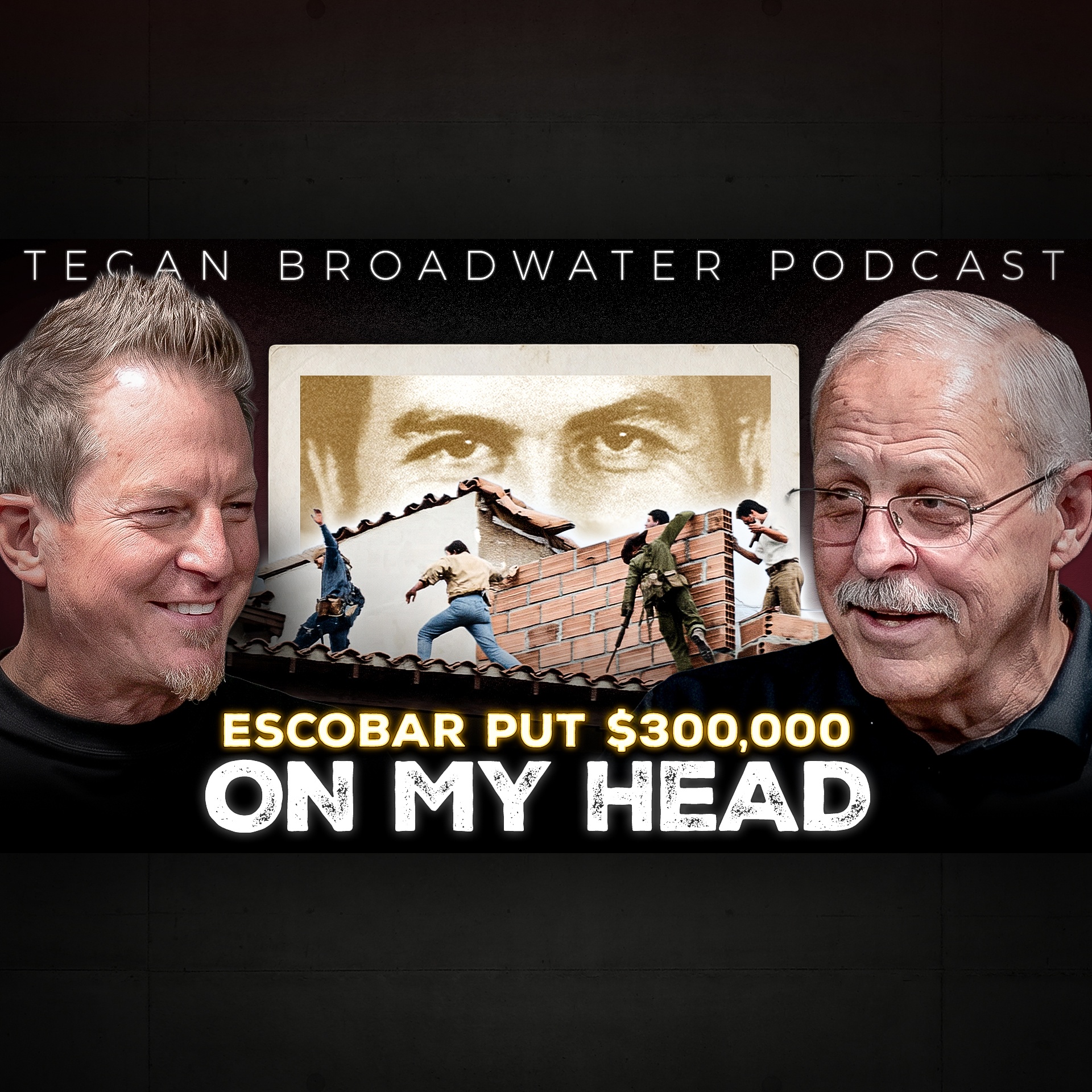
While he was doing it, he had a $300,000 bounty on his own head. Netflix made him famous in narcos. But today, you get the real story from a true hero and an even truer friend.
[00:01:13] Speaker A: Please help me.
[00:01:13] Speaker B: Welcome to the podcast. Retired DEA Special Agent Steve Murphy. Since you are a professional disciplinarian for over 30 years, I've heard you talk about your father before and how he didn't spare the rod. What is your perspective on the old school corporal punishment style of discipline? How do you feel about that now?
[00:01:38] Speaker A: Well, let's look at the times back then and compare them to today.
And the lack of respect that you see with kids out here, the lack of work ethic.
They have no clue what they want to do.
I knew what was expected of me. My sister and I both did. And when we didn't live up to what was expected, you know, its consequences are going to be right? So I kind of relate this to how I've tried to raise my kids, and it doesn't work 100% of the time, but you try.
And I always told my kids, I'd rather you be a leader than a follower. And then you teach them, for every decision you make, good or bad, there's a consequence. I mean, if you go down to Tijuana and eat in a crappy restaurant, Then you're gonna have stomach problems. Right. That's the consequences. Eating bad food.
[00:02:26] Speaker B: Right.
[00:02:26] Speaker A: So. And it just carries over to every decision you make in life.
It can be small or it can be large, but especially with the cops. You go out there and you see these videos that are out there, and the people are just disrespecting the police officers who have dedicated their lives, who are risking in their lives every day to people to protect people that are ungrateful.
[00:02:48] Speaker B: Yeah.
[00:02:49] Speaker A: I think that comes from lack of discipline. I didn't beat my kids.
I got to tell you. You know, it's hard to spank little girls. I've got two. I had two. I have two sons and two daughters.
And there's a big age difference between them because the girls are adopted. But, you know, boy, little boy, you can. Right on the back of the head, you can get his attention real quick. I just can't do that for a little girl.
[00:03:11] Speaker B: Right.
So you did discipline your own kids that way for the most part as well. Even though I think it was kind of falling out of fashion. I think we're close enough to the same age where it was kind of falling out of fashion by the time we raised kids. Right.
[00:03:28] Speaker A: Yeah. Yeah. They got their spankings.
The girls mostly was the spanking with the hand.
And honestly, I don't ever remember spanking my boys with the belt.
It was with the boys. It was.
It finally got to the point where it was more punishment to ground them or take them. Take things away from them. The girls, eventually, as they became teenagers and got access to phones and iPads.
Boy, you take those away and. But they're sneaky, I gotta tell you. I can't tell you how many burner phones we found in our house.
[00:04:03] Speaker B: You learn from your family as much as you do in the street.
[00:04:05] Speaker A: Sometimes they're smarter about it than I am.
[00:04:08] Speaker B: And those dudes will grow up fast, too. I know they dread the weight for you to show up, and it's the discipline and everything, but eventually, too, you spank them as hard as you want to, and they're like, okay, so you got to find something else.
[00:04:23] Speaker A: Yeah.
[00:04:24] Speaker B: Before you start fisticuffs or whatever's next. Right.
[00:04:27] Speaker A: And it's. It's. Well, I will say it came close to fisticuffs with one with. With my second son, but just put furniture between us.
So everybody calmed down.
[00:04:38] Speaker B: That. Whatever works.
Yeah. I'm not trying to. I think the statute of limitations has run out anyway. I'm not trying to go there necessarily.
[00:04:47] Speaker A: Well, you know, and I don't, I don't want everybody to think I'm just a brutal. I was a brutal dad. You know, we spoiled the heck of a heck out of our kids just like everybody else does. And our granddaughters are.
All they got to do is ask and they get it.
[00:05:02] Speaker B: So that's different, though.
[00:05:03] Speaker A: That's a lot different.
[00:05:04] Speaker B: Yeah, that's, that's slick too. Spoiling the grandkids and sending them home with a bunch of sugar in their bellies. Tell them to be quiet.
[00:05:11] Speaker A: There is, but, you know, it's the same token as a grandparent. You can still instill ideas in them about being a leader or being a follower.
[00:05:21] Speaker B: Yeah.
[00:05:22] Speaker A: You know, the three of the girls are active in sports.
The two old ones, the twins, one I know one of them's in the National Honor Society and I think the other one's working on it. So they're doing things to make us proud already. But it just, you know, be a leader, don't be a follower.
[00:05:41] Speaker B: That's awesome. And I have several leadership questions, so I'll save the one that's making me want to ask it now for later. So I don't zigzag too bad, but okay. And you constantly talk about being the, the small town kid from the little bitty town. And what made you pick cop work? And even though this is politically incorrect now, was it to chase bad guys and put them in jail?
Does that have anything to do with the thought of why police work would be an infatuation or was it really an accident?
[00:06:16] Speaker A: Well, so I was born in Memphis, but we moved to Murphysboro, Tennessee when I was 2 years old.
And back then Murphy's just a small, sleepy little town now. It's, it's like Nashville south, it's the next county below Nashville.
And probably 10 years old, you know, camping out in the backyard in the summertime with my buddies and you know, one or two o' clock in the morning comes around, we're out riding our bikes in the neighborhood we're not supposed to be doing. And in our neighborhood, we were out on, right on the edge of the city limits. We were actually in the county and there was an all night laundromat, had vending machines. So we went in to get some sodas and some crackers and you know, nobody's got any money. So we come up with this great idea to let's break in a house and steal some.
And at the time it just sounded like the best idea in the world.
[00:07:01] Speaker B: You're how old about.
[00:07:02] Speaker A: About 10 years old.
[00:07:03] Speaker B: 10. Okay.
[00:07:04] Speaker A: So we ride our little bikes up to the laundry mat, or we go back in the neighborhood and we pick a house. And so we're standing outside this window trying to figure out how we're going to get in.
And next thing you know, this spotlight just lights us up. Scared the crap out of us. I mean, we didn't even run. We were just like a deer in the headlights. And two uniforms came over and, boys, what are y' all doing?
So we. We just gave it up. You know, we didn't lie about it. We told them what we were doing. They kind of looked at each other. I don't know. I didn't hear a snicker, but I'm probably. There was probably one in there that I just missed. And they said, well, you boys got a decision to make tonight.
You can come with us and you're going to go to prison for the rest of your lives, or we can take you home to your parents.
We kind of looked at each other and said, take us to jail.
I don't want to go home.
[00:07:48] Speaker B: That was the day we just finished talking about it.
[00:07:50] Speaker A: That's exactly right.
[00:07:51] Speaker B: You knew that was coming.
[00:07:52] Speaker A: Suffice it to say, I didn't camp out for probably until the next summer, and I probably didn't sit down without a little bit of discomfort for a few days.
[00:08:02] Speaker B: So your first experience with law enforcement, though, is actually positive.
[00:08:06] Speaker A: It was, you know, and that's back when police officers had the discretion to make a decision on the street. I mean, they knew we're harmless, we're out there doing stupid little things. We're not, you know, future John Dillingers out there. You're just camping and got into a little mischief.
[00:08:20] Speaker B: Right.
[00:08:22] Speaker A: And even when I became a city cop back in the 70s, you still had the ability to use that discretion on the street. Pull somebody over. Does everybody need a ticket? I wrote a lot more warning tickets than I ever wrote good tickets.
[00:08:34] Speaker B: Yeah.
[00:08:35] Speaker A: And you got your point across. And as long as people were respectful, you know how it is. They. A lot of people talk themselves into a ticket or into jail.
[00:08:42] Speaker B: The pop tickets.
[00:08:43] Speaker A: Yeah. Yeah.
[00:08:44] Speaker B: So. Well, and that's. That's still where discretion is allowed. Is this Class C's tickets or whatever, were there any crimes that you were allowed to kind of let float or did you maybe.
[00:08:54] Speaker A: Well, back then, you know, I mean, being drunk in public was an offense.
I will.
I mean, if you got your winos that are continually out there and they expect you to come again because they Want to go sleep it off. And they want to be a trustee in the city jail for a while and that way they're getting three meals a day.
[00:09:15] Speaker B: Yeah.
[00:09:15] Speaker A: But you know, you got young people that are out there just having a good time. And we had a big city park area in our town, this town of Bluefield, West Virginia, and huge, huge parking lot, like, I don't know, several acre parking lot because you had your football field there and tennis courts and the city auditorium and a bunch of different things. And you go down there and the guys are all, you know, they see the mark cruiser coming and they try to hide their beer and rather than give them a ticket or something, it was more painful to make them pour or just, I don't say make them, just tell them pour the beer out in front of us and you know, that hurt them more.
[00:09:51] Speaker B: Yes. Yeah.
[00:09:53] Speaker A: And I'm sure they went right back to the market, got another case of beer or whatever those are.
[00:09:58] Speaker B: Those were easy days to make fake IDs, but still hard to pull off when you were kids, right?
[00:10:02] Speaker A: Yeah.
So felonies. No, there's no question about felonies. It's.
Sorry, I just. The way it is. Yeah.
[00:10:12] Speaker B: So it's, it's always an interesting conundrum when I, when I talk to guys like you have been through so many levels of, of offensive stuff. When you talk about using your sound judgment to make a decision that you feel not a judge or not, you know, not a. Through the jail process, but you kind of make a decision out there and a lot of times it's for the better, especially if it's a, a forgiving act.
You know, in that particular instance, obviously nobody's going to go driving off if you feel like they've had too much to drink. But that does seem like something that gives you a great experience to be able to leverage that. And then when you come up, have a little bit more discernment as a law enforcement. Did you feel like you had that opportunity in the old school days?
[00:10:58] Speaker A: Yeah, you did.
And as you're talking, I just remembered this one case where pulled this guy over for DUI and it's, it's clubs are closing. 2:30, 3:00 clock in the morning. He's all over the road.
Get out of the car. And he, the man. I'm six two, he's probably six seven, works for the railroad. Just a big, big man, big broad shoulders, didn't resist, no problem. Pat him down, you know, gave him sobriety tests. He just almost fell out in the street just. There's no question about it.
[00:11:27] Speaker B: Right.
[00:11:28] Speaker A: And put him in the cruiser and he told me jokes all the way to the jail to see the police department.
And when we got there, I had tears running down my cheeks from laughing so much.
And so when we got in, the desk sergeant's in there and he said, what's the charge? And I said, I said, you know, rather than dui, just. Just reckless driving and public intoxication, that way he gets six points on his license. He doesn't lose his license, he sleeps it off.
And so we're going to do that. Well, he pulls a wallet, you know, we're doing his inventory. So he pulls a wad of cash out of his pocket, and we got a box there in the sergeant's inventory and everything. And he's like, oh, I'm going to count it myself. And so he. One, two. And he'd get about 15. He'd go, 15, shoot one, two. And we went through this like five times. And finally I grabbed the wad of money out of his hand. I said, leave it in the box. The sergeant's going to count it in front of you. We're going to give you a receipt for it. Nobody wants your money.
And he just turned around, looked at me like, okay, and remember how when you had your Sam Browns on your gun belt and how they would drag your pants down? Yeah. So you'd always. You're always hiking your pants back up. I turned around and hiked my pants up. He cold caught me right behind the ear, put me down the ground.
I opened my eyes and I saw the little white things floating around. And he came down on top of me. So I just covered up and. And so you get your senses back about you.
[00:12:51] Speaker B: Oh, yeah.
[00:12:51] Speaker A: The sergeant came out there and. And all of us back then were taking taekwondo because we'd broken our hands so many times fighting.
And so the sergeant, he pops him on, gets him off of me, and then we went at it.
So got him, went in custody.
[00:13:07] Speaker B: So did the sergeant pause and let you go at it at that point, or. Yeah, okay. They just got it because that's another old school frame that I think most people wouldn't appreciate because it really was like that.
[00:13:19] Speaker A: We're talking about southern West Virginia. These people come out of the mountains, come out of adjoining counties where there's little, if any law enforcement. They don't like people telling them what to do.
[00:13:29] Speaker B: Obviously, even the guy that cutting him a break, he's going to call a cock.
[00:13:33] Speaker A: Well, then we threw the book at him after that. So he did get the DUI charge.
The next night, we're sitting in roll call about 11:30 and we're back in the squad room and the desk sergeant calls back to our lieutenant, says, tell Murphy's got a visitor out here in the lobby. It looks like Ricky Raccoon.
I'm thinking, why would you say something like that? And then it hit me. It's probably that guy from last night. And I told the other guys, I said, if this is the man from last night, I'm gonna need help, guys, because, you know, he's a big boy.
[00:14:06] Speaker B: Yeah.
[00:14:06] Speaker A: And we went out there and it was. It was him. And he had black eyes, two black eyes. And he had. He pulled his shirt up and he had a big bruise down his chest where I'd kicked him when we were. I mean, he was. He wasn't giving up easy.
And he said, he said, are you Steve Murphy? And I said, yes, sir. And he said, I don't know what happened last night. And I'm thinking, oh, God, here we go again.
And he said, but I just want to come and apologize to you, man.
Thank goodness, you know. And he said, I don't know what got into me. I just got paid and went to a bar and, you know, just let the liquor took control of you.
[00:14:47] Speaker B: Yeah, it's kind of fortunate for you, too. If you're going to have to scrap with somebody that big. It may as well be drunk.
[00:14:53] Speaker A: Well, and that's what you hate to. You hate to hit a drunk. I mean, just drunks you should grapple with or wrestle with them. You know, it's not too hard to beat up a drunk. You just want to get him under control. This guy, he wasn't. He didn't want to get under control.
He continued to fight.
[00:15:08] Speaker B: Yeah, that's not your average drunk.
[00:15:09] Speaker A: So. And I never saw him again. And then years later, I became a railroad cop. I never ran into him again, though.
[00:15:15] Speaker B: So I would love for you to compare and contrast big city and small town law enforcement maybe with some of the anecdotes we talked about or something else that somebody might not be aware of.
Obviously there's a giant disparity between the two. We've got guys that'll try to call me and apply at our company, said I was 20 years SWAT, blah, blah, blah. And they realized there's like eight dudes in the department and they're all SWAT, you know, it was a little different, but. But there has to be a lot different of a. Kind of a Culture or the way you deal with the public or whatever. How. How did you see that?
[00:15:54] Speaker A: Well, so when I joined, it was. We had 35 men on our department. So typically on a shift, you had four or five people on the street, and then you had a desk sergeant.
And then when.
If the sergeant was in, the lieutenant would be the shift commander. And then if he was off, the desk sergeant come out, and then a patrolman had to work the desk. And.
And actually, it worked kind of good on midnights, if you wanted to volunteer. If you're. A lot of us were going to college, getting our. Our college degrees back then, so you could study while you're sitting on the desk. Yeah, I mean, Bluefield, West Virginia, midnight shift, you might get a couple calls for the whole night. That's about it.
[00:16:28] Speaker B: Okay.
[00:16:29] Speaker A: But on the other shifts, whatever the crime was, you had to handle it. You don't. You would. If it's a felony, we average maybe one or two murders a year. That was all. It just rarely ever happened. But beanies and burglaries and things like that.
You did the fingerprinting, you know, you dusted for prints, you look for evidence, and the detective came out. Then you assisted him on what he was doing. Back then, we had three detectives.
Eventually went down to two.
But you learn a whole lot more than if you're in a big department, because when you go to a felony crime scene, the uniforms set up a perimeter and keep people out and bring
[00:17:10] Speaker B: a specialized unit in or something. I mean, yeah, sure.
[00:17:12] Speaker A: So, you know. So what are you learning from that? Yeah, I mean, you see what they're doing and everything, but in a small department, you don't do it as frequently, but you participate in every aspect of the investigation, especially the felonies. And, you know, I think most guys back then wanted. I think we all aspired to be a detective at some point where you could just get into not having to answer the dog, barking dogs and the domestics. Nobody likes going to domestics.
[00:17:39] Speaker B: Right.
And.
[00:17:40] Speaker A: But you want to really get into being an investigator.
But you asked me earlier about why I joined or, you know, if that's. I don't know, after that incident with the cops there in Tennessee, I think I was impressed by the way they looked and their demeanor. And, you know, they had the shiny shoes and the gun belts and all that. They just really look cool. And I grew up, you know, I grew up in a very strong Christian household, and I believe that God gives everybody gifts. And I think my gift was service to others.
And I Know, this sounds so cliche to say it, and I do really believe this. I mean, I did want to be a police, because it just looks so exciting. I wanted to be part of a group.
[00:18:23] Speaker B: Well, that's, I mean, when we're all little, that's how you pick your football teams and everything else. You know, the coolest uniforms.
[00:18:29] Speaker A: Yep, yep, that's true.
[00:18:31] Speaker B: So that's okay.
[00:18:32] Speaker A: But at the same token, you wanted to help people. I mean, I haven't met a police officer anywhere in the world yet that told me they became a police officer so they could kill people.
You know, that reality is a possibility, but you know, that's not why people join law enforcement. Then you hear this crap that's going on now with the defunded, defund the police and you know, socialism and all that.
What I'm promoting now is you don't like the police, go and ask if they have a ride along program and just go ride a couple shifts with them and see the crap they have to put up with.
When I was a city police officer, I was going to college in the daytime and there was an. I remember the girl's name, you know, just as well as I remember my sister's name.
She and I were always at head, at odds in the classroom, in the criminal justice classes because her, her husband was a defense attorney.
Well to do people and, and you know, I'm blue jeans and tennis shoes and she's dressed nice and, and so our instructors would hold debates, they'd pick a topic and she and I will always go head to head.
So I told her one time, I said, why don't you come and ride with me? We have a ride along program, just come out on the evening shift at that time. And I said, just ride with me as long as you want. You can do the whole eight hours or you can come out, do an hour, whatever you want to do and just see what it's all about.
So she did.
So we get a call and it's in a beer joint and we pull up and there's two guys outside fighting. And so you go break it up and of course they turn on you and they're calling you everything but a police officer. And she's staying in the car, but she's got a window rolled down watching. And you could see she's scared.
And you know, a lot of those fights, I was scared too. We just can't show it, right. And so anyway, we finally get everybody separated, let them go their way, didn't put anybody in jail. And I come back, get back in the car. She said, is that it? I said, yep. Said, it worked out pretty good, huh? She's like, why didn't you put them in jail?
I said, for what?
She said, did you hear the names he was calling you? And I said, yeah, well, you should put him in jail for that. I said, there's a thing called the First Amendment. As long as they don't touch me, you know, they can say whatever they want to say. It's. I don't take it personal. Back then I did. Now I'm an old man. I might. But.
[00:20:49] Speaker B: Right. Yeah, even we all mature through that whole process, too. Right. There's a version of this that doesn't make it here. The part I only send to the mailing list community early before it goes anywhere else. Free links in the description for those who want to be on the inside.
[00:21:04] Speaker A: But you know what? That changed that girl's attitude towards law enforcement after that. And mission was accomplished. That was the whole point is come out and experience it yourself and then see what you think. I mean, it was. Who's that?
He's the emcee for America's Got Talent. Used to play football. Terry.
[00:21:23] Speaker B: Oh, yeah.
Big Terry.
You can say.
Terry.
[00:21:28] Speaker A: Terry.
[00:21:28] Speaker B: Yeah.
[00:21:29] Speaker A: So I heard he.
[00:21:31] Speaker B: Welcome to the show.
[00:21:33] Speaker A: I heard he went on a. On a ride along and. And they. They put him through some simulated exercises, Shoot, don't shoot situations.
[00:21:42] Speaker B: Oh, yeah.
[00:21:43] Speaker A: And he completely changed his mind once he experienced it. And they were saying, why'd you shoot the guy? I didn't know what else to do. I had to make a decision in less than a second.
[00:21:51] Speaker B: Right.
[00:21:52] Speaker A: That's real life.
[00:21:53] Speaker B: Right. So this is genius. Did I send you my entire question?
[00:21:57] Speaker A: Listen, I don't think so, because this
[00:21:59] Speaker B: is where we're going to be.
[00:22:00] Speaker A: Like four topics.
[00:22:01] Speaker B: Yeah. The only thing that. The only thing that I kind of skipped over is, is when you decided to move up to a bigger. A bigger city department, was that because you needed to earn Connie's admiration, or was that just looking for bigger, better experiences? Because I know you were involved in several shootings. Right.
So I wanted to pivot directly into that, especially since you just kind of segued in there.
If you'll talk about why you wanted to go to a bigger department. And then I want to go straight into.
I would love to hear from you specifically, because to me, there's three different types of people who are in multiple shootings. There's cowboys, there's tactical idiots, and there's hustlers.
And I already know what category you're in. I'm not going to put you on the spot because I know you're just the people that just work hard and are constantly out hunting are going to get into stuff. That's just how it goes.
But I would love for you to talk about one or two of those experiences and perhaps it was when you moved to a different department.
Whatever experience you want to discuss for the listeners who feel like all cops are trigger happy or shoot based on race or have such a misunderstanding of culture that they're scared or whatever that is, paint a picture of that. Second, for someone who doesn't have any of that experience and talk about maybe some of yours.
[00:23:35] Speaker A: So I left. I worked six years with the Bluefield, West Virginia Police Department.
And even a small town, you're getting in shootings.
Just thank the by the grace of God, I never got hit.
But after six years, I started out at $9,600 a year.
That's $800 a month before taxes. Yeah, and I had my, you know, my first wife, my practice marriage and that's where my two sons came from. You can't support a family on that. So I'm working for a off duty fireman who's an electrician as an electrician's helper building houses.
I got the security contract for the local state college, Bluefield State College where I graduated from for their basketball game. So got security contract for that. I'm working all the grants that I can get on. I'm working all the overtime I can get off the off duty jobs. I even sold Amway. I mean, you do what you got to do to support your family, right?
[00:24:33] Speaker B: Hey, they got some good toilet paper.
[00:24:36] Speaker A: They had some good cleaning products. Back then my biggest customer was my mom.
But after, after six years, I think the most money I ever made was 17,000, $18,000 a year.
Put my first wife through college.
Anyway, the railroad police came open and it was in Norfolk, Virginia. So I would have to move from West Virginia to Virginia to Norfolk.
But the pay doubled. I mean, I think not double, but. Well, I guess it did for my base salary because I started off, I think at 23,000.
So I did that, moved down to Virginia beach, went through divorce before that.
[00:25:17] Speaker B: But a railroad cop is still sort of a, a small assignment unless you create your, well, larger tasks.
[00:25:26] Speaker A: This particular assignment was a glorified security guard is what it was. Because the in downtown Norfolk at Lamberts Point, that's where the railroad Norfolk west, it was Norfolk Southern now used to Be Norfolk and Western has their coal loading piers for these international ships come in and load up the coal. Those are billion dollar peers and they had, they caught some people down there doing some stuff so they hired three guys to come and join and. And we just sat on the end of the pier checking people out. On and off the pier. Yeah. Hated every minute of it. They did it for two years.
My sons are back in West Virginia. I finally got a transfer back to Bluefield with the railroad police.
Didn't get any shootings while I was in Norfolk.
But I come back and now I'm doing investigations with the railroad and got several shootings there.
One, I was doing surveillance one night at some shops and our boss was anti overtime. He was, he was a clerk for the railroad and somehow they made him the police chief for our division which
[00:26:24] Speaker B: is also indicative of a small town that's got to be political or something, right? Because I guess how else he's the
[00:26:30] Speaker A: most unexperienced person I ever worked for.
So anyway, the shops, this is in Bluefield and I lived in a little town called Princeton which was about 10, 12 miles away. And the Princeton shops kept getting broken into. So he wanted us to do surveillance. I was on the midnight shift and, and the other guys were like well let's, let's do two man surveillance. And he's absolutely not, you know, Mr. Murphy will go out there.
So I had a Remington
[00:26:56] Speaker B: 8 7.
[00:26:56] Speaker A: No, had a Mossberg 500 shotgun with pistol grip. Back then you had your duty weapon and he just wore, you know, we didn't wear jeans, you had to wear slacks. But it's more like work pants and boots because you were always on the railroad property.
So I'm out there one night and I see a guy sneaking over and he's getting ready to break in these windows to one of the shop buildings. And he was, he was getting a pallet to lean up against the wall and he's going to use that as kind of a ladder to get up and the, the equipment in there can only be used on the railroad. There's no other purpose for this. Well, you know there's hand tools but there's really nothing else in there. So I'm thinking okay, well I'm going to sneak out and I'm going to make my way over and when he gets up on that pallet I'm going to charge him and we'll take him down.
Well, so I run over and crouch behind this car and I'm watching him. I'm just waiting and the next thing you know, I hear a shot in the back window of the car. I'm hiding behind the back. Got shot out.
Crap your pants? So I ran to the front of the car because I felt like the shot came here. I never saw the second guy.
So there's a second shot comes, increases that back corner where I was. And so I'm thinking, okay, now, you know they can bracket me, right? You know, they can flank me here. So if the building I was hiding in had these huge steel I beams. So if you could get inside one of those I beams, you got steel around you, three sides. So I took off running and I'm. I'm just holding the trigger on the, on the Mossberg and firing rounds that way as I'm running that way and just firing. Cover fire. Yeah. And went in there. And then, you know, you get real quiet and you can't hear after that shotgun, your hearing senses are all screwed up. But after some time, I got on radio and I had to call the railroad dispatcher who dispatches trains. He's not a police dispatcher.
[00:28:37] Speaker B: Right.
[00:28:38] Speaker A: And he's in Bluefield. And I said, I need you to call the Princeton police, tell them I'm being shot at down here. I need some backup. Well, I knew all the cops in this little town because that's where I grew up.
I knew the troopers. I'd done, you know, through my college education, I'd done internships with the county and with the city. I knew the troops. And so next thing, I can hear the sirens coming. And, you know, there's no better sound in the world when you need help, that you hear those sirens.
So they come rolling in there. And how long, how long did that
[00:29:04] Speaker B: take to get there? Because I think that's unappreciable too, is that. That's a decent amount of time to have to sit through that process knowing that you're getting shot at.
[00:29:12] Speaker A: Or I'm going to guess it was probably a good five minutes before I heard sirens coming.
But it seemed a lot longer than that.
[00:29:20] Speaker B: Were you still firing back or was people moving around and trying to figure out.
[00:29:25] Speaker A: No, I think this. I think the shotgun blast scared them.
[00:29:28] Speaker B: Okay.
[00:29:29] Speaker A: And honestly, I didn't have any more shotgun shells. I just had what was in the chamber. But I still had my back then I carried a Smith and Wesson Model 15.357snub nose. That was my duty weapon.
[00:29:41] Speaker B: Okay.
[00:29:42] Speaker A: So I still got that.
[00:29:43] Speaker B: Great for long range gunfighting.
[00:29:44] Speaker A: Yeah, well, back then too, I was. I did a Lot of competition shootings. I was, I'd made the governor's 20.
[00:29:50] Speaker B: Okay. You would have hit him?
[00:29:52] Speaker A: I.
[00:29:53] Speaker B: You would hit him. I wouldn't have hit.
[00:29:54] Speaker A: Well, you know how it is. It's. It's easy to hit that paper, but when somebody's shooting at you, it's a little bit different.
[00:29:59] Speaker B: Well, this, hence the point. I mean I think that's too, that's so.
[00:30:03] Speaker A: I mean that was just, you know, this.
I went back up the city one night from a guy, a guy had shot another guy who came home and caught him at bed with his wife. And now he's shooting at the police officer. So I went and helped out with that. Well, that same chief, when I called him the next morning to tell him that I was involved in the shooting with the city, he got really mad at me and he came in and he ripped me up one side, down the other and told me he's going to get me fired. I had no business out there, you know, backing up the police department. I don't care if that is your old agency, you work for us now.
[00:30:35] Speaker B: What made you happen upon that?
[00:30:37] Speaker A: I heard gunshots.
[00:30:38] Speaker B: You heard shots and you, I mean, which is you're obligated. I mean this isn't like, hey, you have some option. You're a law enforcement. Sworn peace officer still.
[00:30:48] Speaker A: Right, Exactly. And here's the way I looked at it too. I'm the only railroad cop on duty in 26 counties. When I need help, who do I call?
I call the local police.
[00:30:58] Speaker B: Yeah.
[00:30:59] Speaker A: So if I can help them, you know, you damn better believe I'm going to be down there.
[00:31:04] Speaker B: I know that wasn't your motivation. And that's a good reason to give the chief.
I know your motivation was noble and or action incited. Right.
[00:31:13] Speaker A: I mean, but he told me he's going to get me fired. Yes. And as I'm leaving the office because it was quitting time and I said if you want me to stay and chew on me some more, I'll stay, but I'm going on overtime clock. He's like, get out of here. And then as I'm walking out the door, I said, chief, just so you understand, given the same situation, I will respond the same next time. I'm going to get your job. Okay, I'll see you tomorrow.
So luckily the higher ups in the railroad police had all been real cops.
Understood. The city gave me this big proclamation. It was in TV and the newspapers and all this stuff and embarrassed him. But.
So from there though I just.
After they didn't do anything because of the bosses. Told me that they would take care of him, my chief, because he was wrong. And they didn't do anything. And I thought, I'm not going to work for an organization like this.
[00:32:01] Speaker B: Yeah.
[00:32:01] Speaker A: Well, one of the new railroad detectives, Pete Ramey, love this guy to death. Great old big black man. Just was a Virginia state trooper. Worked undercover, drugs with DEA task force. And we got to be best friends. And he started telling me all these drug stories working undercover. And man, I'd always been interested in narcotics.
So.
[00:32:22] Speaker B: Fighting them, you mean?
[00:32:24] Speaker A: Yeah, yeah, I guess I should have word that the right way clarifying.
So I eventually applied for dea. Took two years to get hired. But that's how I went to the EA is basically because Pete showed me there's something better for what I want to do.
[00:32:38] Speaker B: Awesome.
[00:32:38] Speaker A: But I just happen to remember a story too, to talk about discretion. So I'm a. I got hired on the police department November of 75. I didn't go to the state police academy until spring of 76, but they still got you out there working, you know. You know, our firearms instructor would take you out and qualify you through weapons and everything. So I'm in the state police academy. You got to come home on weekends.
And one of my best friends, Jackie, he was a police officer, we were rookies together.
He said, hey, everybody that worked at this gas station knows this kid that's selling pound quantities of weed. Well, a pound of wheat back in, you know, 19, early 1976 in Bluefield, West Virginia. That was a lot of dope.
So we went down, talked to him and said, can you call him up? And he said, sure. So he called him, the kids said, I'll be right there.
So we just go hide in the Bay area, the garage of this gas station. And Ken shows up and he brings him back there and we've got the door cracked from a storage room watching. And the guys hands him the pound of weed. And we stepped out and said, how you doing? It wasn't any of this tv jump out and slam him to the ground. That kind of stuff. Just, hey, pal, how you doing? What you got there? And he's like, well, brought a gift from a friend here. 17 year old kid.
[00:33:46] Speaker B: Yeah.
[00:33:47] Speaker A: I said, well, we're police officers, you know. So we toughed him up and did field test positive for weed. Taking the station.
We come walking in now we're off duty, and the disc sergeant, we tell him what's going on. He's like, who authorized you to do this? Well, nobody, we're police officers.
Nobody knows you're out here doing this. I said, you do now.
So they call a detective in. I mean, we just blew everybody's minds, right?
[00:34:11] Speaker B: There's a process for this.
[00:34:12] Speaker A: Yeah.
So this guy Roger Witt comes in, he's the detective on call and he doesn't say things. And he's. Roger was really cool. He's a younger guy. This is a guy you could learn from. And he said, you guys did what? And how did you do this? And we went through everything and by this time, the 17 year old's dad, we called him and he's up there and this man is, he's spitting nails. He wants his hands on that kid.
And so, you know, go through all the process, explain everything to the dad. And Roger calls us over the side. He said, before we let this kid go to his dad, we had to take him to magistrate and then let him go to his dad. He said, what would you guys think about not charging this kid?
We said, well, I don't know, what do you think about it? We're new.
He said, you see how his dad's acting? Any punishment he gets from that dad is going to be worse than anything you guys can do to him. The state's going to let him walk. It's his first offense. He's 17 years old. Let's just not charge him and let his dad take care of the business. And we did.
[00:35:06] Speaker B: Yeah.
[00:35:07] Speaker A: So that was discretion, right?
[00:35:08] Speaker B: Right.
[00:35:09] Speaker A: So all these years later, I'm retired. I was caught for 38 years, so I'm already retired. I'm on Facebook one time and I saw a message from a guy, he said he was telling somebody else, he said, I'm telling you, the guy that's in narcos is that cop that gave me a break when I was a kid.
So we started direct messaging each other and he told me, he said, man, you cut me the best break. He said, I went on, he said I was, I suffered at the hands of my dad there for a while, but he said, I went on to become a successful businessman. I'm already retired. And you know, I don't say independently wealthy, but he was successful. Yeah. And he said, it's all because you gave me a break. And, and I mean, I couldn't think of a better ending to a story. If you made it up for television.
[00:35:52] Speaker B: Yeah. Because it's hit or miss. It could have been the 6 foot 5 dude that all of a sudden turned on you, that you tried to give a break. Too. But yeah, and that's. That's a fantastic story. And that's kind of the whole point of being a cop and being. And that's one of those examples, too, that we couldn't find that that was not a felonious amount. Right.
[00:36:13] Speaker A: But almost in West Virginia probably was back then.
[00:36:17] Speaker B: Right. So, I mean, that's just one of those times where. And those are the cops. I absolutely remember I got harassed all the time as a kid from the cops. But I also remember the ones that I was always respectful but sometimes it didn't help. But the ones who taught me those lessons, who just decided to let me go for no reasons, are the ones I'll never forget. So.
[00:36:35] Speaker A: Yep. So. And you talk about race coming into it at the time that when you're doing these shootings, honestly, I mean, you know, who's got the gun? I'm not focused on what color you are. I'm not focused on whether you're a man or a woman.
If you got a gun, you shoot at me, I'm going to shoot back at you.
So, you know these claims that come out about, you know, they only shot somebody because they're a certain color.
Are there cops like that?
Well, every profession has a few bad apples, doesn't it? I mean, there's. My oldest son's a doctor. There's bad doctors, you know, pain pill, the pain clinics, you know, write scripts for everybody. It doesn't matter what profession you are. There's people that don't live up to the standard.
But we certainly don't criticize the whole profession because of one person accepts law enforcement.
[00:37:27] Speaker B: Yeah. It is kind of rampant there.
[00:37:29] Speaker A: Yeah. So look at the circumstances, everybody gets their day in court.
But I'll tell you right now, and I think you and I have talked about it. I've done a lot of interviews lately. I think it was you. Nobody hates a bad cop more than a good cop.
They deserve their day in court. But if they're guilty, they should be punished, in my opinion, harsher than anybody any other criminal, because they swore an oath to protect the public.
And you and I, Mel, you know, we've all got between three of us. We've probably got a hundred years of experience sitting here.
We've never betrayed our oath. You betray your oath. That's just lower than, well, shit on the bottom of the ocean, in my opinion.
[00:38:11] Speaker B: Yeah, I'm glad you said that, too, because I think a lot of people don't know that. I mean, that can be enhanced in certain instances. And I think it should be enhanced in others where it isn't. Because of that, if you're a teacher, a preacher, law enforcement, lawyer, you know, those types of things should have a steeper punishment. Because of that, you're. You're in charge of other people, and you're more accountable than your average Joe. That's the point.
[00:38:37] Speaker A: You have the public's trust. They trust you simply because you got that uniform on.
[00:38:41] Speaker B: So in those moments where you realize you're being shot at, you've fleetingly touched upon it. But talk about that SNS activation that, the adrenaline dump and the things that happen to you that help people understand that there's not as much of a conscious thought process as you would think. I mean, you might be running for cover, consciously figuring out where you need to go, but at the same time, like you said, you can hardly hear. You've got the tunnel vision. Was it hard to run or we feel out of breath or anything interesting that was happening to your body at that time or during any of those instances that you can remember?
[00:39:20] Speaker A: If you're running for cover, it seems like it takes forever to get to it. You just, you know, you're afraid a bullet's going to hit you as you're running.
In 1989, in Miami, in Hialeah, we were doing a deal on a Friday.
And for 17 kilos, we had an undercover agent, an informant. It was a 17 kilo by bust.
Me, my partner Kevin Stevens, and Lynn Piper, the third agent. We were the inside arrest team. We had two backup teams dispersed out through the neighborhood.
Two bad guys show up with what they present as two kilos of coke. Our undercover starts conducting a field test, and next thing you know, we hear him begging for his life. Please don't shoot us. Please don't shoot us. The money's in the trunk.
You know, back then, the Keokuko wholesale was going probably for 23, 24,000 in South Florida.
I used the door open to peek down the hallway and saw that they had both our informant and our undercover agent on the floor. And I could see two handguns. Two bad guys were holding handguns. I used the door closed, got backed into the closet, got on the radio and hey, guys, get in here. It's a rip off. They got peed on the floor. Yeah, as I'm doing that, my partner Kevin opens the door to see what's going on. As he's opening the door, bad guy number one has his hand on the other side of that doorknob. So the width of a hollow core door Apart.
Kevin identifies himself. The bad guy starts shooting at him, hits him twice. Once below the elbow, once above the elbow. Kevin wings him. As Kevin's falling back, he falls on top of me, slams the door shut, and the bad guy keeps shooting through the door. We open up. I've got a Colt 9 millimeter submachine gun. Then I don't mean to laugh because it's so serious, but there was 23 bullet holes in that door. After everything calmed down.
Well, you know, the reason law enforcement trains is to develop muscle memory so that, you know, tactics when you need them, they just. It's an instinct.
So you know, the. You know, the tactic for slicing the pie, Right. We slowly come around the corner, right? Well, Kevin's down. We've. We've got pillows off the bed. We heard more shots out front. And then he got deathly quiet. And we got pillows, trying to staunch the flow of blood. Offering words of encouragement to Kevin. And he looked up at me, he said, just go get him. Go get the guy.
With some choice words.
[00:41:37] Speaker B: I'm gonna say. That's a very polite way to ask you to favor. Yeah, that time.
[00:41:42] Speaker A: So rather than shouldering up and slicing the pieces, I yanked that door open, stepped out in the hallway. My tactics, what happened is I let my emotions get the best of me that day. And I just went straight out in the hallway. And there's our informant standing at the end of the hallway. He'd been shot right dead in the Adam's apple. He's trying to save his own life, hold his blood. He never made it to the hospital. He died that day.
And the reason I'm telling you that story is that's why there's so much training involved. Is it? So you do develop muscle memory. You do have that experience of how to react.
When Javier and I were in. In Columbia, living with the Columbia National Police up in Medellin, and we're flying out with the cops on these Huey gunships. And, you know, you're getting shot at from the ground as you're coming in for landing. That's one of the scariest things I ever experienced. Because you can't. You. They don't want us shooting back. You got door gunners. You got gunners on each side with 30 cows that are straight from the ground. But they didn't want us shooting back because they're worried about the shell casings, you know, flying around and maybe getting into the gear and the motors and everything.
But just to have to sit there and endure that. It was.
[00:42:56] Speaker B: Yeah, especially when you can't do anything about it.
Kind of crossing your fingers at that point.
[00:43:00] Speaker A: But at the same token, when it's all over, I mean, you're just on a high. Like, I've never tried. I've never smoked weed, I've never taken coke, I've never taken any illegal drugs, had more than my share of alcohol. But, I mean, when it's all over, you're just on a high that's just unbelievable. I guess the dopamine in your system is just overdosing you at that point.
And you, you know, you go back. Eventually that wears off. You get that dump, and you're a little bit exhausted. Yes, you need to sit down and rest a little bit.
But then you start reflecting on, okay, what. What did we learn today? What can we do? What mistakes do we make so we don't make those again, but we continually made that mistake of going in those helicopters and being shot at, like, you know, with.
[00:43:46] Speaker B: With all that action. Early on, was there ever a moment of clarity where you thought, man, this is exactly where I belong? Whether it be early on or a little down the road or.
[00:43:58] Speaker A: There were times.
Medellin is a beautiful city. It's kind of built in a bowl. And at nighttime, we're on one side of the bowl, and across on the other side is the. Some of the meanest barrios and anywhere in the world. But the beautiful lights, it just looked like thousands of fireflies. It was just a beautiful sight, you know?
[00:44:17] Speaker B: Yeah.
[00:44:17] Speaker A: And so after, if you've been on ops all day and you're tired, you come in and you get your rice and potatoes for dinner, because that's what you ate three times a day. You had a lot of carbs, but you didn't have a lot of protein go with it.
And you might have a cold beer, you know, with your Colombian friends or Javiers there with you. And especially if Javier's with you, you're sitting there thinking, we're talking that there's not another de age in the world doing what we're doing right now. And every single one of them would pay money to take our place.
And. And that's true in a lot of law enforcement. I won't say all the agencies, but I mean, I got some brothers and sisters in all the agencies that would love to be there and be experiencing the same thing that you're going through.
[00:44:58] Speaker B: Yeah. And so when you. You went eventually through the DEA academy, you talked about going through all that training. How long is the academy? Eight, seven. Eight months.
[00:45:08] Speaker A: Back then, it was 13 weeks. I think it's 17 weeks now.
[00:45:11] Speaker B: Okay.
And then you, you get on and you start, you get launched into Miami. Can you explain to the listeners how that actually works, about how you get to put your choices down or whatnot? And then.
Because how you ended up in Columbia is also interesting. But I'd be interested to know you. I've heard you talk about what you were not prepared for, and with all that training, I'd love to also know what you learned once you step foot outside of that academy.
[00:45:44] Speaker A: Going through the DEA academy at that time, you didn't find out where you were going to be stationed until maybe the week before you graduated. And somewhere along the line they let you fill out a. Back then, it was a five.
You could put five locations down. And one of them had to be a division office, what we called a division office.
So my office, and this was the order of preference. Norfolk, Virginia. Wilmington, North Carolina. Charleston, South Carolina. Jacksonville, Florida. And Miami was my division office.
And then they had a ceremony where you had to come in and coat and tie in the classroom. And they would call you up, all these people from HR and headquarters would come down to watch you react, to find out where you're going to get stationed. Because some guys look like they're going to cry, and some guys are real happy.
And so they hand you the envelope and they say, where do you want to go? And I said, norfolk, Virginia. They said, where do you think you're going? I said, Jacksonville, Florida. And then you open the envelope, it says Miami. I wasn't disappointed. I didn't think my wife's gonna be too happy about it. But. So that's how you found out. Now you know where you're going to be stationed before you ever step foot in the academy. Because there's, there was not a lot, but there have been guys that go through that academy and that's an expense to the government. And then they quit because they don't like where they're getting stationed.
[00:46:56] Speaker B: Interesting.
[00:46:57] Speaker A: Yeah. So I think, you know, DEA developed a heart somewhere along the lines.
I think it's a good thing this is a.
[00:47:04] Speaker B: Saving some bucks is what they're doing by that.
[00:47:07] Speaker A: But then, you know, Connie and I, we go down to.
We're living in Fort Lauderdale. My office is down in Miami.
We're small town country people. You know, here we are in the big city now and we were really fish out of water.
And I'll give you a perfect example. So on the weekends, if we weren't, if I didn't have to go into work, we would go to different parts of Fort Lauderdale, and we're learning our way around. We're exploring towns and finding shopping places. And so we went to this big, big, big shopping center, and we're walking around looking into different stores, and we didn't have a lot of money. I mean, we. We just did.
We've been living in a trailer in West Virginia because that's all. We scraped all the money we had together. That's what we could afford. Yeah, it was a nice trailer.
[00:47:50] Speaker B: And you got to step up in the dea, but you were still a rookie, so.
[00:47:54] Speaker A: Yeah, well, actually, I took a little bit of a pay cut to join dea, to leave the railroad, because after six years. Railroad, I was making pretty good money and interesting. They had a stock sharing plan and all kinds of things.
So anyway, we're walking down through there and there's this big entrance. And so let's go see what's in here. And we walk in and this man walks up, says, how y' all doing? You got your membership card? And I said, my what? He said, your membership card? And I said, I gotta be a member to shop here? And he said, yeah. I said, well, how'd I get a membership card? He said, well, you gotta pay a fee. And I said, I've gotta pay you money to come and spend my money. More money in your store. What the. What kind of racket is this?
It was BJ's warehouse.
We've never heard of that.
[00:48:34] Speaker B: Early days, right?
[00:48:35] Speaker A: Oh, my goodness.
[00:48:37] Speaker B: So you know, it's still a racket.
[00:48:40] Speaker A: Yeah, it is, but it's. That shows you how naive we were. And inexperienced, but then as to how. And then my wife was a registered nurse. She. She loves working icu, Mercy Room, trauma, cardiac, cath lab. She likes. I think all that stuff's gory. I don't like it at all. She. She thinks what I do is crazy, so.
But that was her sense of adventure.
So we're there for a few years and Kevin's been shot. My wife has always been the kind of person if. If you and I are partners, you're family.
So, you know, she. If she bakes me cookies, you're getting a bag of cookies, you know. Same was hot when we were in Columbia with Javier and all that.
So I was working some cases in Miami, and we were getting tips out of the office in Barranquilla, Colombia, about money laundering, Colombian money launders. And so we were filing a lot of smurfs around and building cases and doing trash runs you know, jumping into dumpsters and getting receipts and all the gory stuff that you don't like to do.
And finally, a tip came in on a location, so we went and set up surveillance. Long story short, we got $1.3 million cash off the guy in Miami. Yep. And then we went to his jewelry store, and so seized, like, $600,000 worth of jewelry. And so at that time, 1.3 million. That was a really, really big cash seizure.
And so the guys in Barranquay are like, merch. You ever think about coming down here to work?
So I went, talked to my wife about it, and my wife is a very headstrong person, which is one thing I really respect. She's very independent. She doesn't need me to tell her what to do.
And I like that. I mean, I. You know, we get along. We've been married 42 years. I think this is going to last. Right?
[00:50:24] Speaker B: That's awesome.
[00:50:25] Speaker A: So I brought this up to her. She said, you know, and this was her idea. She said, this has been really exciting living here in South Florida. She said, what's the next most exciting thing we can do?
I said, well, the guys in Barranquilla want me to put in to come down there, and, boy, I got to look, you know.
And so I said, well, just think about it, you know, and dropped it. And so a few weeks goes by, and she comes back and she said, are you serious about moving to Columbia? And I said, you said, exciting. I can't think anything more exciting than that.
And she said, well, if we're going to do it, let's do it while we're young.
So I put in. I got selected for Barranquilla.
[00:51:03] Speaker B: There's a version of this that doesn't make it here. The part I only send to the mailing list community early before it goes anywhere else. Free links in the description for those who want to be on the inside.
What's the selection process like for that? I mean, you got tipped off as, you know, for somebody said, hey, you'd be great at this, but that doesn't mean necessarily you just get to go.
[00:51:24] Speaker A: Right, right. And I would have to go to language school to learn how to speak Spanish.
[00:51:27] Speaker B: Okay.
[00:51:27] Speaker A: You hear my accent when I speak Spanish. It's like, hola, y'. All.
Which. You're from Texas, so you understand it. But.
So I got the. I got the position, got selected. And what happens is they advertise it, and everybody in dea, if you have enough time in the. In the grade that you're in can put in for it.
[00:51:45] Speaker B: Okay.
[00:51:45] Speaker A: And back then they would take GS12s or 13s. 13s is journeyman level. That's a senior agent. The 12 is just a step below. So I was a 12 at the time, got the position.
You know, we were all excited about it, getting ready, getting lined up to go to language school. And the next thing you know, my transfer gets rescinded because they needed a Spanish speaker right away. I'd have to go to school for six months. It would be probably nine or 10 months before I got in country.
So they just say I was ticked off. And a guy from headquarters called me that I don't know. And he said, you know, you just got screwed, right? And I said, yeah, I figured that out. Trained criminal investigator here. And he said, we're getting ready to advertise three positions in Bogota. Do you want one of those? He said, I will make sure you're on the list. I said, let me. Yeah, I said, let me call you back tomorrow. Talk to Connie. She's good for you, good with it. So we put in for it. Sure enough, we get picked this time.
That's how we got picked. Now, I didn't know Javier opinion. I knew who Pablo Escobar was, but I'd never worked a case that at that level, you know. Yeah.
[00:52:45] Speaker B: And this is. What about what year are you talking about then?
[00:52:48] Speaker A: This was 1990.
[00:52:53] Speaker B: Okay.
[00:52:53] Speaker A: I got selected.
[00:52:55] Speaker B: So Pablo was cranking by then, still.
[00:52:57] Speaker A: Oh, he's big time. Yeah, he was the man. He was.
He was already multi. Multibillionaire, Right.
[00:53:04] Speaker B: Did you still have to go to language school and all that stuff?
[00:53:06] Speaker A: Six months in language school up in Washington D.C. outside of Washington. The rest over in.
I can't remember what it is up there in the D.C. area.
And you had to reach a certain score. I think the.
They scored you at one. One plus two, two plus all the way up to five. And you had to score at least a two in reading and speaking.
[00:53:29] Speaker B: He said, two sounds dangerous.
[00:53:32] Speaker A: Well, you can order a beer, you can ask for the bathroom.
[00:53:35] Speaker B: Exactly.
[00:53:36] Speaker A: You know, the important things.
[00:53:37] Speaker B: Yeah.
Scream help.
[00:53:39] Speaker A: Yeah. So I did all that and we take off to Columbia. One thing I want to back up just a second. I forgot to tell you is When I joined DEA, I've been a cop for 12 years now.
The first, the most powder cocaine I'd ever seen at that point was 2 ounces. So a bag like that.
So we get to. We get to Miami in 1987. I've got a senior partner, Gene Frankar.
And Gino been working this case. I mean, he's one of the best investigators, one of the smartest men I've ever met in my life. Just, just intellectually smart.
And he was building a case to prove that Cuba was being used as a transshipment point for cocaine coming out of Columbia into South Florida.
So they had these two informants, these two old men. It was a old white guy and an old Asian guy. We called him Cheech and Chong was their street names.
And they had an import export business.
And so they set up a deal for 400 kilos of cocaine.
I went to the first meeting I went to with Gene. The two informants were there. And I'm, I'm a new guy, so I keep my, I know to keep your mouth shut.
And I'm thinking it's going to be high speed, low drag, you know, we're going to go to the Intercontinental down on the, on Miami Bay. We went to Denny's on 36th street over next to the airport.
[00:54:58] Speaker B: That's, that's, that's better speed for everybody.
[00:55:01] Speaker A: So the two guys, Cheech and Sean, come in, and I'm just looked at them like, these are uniform. I mean, these guys look like you got one foot in the ground already. They look like I look now.
And so they, they talk about it. And so we get in the car, we're heading back. And Gene said, what do you think, Murph?
I started laughing. I said, gene, those guys are full of crap, aren't they? And he said, what do you mean? Why do you say that? I said, they're talking about 400 kilos of cocaine in one load. There's not that much cocaine in the world at one time, is there?
He starts laughing, he's like, where are you from?
So then that leads to.
We were going to take the undercover. The DEA had an undercover boat. It was a 53 foot hatter sport fisherman that had been seized from drug dealers previously. And it's wired, the video and audio and all that stuff. And he said, I need somebody to go down with the two DEA undercover boat captains. He said, you ever been on a boat? I said, I've been on a cruise ship when I got married. Said, you want to go? And I said, heck yeah.
So they said, they take, yeah, well, they, they take me out to the marina for a couple days and teach me how to curl rope and how, you know, I'm just gonna be a deckhand, you know, and just have what I should be doing to make it look natural.
And they Said the other thing is you got to get rid of those Converse tennis shoes. I'm like, well, am I supposed to go barefooted? And they're like, no, everybody wears boat shoes down here. What are boat shoes? So I had to go buy my first pair of boat shoes.
[00:56:20] Speaker B: So we lived in Miami all that time and didn't know what boat shoes were yet?
[00:56:23] Speaker A: Oh, no. Well, I got there in November and this was February. So I've only been there four months.
[00:56:26] Speaker B: Okay. I mean, I saw winter time too.
[00:56:28] Speaker A: So yeah, I saw the other guys wearing them. But I'm thinking we don't have any money. I can't afford just go out and drop 80 bucks on a pair of boat shoes.
So we go to the Turks and Caicos Islands eventually. And I've never even heard of this place. I didn't even know that place existed. We go down there, the deal's typical deal. It took us five days to get there on the boat.
I didn't feel so bad because both, both captains got sick.
They threw up. I didn't throw up, but I was. I didn't feel good at all.
So eventually the twin engine plane flies in, comes to the end of the road Runway there in Providenciales. There's no taxiway. It's just. It's a small airport. So as they're turning around to taxi back up, the back door throws open. And I'm out there with a couple Provo cops and a couple other undercover agents. And these green duffel bags start getting thrown out. We see two look like Hispanic males in the plane. They close the door, they taxi up, refuel, they take off.
Well, on the trip over or down to Providencia House, we hit a reef and bent the prop on one of our motors, the twin inboard motors. And so we limped into Treasure Key.
We called DEA Miami, they called us back, said tomorrow, DEA air Wing is going to fly a new prop from Miami to Nassau. The DEA office of Nassau will pick that up. They'll bring it to you at the marina. We've already checked with the US Navy. They have a. They have a subtender close by. They're going to send two sailors over, they're going to fix the prop.
And I'm thinking we've got control like that over the U.S. navy.
And again, I mean, I'm naive, right?
[00:58:02] Speaker B: Yeah.
[00:58:02] Speaker A: And so that plane, when we finally got to Provo and the plane comes in, I find out later from Gene that we had an Air Force or. Yeah, Air Force P3 AWACS radar plane up tracking that plane out of Cuba into Provo, Turks and Caicos, and then tracked it back into Cuba. This is all evidence. Right.
And I was just impressed that we. We could work with the US Military like that.
[00:58:25] Speaker B: That is cool. And that worked out, too.
[00:58:27] Speaker A: Yeah. So I went from two ounces of cocaine to 400 kilos. I went from two ounces to 880 pounds of coke. And I tell everybody I was addicted to cocaine at that point. Just in a different way. Yeah, yeah, don't edit that out.
[00:58:39] Speaker B: And it used to be so much easier to fly in and out, too, Right. Because it was just mass amounts of shipments coming in and out. It's almost like trying to pick off people at the border. You just got a. 1 out of 10 is not going to make it. But there's so much coming in. It was a different time back then.
[00:58:57] Speaker A: It was a couple years later, after Kevin gets shot, they sent me to NASA or to the Bahamas for three months to just get me out of Miami. And DEA had an operation called OP back then where you're flying with either the US Coast Guard, the US army and helicopters and the Bahamian National Police, and you're doing patrols throughout the Bahama island chain.
And we're. Freeport is on Grand Bahama island. And on the east end of the island is inhabited because that's where the waves come. You know, the bad weather comes in. Okay. And so we just fly out there one day and we look down and we see this big. Looks like a big burlap sack had washed up on the beach. So they. They put me in that basket, the old Sikorsky helicopters and lower me down, and I get it and load it in the basket. And then I come back out and we take it back to the base and cut it open. 72 kilos of cocaine had just washed up on the beach.
[00:59:42] Speaker B: Oh, good Lord. Lord.
[00:59:44] Speaker A: I mean, we used to joke around if you. If you couldn't make a drug case, you were in the wrong profession because it was actually washing up on shore and falling out of the sky, man.
[00:59:52] Speaker B: It would have been a good opportunity to turn bad, too.
[00:59:55] Speaker A: Those days, you know, that just never enters your mind.
[01:00:00] Speaker B: Well, not yours, but I wasn't insinuating that. But there are those cops, you know.
[01:00:06] Speaker A: Well, even these big cash seizures, it's. It's. You see this money, and it's like Monopoly money. It's.
[01:00:11] Speaker B: It is. It's unreal.
[01:00:12] Speaker A: I mean, right? Sitting here right now, I might have $12 in my pocket. I just never had a lot of money. You know, there's nothing to me, there's just nothing tempting about it.
[01:00:21] Speaker B: Yeah, well, that's, that's the kind of person that's supposed to be a you.
[01:00:26] Speaker A: Well, I think I'm probably in the room with the same kind of people right now.
[01:00:29] Speaker B: Yeah, I will. I would hope so.
[01:00:31] Speaker A: Well, talk to me a little guy over there is a little questionable.
[01:00:33] Speaker B: Yes. Well, yeah, he's not paying attention. Just nod your head, I guess. Talk to me a little bit about how that progressed into chasing Pablo down, because obviously I know you've told the story a bunch of times, but it's a key part of your career path and, you know, one of the key figures of our time. Certainly.
[01:00:56] Speaker A: And I'll be honest with you, it's the whole reason that I'm doing in retirement what I do now.
So when you, when you, when you transfer into a new office, you don't know who your partner's going to be. Even if you're going to have a partner, you don't know what cases you're going to be assigned to.
And when you first get to the embassy.
We flew in on a Sunday night, my wife and I with her cat.
They put us in a boarding house because we had a cat.
It was terrible. The bed in this place just had that. You lay down, you roll over on top of each other and you're not sleeping because you're antsy and you're excited and you're anxious about.
They'll say, probably a little bit of fear in there as well.
And probably one or two o'clock in the morning, I hear gunshots outside the window. So I roll off the bed about 9 millimeters, laying on the bedstead on the nightstand there, grab my nine, Connie rolls down the floor too.
Next thing you know is automatic gunfire, machine guns going off. And I'm just look at that thing like, yeah, what am I going to do with this now? Just put it back up there.
And we eventually peeked out the window, didn't when we saw guys running away. But we thought, this is no kid. We haven't even gone to the embassy yet. We're looking like, what did we get ourselves into this time?
[01:02:08] Speaker B: If she wanted that er, action, she's in for it.
[01:02:11] Speaker A: Yeah. So anyway, you get in the embassy and you have. It takes a week to get all your passes and everything. Well, that, that first week we're there on Thursday is when Pablo Escobar surrendered to his custom built prison.
Now, what I like to tell everybody is he heard Murphy's in Country might as well just give it up, because that's trained.
[01:02:29] Speaker B: That's right.
[01:02:30] Speaker A: That's my story, and I'm sticking to it.
[01:02:31] Speaker B: That's right. So that was the cathedral, they called it. Right. So. And describe that a little bit, just to assume, you know, we've got lots of viewers that didn't live through that time. I mean, that was a really big deal and really odd.
[01:02:46] Speaker A: It was. It was the worst plea agreement that has ever been reached in the history of the world, in my opinion.
Pablo built his own prison. Cost him over $5 million.
He hired all the guards that worked there. He paid their salaries because he didn't want the taxpayers of Columbia to have to bear that financial burden.
He handpicked his fellow inmates. Of course, they're all his most loyal sicarios and his brother.
He made an agreement with the government that the Colombian police, Colombian military, and the Green Ghost could not come within two miles of the perimeter of the prison.
He only was sentenced to five years. He got to pick the felony that he pled guilty to, and then every other crime he ever committed in his entire life, to include thousands of murders, were wiped away.
And his sentence is five years.
[01:03:38] Speaker B: Remarkable.
[01:03:39] Speaker A: Now, having said that, he's only in prison for one year, then he escapes.
The president of Columbia at that time, Cesar Gaviria, his platform was to stop the violence.
And you know what? That one year that Pablo was in prison, the car bomb stopped.
There were still murders, there was still a lot of violence associated, drug trafficking and all that. But the car bombs did stop because
[01:04:05] Speaker B: it wasn't the only cartel working, but it was the biggest, most powerful at the time. Medellin. Right.
[01:04:11] Speaker A: And the most violent.
[01:04:12] Speaker B: Yeah. And that's. And it's for the people watching, it was absolutely murder capital of the world, hands down. Right.
[01:04:20] Speaker A: It is time.
[01:04:21] Speaker B: It was early 90s.
[01:04:23] Speaker A: Yeah. You can.
So how are you not. You know, we travel around the world, we tell the true story, excuse me, of Pablo Escobar.
And the last thing I say, you know, as we're coming on the conclusion of the presentation is don't believe what we're telling you today. I mean, we're telling you the truth. That's the whole purpose. We do it. So we want the world to know the truth, but don't accept what we say is the truth. You should challenge anything anybody tells you to go do your own research, especially if you hear it on the media.
You need to go look it up yourself and you decide. Don't let the media, don't let politicians Tell you what to think. God gave us all brains.
But if you go. And so this is a challenge to your listeners now, if you'll go do the research, you'll find out that 1992 and 1993, Medellin, Columbia, was the murder capital of the entire world.
Most dangerous place to be in the world.
And we're living up there. Two gringos.
So after Pablo was killed, and I was not on the roof when Pablo was killed, that's Hollywood. I was back to base with Colonel Martinez. And I rode out after Pablo was killed with the colonel in his protection detail in a 600 man force, the search block.
So after that time and today, people will challenge me. Hey, okay, so you guys took out a guy who was responsible for 80% of the world's cocaine.
Well, my question to you is, can you go on just about any street corner in the United States today and buy cocaine? Of course we know the truth. That's absolutely true.
So what did you accomplish by taking out Pablo Escobar and Medellin cartel?
Well, Medellin, Colombia, was the murder capital of the world. So what we did is we looked at the murder rate in Medellin prior to Pablo's death. We waited a couple months to check the murder rate.
Go do your own research and see if I'm not telling the truth. The murder rate in Medellin, Colombia, dropped by almost 80% because one man is dead.
Every audience, almost. I can't say every, but almost. I'd say 98% of the audiences we speak to there is a Colombian, either a Colombian national or somebody who has Colombian heritage in the audience. And they always wait for us after the show and they want to meet us. And the message continually is, thank you for what you did for our country.
So people say, well, you really didn't accomplish anything. Well, you know, we attributed 10 to 15,000 deaths to Pablo Escobar, one of his last remaining sicarios, who's dead now, Popeye, John Jairo Vasquez, Velasquez. He said the gringos got that number completely wrong. It's over 50,000 people that Pablo Escobar is responsible for killing.
So if we had not taken Pablo out on December 2, 1993, how many more people would have died since that time?
You can't count the number.
[01:07:17] Speaker B: Yeah, and I think that's a great point, too, because that's the one thing that drug trade gets a bad rap on, because it's a black market, and it's a violent black market.
And when you're combating the illegal drug trade. You're essentially trying to take the violence out of the game as much as you can. And obviously, you're trying to confiscate dope, but that's building cases and everything. But ultimately, you are ultimately saving lives in more ways than one.
[01:07:45] Speaker A: Well, you hope so.
[01:07:47] Speaker B: And speaking of that. So when you. I mean, you kind of hopped ahead, but obviously when you found out that he escaped, there was a time period where you got the E brake pulled on you, and one of the supervisors was not ready to run and gun and catch this cat the first time he popped his head up. Do you want to talk about that? And because I'm curious, with that murder rate as it was, I don't remember the exact time, 12, 15 months or something, that he delayed the opportunity to arrest him or whatever they were going to do with him.
And no telling how many murders could have occurred or did occur during that period of time. I don't know if you've ever done that kind of number crunching or not.
[01:08:31] Speaker A: No, but I think what you're talking about is. So there was two manhunts. There was the one that occurred before I got to Colombia. That's when Pablo surrendered. That was the end of the first manhunt, and that was when Colonel Hugo Martinez was in charge of all that.
And because of the successes they had, although they didn't capture Pablo, he was given a post in Madrid, Spain, as a thank you for doing such a good job. And the people that his executive staff were given nice posts around the world to get him out of Colombia and give him a break.
So a year later, when Pablo escapes, we heard it on the news that night. The next morning, Javier and I come into the embassy, and our boss is there and says, hey. The ambassador got a call from the Colombian National Police. The president and the head of the Colombian National Police want you guys up in Medellin. Today.
They're going to restart the search, block the blockade of Busca. That's what it's called in Spanish.
And so we turned right around, went back to our homes, packed a bag, and headed up to Medellin. This is the day after he escaped, landed at the base. And there's an elite unit of Colombia national police officers called Deheen D I J I N.
That's who we worked with. And these. These are the guys that were kick your butt and take your name kind of thing. Action.
[01:09:44] Speaker B: Actionable intelligence, Paramilitary type. Yeah, yeah.
[01:09:48] Speaker A: So we got there and. And they're like, come on, we'll take you guys up to prison. So we jump on one of the gunships and we fly up to Pablo's prison, spend several hours up there just looking around.
It was just a joke. It was a country club type atmosphere.
Pablo had a two room suite. It had a full size microwave oven and had a side by side refrigerator, freezer, custom built cabinets. Had a bar in there with bar stools.
Had paintings on the wall, legitimate pieces of art. There was a famous Colombian painter, artist who's dead now. Fernando Botero. Had a Botero original hanging in there worth $1.5 million. Had a Salvador Dali original worth $3 million hanging in the prison.
His second room had a custom built bed, larger than any king size bed you've ever seen. He had a fireplace in there. Both rooms had a fireplace. Had a desk and an office. Had these big plate glass windows so he could look down on the city of Medellin. Had a patio outside of his suite there, had a private bath. This is a prison, has a private bath with a jacuzzi tub and a walk in closet.
And that closet, there were some drawers in there. You pull the drawer out, there was a safe hidden behind one of the drawers in there. This is a prison.
And then there's a term that they use in Colombia that most other Hispanic countries don't recognize, and it's coleta. And basically the colette is just a hiding spot. So it could be a hole in the ground, it could be false wall.
In his walk in closet, there was a place where it's been described to me, that's where women would hang their, like their long dresses, their long clothes.
And Javier found the button. There was a fake wall, there was a colletta.
[01:11:31] Speaker B: So was he getting out on a regular basis through that?
[01:11:34] Speaker A: No, that was just a hiding spot. But he was going out of the prison. It was the proverbial revolving door, man. It was just the front of the prison. There was two sets of steel bars to create like a sally port to create the illusion that it's a prison. Once you got inside, it's just wide open. On the back of the prison where the fence should be, there's just this gaping hole.
They would jump into cars and go to town whenever they wanted to.
[01:11:57] Speaker B: Why do you think he couldn't stand it more than a year? Any idea?
[01:12:02] Speaker A: Ego and greed. That's what we always capitalize on when it comes to these criminals.
He was charging a war tax of his own members of the Medellin cartel. And his reasoning was, I'm the face. Look at all the bad publicity I've taken. I got elected to Congress, and then I got kicked out of Congress when they found out I'm a criminal. You know, Now I've surrendered. I've come, I have admitted I committed a crime. Unknowingly committed a crime is what he said.
So, in turn, you guys are going to pay me a war tax, or you're going to give me half of your load.
So he was charging them a minimum of $400,000 for every load that they sent out of Columbia. Well, that was just millions and millions
[01:12:46] Speaker B: of dollars from prison, right?
[01:12:48] Speaker A: So his sicarios come in one day, and they have found this huge stash of money. And it's been shrink wrapped. They found it in a cave, and the shrink wrap has. Has come loose.
So air and moisture have gotten in.
We've heard it's anywhere from 10 to 23 million dollars.
I've still got the original report where it was reported by the Columbia police. They said it was 23 million, but it's hard to believe, but that's what they reported.
[01:13:14] Speaker B: Was any of it still good? Was it destroyed?
[01:13:16] Speaker A: It was destroyed. I mean, bugs in it all. I mean, just. It was nasty. It was. It's like mushy paper, you know?
So they said, we found this on the property of Kinko Moncada and Fernando Galliano, which was two of Pablo's main lieutenants.
And actually, Kiko was Pablo's childhood friend. They grew up together.
So he says, call him up here to the prison.
Tell them, don't bring their front guards. Just tell them we're going to have a party. We're going to bring some hookers. We'll have some barbecue, some drinks, all that stuff. No need to bring security details. I'm not going to discuss business. So they come up, they come, and this was told to us later by an informant, they come walking in.
Kiko Moncada looks down and sees that money. He looks up at Pablo and he's like, pablo, this is not what you think it is. Because he said, you know, the informant says that Pablo had murder in his eyes.
As he's explaining, look, we hid this money some time ago. Pablo, if it's rotted like that, you know, we forgot about it, because it takes time for that to happen. That's a long period of time for that paper to rot like that. And his sicarios are egging him. Pablo, they're lying to you. Kill him. Kill him. Kill him. Eventually, Pablo picks up a stick and beats his childhood friend Kiko. Moncada to death.
Scarios. They jump on Fernando Galliano. They kill him.
Eventually, word gets back to us.
Go to the government of Columbia, say, you got to do something. This is ridiculous, you know, and it's not me and Javier talking to the president of Columbia. But the message is, either you do something or the press is going to find out.
So the president sets up a deal where they're going to send a deputy justice Minister and the Colombian military go up and get Pablo out on the idea that, Pablo, we're going to put you in a different jail so we can strengthen your prison to make it safer for you. He's not stupid.
So he refuses to go. They take the Deputy justice minister, Mendoza was his name, 25 years old. They take him hostage. Pablo's used to picking up the phone and calling the President of Colombia and members of Congress and they would take his calls. Nobody's taking his calls that night.
So they send in an elite group of, they call them copas, I think they were military. And they raid the prison. Not a single good guy is injured that night. A lot of the guards that Pablo paid for were killed. But Pablo escaped out of prison that night.
Hard to figure out when it's surrounded by the military, but he did.
So that's where the manhunt for the next 18 months now. So when Javier and I, we go up to the police base now on our first day, and Colonel Martinez is in Spain, so they've got a different colonel there who immediately comes out to us and lets it be known that I don't want you here. I didn't ask for you to be here. The only reason you're here is because the general told me you're going to be here.
Do not get in my way. I don't want to hear anything you have to say. Don't ask me for anything.
You know, just, I mean, just as cold hearted and a little more colorful in his language than that.
[01:16:22] Speaker B: Nice to meet you too, sir.
[01:16:23] Speaker A: Yeah. And so we're still working with our Daheen buddies, you know, so we got that going within just a few weeks. The ambassador calls us back down to the embassy and they introduce us to a guy named Jerry Boykin, who was a colonel at the time, but eventually became a three star general. He was the head of Delta Force at that time. So they brought in Delta Force. A few days later, they brought in Seal Team 6, which is now Dev Crew or development Group. So we had the best military operators living and working with us for 18 months.
But politics always Gets in the way.
So the rules of engagement were none of the gringos were allowed to leave the base on operations.
Well, Jaime and I went.
We consciously had a discussion. We went over by ourselves and discuss this.
[01:17:12] Speaker B: Whose rule?
[01:17:14] Speaker A: That came from the ambassador, which is the president's representative.
[01:17:18] Speaker B: Okay.
[01:17:18] Speaker A: In conjunction with Columbia National Police.
[01:17:20] Speaker B: Nothing to do with your agency or the military, anything like that?
[01:17:24] Speaker A: No.
[01:17:24] Speaker B: Okay.
[01:17:25] Speaker A: Well, Javier. And I said, well, you know, we can't do our jobs, we're wasting our time, we might as well just go back to Bogota. So he said, he said, well, you good? Was still going out? And I said, absolutely. I don't want to set a space. All that's boring.
So we would go out with the Daheen guys. We go out and do surveillances, go out on raids.
We go out on helicopter gunships.
When those got busy, you know, you're going out almost every day. There were times when they would get intelligence and we might take.
So you can. You could put eight combat ready troops on a Huey helicopter.
They bring in like six or eight Hueys and we'd fly and they'd drop you off on top of the mountain and you go patrol the mountains for till dark and then pull you back out.
[01:18:10] Speaker B: You still being able to bring your firearms and all that kind of stuff as well, or you're not supposed to, but you sort of did by accident?
[01:18:18] Speaker A: Well, we had permission from the Columbian government.
[01:18:20] Speaker B: Okay.
[01:18:21] Speaker A: Weapons.
[01:18:21] Speaker B: Okay.
[01:18:22] Speaker A: And we had weapons permits. I was the firearms instructor for dea, so I had access. We had everything From Uzis to M16 to the Remington 870s and all kinds of things.
[01:18:31] Speaker B: That's one of those rules though, where you broke it. But man, if something had really gone south, that would have been a lot of drama.
[01:18:38] Speaker A: Well, so there's two things on that. One is we were not allowed to wear anything that looked like police or military. So we wore jeans and polo shirts or tennis shoes, you know, and we were only allowed to carry our sidearms, which we both had. Smith West Model 659 stainless steel, 9 millimeters. And that's the one doesn't have the hammer on it.
[01:19:01] Speaker B: Yeah.
[01:19:01] Speaker A: And you use that because you stuff it down your pants, it won't snag on your shirt when you pull it out. And if it gets sweat on it, it's not going to rust because it's stainless steel. Right.
And then I had to had my Model 15 on my ankle.
We couldn't carry long guns. Everybody had a long gun except the two gringos.
[01:19:16] Speaker B: Right. least had Something, but I mean, it's almost like your cyanide pill.
[01:19:20] Speaker A: Yeah.
And, and I mean, you know what happens you get when a firefight start, starts, people get hit and, and they go down and there's weapons laying on the field. So you just do what you have to do.
[01:19:33] Speaker B: Okay, that's kind of what I was getting at. But not trying to make you come out with too much, but I would assume you guys are. I mean, you're more than capable of doing it, but there's all this forbiddance and it just seems counterintuitive to go out and be essentially unarmed also, so.
[01:19:52] Speaker A: Well, but look at the. You got the best military operators in the world. I mean, to this day, Javier and I say if we're ever kidnapped, we want those guys to come get us because we've seen their capabilities, but they were not allowed to leave the base. So you got the best operators in the world, and they're just relegated to a training billet. You know, they're, they're teaching, they taught cops how to use deck corps to blow doors and use shotguns to blow doors off hinges and raid tactics. And I mean, just what a waste of talent. And this is no kidding.
We honestly believe that if they'd let those operators do their job, that they would have caught Pablo because they brought assets down that I'd never even heard of.
I mean, it's all classified stuff.
So we truly believe that they would have found Pablo within three weeks of his escape. Certainly not more than three months.
But because of that politics, they wouldn't do it.
[01:20:47] Speaker B: And again, so then that murder count is who knows what continually growing. After over a year of him being out and about.
[01:20:55] Speaker A: Yep. Well, finally that, that one colonel there that didn't like us, we called him Pajamas was his nickname, because, you know, you go wake him up in his room at 3:30 in the morning when you got good in actionable intel and he, he comes to the door in his silk pajamas.
I mean, these were, these were not.
These were a little bit rough conditions. You know, you didn't have a lot of hot water and things like that. You might be in a. You might be in a bunk room for two people, and there might be eight, 10, 12 people sleeping in that room.
But finally we being DEA, went to the general in charge of the Columbia National Police and said, here's the problem. The guy won't go. He won't give us manpower when we need to go out, we get actual intelligence, and he won't give us the manpower to go out and do anything.
So they pulled him out, pulled pajamas out. They brought Colonel Martinez back from Spain.
Colonel Martinez is a hero. He's a stud.
His name should go down in Colombian history as one of the biggest heroes of that country.
He wasn't happy about being back in Colombia because he was enjoying Spain.
[01:21:58] Speaker B: He was in a cushy spot, and
[01:22:00] Speaker A: he and Pablo hated each other. It got so bad that Colonel Martinez had to move his family into the police compound in Medellin to protect them, because Pablo, even the apartment they lived in in Bogota, all the other people that owned apartments signed the letter and asked them to move out because they were afraid that Pablo was going to come and blow everybody up.
[01:22:18] Speaker B: Yeah, it'd be a bunch of collateral damage out there.
[01:22:20] Speaker A: Yeah. Yeah. Wow.
[01:22:22] Speaker B: So he got there, they finally get him. You get the call that they've sniped him, taking him out, and. And you make it out there. It's. It's an interesting conundrum because you're a faithful guy. You've already talked about this, and he's a mass murderer, kingpin, whatever.
But it's still an interesting social experiment to see the photos. You see DAA guys taking pictures in front of loads of dope or cash all the time. And this was somebody that got murdered, essentially.
And then there was, like, the presentation, the.
Whatever, the trophy shot, I guess.
[01:23:06] Speaker A: Yeah.
[01:23:06] Speaker B: How did that. How did that come about? How do you feel about it now? I know it was. Had to be emotional at the time, but from a different angle since you weren't in his family or whatever. But obviously that. Just. That whole depiction seems counterintuitive, although understandable. I'm just curious how you feel about it now.
[01:23:27] Speaker A: Well, I always carried a camera.
The worst thing I hate about that whole incident is it Javier should have been there because he was in country three years before I ever got there.
And the day that Pablo was killed, the ambassador made Javier fly to Miami to meet an informant who thought he knew where Pablo was in the country of Haiti. We knew he wasn't in Haiti. I mean, we just.
You just. We sensed. We went through a downtime there for a couple months, and then things started picking back up, and you just sense that something good's getting ready to happen.
And so Javier missed the whole thing. In fact, when he landed in Miami, took a taxi over to meet the informant. When he walked in to meet the informant, he's. The informant's on the phone, puts the phone down, tells Ivory to just kill Pablo. I didn't say a word. He turns Right around and calls a taxi back, goes back to Miami Airport, flies back to Columbia.
[01:24:12] Speaker B: So it wasn't a diversion, it was just bullsh.
[01:24:14] Speaker A: Right.
[01:24:15] Speaker B: Okay.
[01:24:15] Speaker A: His informant trying to make money. And actually, the informant is portrayed in the narco series Navigante. He's a real person.
So I carried a camera, though, everywhere I went. And a lot of times I carry a video camera as well. And it was to document the things that was going on.
Columbia is just a beautiful country, you know, it really is. It's one of the prettiest places I've ever been. And after the United States, it's my favorite country in the world. My wife says the same thing.
So anyway, when you get there, like I said, I was not on the roof when Paolo was killed. I was in Colonel Martinez's office when it. Once it was confirmed that Pablo was. Was shot, I ran over to. I needed a phone, so I went in. We had a 1-800- Telephone-Tip Line set up, so I went in there because nobody ever used that phone. I called the DEA office so I could tell our boss what happened. I can't get through to the front office, so I called the admin office.
And one of the. One of the ladies in there, just sweet as she could be Angie, answers the phone. Oh, Steve, how are you? And I said, I'm good, angie. I need Mr. Toff on. That was her boss. Get Mr. Toff on.
[01:25:23] Speaker B: Okay.
[01:25:23] Speaker A: How are. How's Connie? Are you guys playing anything this weekend? Angie, go get Mr. Toff. This is an emergency. So she does, and it takes.
It seemed like two or three minutes, but it was probably. It seemed like it took forever, like an hour. But finally Mr. Toff comes on the phone, and the first thing he says is, they just killed Pablo.
And I said, no shit, boss. That's why I'm calling you.
[01:25:44] Speaker B: Right?
[01:25:44] Speaker A: And he said, what happened? I just briefly told him what I had done. He said, your job is to get out there and confirm. That's probably.
Yes, sir.
Now, just prior to that, the deputy chief of mission, who's the number two guy behind the Ambassador, somebody had kept ratting it out that Jaime and I were leaving the base because we weren't supposed to leave the base.
And so two times he threatened to kick us out of country. And the second time he said, let me get one more report that you went out of the base, and you will be on tomorrow's American Airlines flight back to Miami. Your wife will be there sometime afterwards, and your furniture, you'll probably see that in about Six months because they got to ship it on a ship, right?
And you know, just say whatever. Okay, boss, you got it. Shake a bush, boss. Shaking the bush.
[01:26:30] Speaker B: Undeterred.
[01:26:31] Speaker A: Yeah. So when Mr. Top said, you know, get out there and confirm, I said, I said, boss, you know what the DCM said? He says, who do you work for? I said, you sir. Get your ass out there. Yes, sir.
[01:26:43] Speaker B: There you go. Somebody got your back.
[01:26:45] Speaker A: Well, I go to, I run over to the barracks, get my gear, come running out, and the entire search block is gone.
The only people there are the guards on the gates and the secretarial to admin staff, you know, the cooks and people like that. And I'm like, oh my gosh, I don't have a car, I don't even have a bicycle. I don't know where this is, you know. And a little bit of panic starts to set in, like, what am I going to do?
[01:27:07] Speaker B: You're going to miss it.
[01:27:08] Speaker A: And finally here comes Colonel Martinez riding back in. And, and so the cops had a hard time saying, my name's Steve. And so it came out of steak or stick, so that's my street name, Stick. And he comes pulling, stick, what are you doing? So Colonel, I need a ride out. And he's, get your butt in the car here. So, you know, we're in his jeep and he's got his protection detail with him. And so we go out there and we go through the house and get up on the third floor where the wind is that Pablo jumped out of, and he jumped out onto the roof of a two story behind his three story row house.
There's all the Daheen guys with the body.
And so I'm got my camera, like, hey guys, you know, and they're like stink stick. And they're holding their rifles up and cheering. There's nobody shooting. It's not like the Middle East.
And so I've snapped some pictures up there and then the colonel said, come on, we're going to go around and go up on the roof. So we go outside, go around, climb a ladder, get up on the roof. Those guys and, and you know all those pictures you see on the Internet of Pablo Escobar's body. I took all those pictures and, and
[01:28:10] Speaker B: it's purely documentarian at that point, right.
[01:28:14] Speaker A: I took like between that and inside the house, I think I took four rolls of film that day because this was back to 35 millimeter camera days, you know.
[01:28:22] Speaker B: I know you remember. Not many other people know. I know.
[01:28:26] Speaker A: So then the, the, the, the Dehen guys are like, steve, take my picture with Pablo. And so they would kneel down next to the picture, and I was snapping different people's pictures. And then finally they're like, come on, man, get in here, get in the picture. So one of them got the camera, and. And you just get caught up in the elation because honestly, we all knew that now that Pablo's dead, everybody in Colombia is safer.
[01:28:50] Speaker B: Yeah.
[01:28:50] Speaker A: Just because this one guy's dead. And so the pictures taken and eventually makes its way up to Washington headquarters. And I might have had a little explaining to do back then, you know, they weren't real happy to see me in that picture.
And as time went on, I don't shy away from that. Every speaking event that Javier and I still do, I show that picture and I explain it. And the reason I explained, the reason we're so happy is because, you know, this man. In this one criminal investigation, over a thousand Colombian police officers were killed in one case.
I mean, you know how we react here in the United States when one police officer gets killed, right? Everybody drops everything and we focus on catching that person. A thousand cops.
I mean, cops.
Pablo put bounties on police officers heads. A hundred dollars. A man or woman is brave enough to put on a uniform and go out there and protect the public, and their life is worth a hundred bucks.
[01:29:45] Speaker B: Yeah, that's insane. Those guys.
[01:29:47] Speaker A: He put bounties on Javier now. $300,000 each.
There was a wiretap intercept because he knew we were listening to his phones, and the telephones back then were radio phones, so he was using the radio frequencies, basically.
That's a very simplistic way to describe it, but that's what it was. And we heard him make reference to the two gringos one time.
And then a couple weeks later, we heard him mention the names Pena and Murphy.
And we all try to be tough guys.
That was a little bit. Knowing that he put a bounty on you, that's one thing. But to hear him say your name was. It was.
[01:30:23] Speaker B: You're thinking, there's information traveling.
[01:30:27] Speaker A: Yes.
And. And I mean it. It'll cause you to pause for a minute.
[01:30:30] Speaker B: Guys got some reach.
[01:30:32] Speaker A: Well, and you're thinking, yeah, okay. You know, you try to play it off big and cool at night time, you're laying there one. Crap.
[01:30:39] Speaker B: Did you tell Connie at the time? I mean, I'm sure you had. You weren't living there. Right. But you talked to her every day, right?
[01:30:47] Speaker A: Pretty much every day.
Eventually got to the point where Javier and I would rotate Back and forth. So one would be in Bogota, one being Medellin.
We both could not leave country at the same time. Javier was single, so when Christmas would roll out, he would cover everything, and Connie and I'd head back to the States for a week.
[01:31:03] Speaker B: Did you talk to her about the bounty when that came up? Yeah.
[01:31:07] Speaker A: She knew, um. By this time, she was working as a file clerk in the. In the DEA office. So she had access to everything she saw the teletypes.
[01:31:16] Speaker B: So was she bought in by then? You think that's why she was. I mean, I know you. I know she wasn't okay with it, but you're saying, obviously she didn't try to draw a line or flip out.
[01:31:25] Speaker A: She understood the priority of what we were doing, that. That case was the priority for DEA worldwide.
[01:31:31] Speaker B: Right?
[01:31:31] Speaker A: I mean, I would almost venture to say for law enforcement worldwide.
[01:31:34] Speaker B: Yeah.
[01:31:37] Speaker A: She didn't like me being gone all the time, but she understood the mission. She did not complain about it. Not a single time.
That girl's. She's got a bigger set than I ever thought about having. I mean, I'm just. I've.
Even to this day, I'm really proud of her for what she did. I. It would have been tough to get through a lot of it without her. Because she's the calming force. When you've seen things that humans just aren't supposed to see.
The gruesome tortures and, I mean, the mutilated bodies.
You've been to death scenes, you know what it looks like, it's just grotesque.
And she was like your counselor, like when my partner got shot. I have never suffered from anything close to what somebody might call ptsd. I've never had bad dreams about it. Except when Kevin got shot.
And that time I was shell shocked.
[01:32:37] Speaker B: Why do you think that was different?
[01:32:39] Speaker A: My partner? I mean, that's my reasoning. I never went to counseling, you know, back then. It's like, you know, I don't. Too tough.
[01:32:45] Speaker B: Yeah. I don't mean psychologically or. You know, I'm just curious if you have a feeling, because you. You have seen a lot of stuff. But I guess so close to home, I guess it just kind of a. A wake up call, maybe, or.
[01:32:57] Speaker A: Well, it just. It was just because he's my partner. You know, he was my junior partner. I should have done a better job protecting him, you know, and that's survivor's guilt. I know what that is.
But loud noises there initially would startle me, so my wife, she's got a little devious side to her. You know, she's a practical joker and she'd catch me with a back turn, she'd slam a kitchen drawer or something. And I'm hitting the floor. I mean, I'm just coming out of my skin. And she's laughing and evil. I'd have a few words with her. And finally she said, what is it that you're afraid of? You're in the safest place that you could ever be. You're here in your home.
You've got weapons everywhere around this house. None of our neighbors know who you are. You're undercover. You know, what are you afraid of? And finally the light bulb went on. And, you know, she's right. What am I afraid of? It's just, it's just a noise. And it went. All went away. But that was, you know, I give her a hundred percent credit for.
[01:33:53] Speaker B: Has it ruined any of your intuitive sense for when you hear something? You know, now we teach people, hey, when you hear balloons popping in the grocery store, it's not balloons. Do you. Do you feel like it's reverted all the way the other direction or is it. No. Affected your intuition much?
[01:34:13] Speaker A: And the reason I'm smiling is in, in Orlando, when it's Fourth of July, Christmas or New Year's Eve, the fireworks are unbelievable. The sounds. Yeah. And I mean, we even record it and send it to our family members because nobody can believe it. And if the wind's not blowing, there's just the smoke from all the fireworks. And these folks, they don't skimp. They go out and spend thousands of dollars on these. They got the big fireworks.
But it is so reminiscent of some of the things that Javier and I have experienced in Columbia. It sounds like a war, but do
[01:34:48] Speaker B: you enjoy it or not? Because of that, I'm good for a little bit.
[01:34:52] Speaker A: I'm good for five, 10 minutes, then I go back in. But I don't lose sleep.
When I retire. I did have dreams, not nightmares, but I relived Kevin shooting throughout my entire career. He got shot in 98. I retired in 13.
But when I retired, I didn't have another dream about Kevin shooting until about four months ago. And I just one. I was having an hour traveling somewhere and. And when I woke up, I usually don't remember my dreams, to be honest with you. But when I woke up, that's what was on my mind. And I don't know what triggered it. And I wasn't sweating. I don't break up, wake up in cold sweat or anything like that. It's just, wow. I Wonder where that came from.
[01:35:29] Speaker B: Interesting.
[01:35:30] Speaker A: Kevin's doing fine. He's right. He's retired, living in Florida, playing golf.
[01:35:34] Speaker B: Well, that's good.
[01:35:35] Speaker A: Yeah.
[01:35:35] Speaker B: I mean, if he's not sweating it, then you have an excuse to not sweat it.
[01:35:40] Speaker A: I hope so.
[01:35:42] Speaker B: Jumping to a parallel topic here.
You and I have a common person we've been in touch with, and I'd love to know your. Your thoughts on Pablo's son, Sebastian, or Pablo Jr. Pablo Escobar Jr. Essentially. Right.
Who has a handful of claims. He has his own perspective. He grew up in the house, whatever, but obviously wasn't involved in a lot of the direct stuff. So I would be curious about your candid opinions about Did Pablo possibly shoot himself? And if not, do you know who did? And is it even important?
You won't believe the things that we actually discussed once the cameras were turned off.
I'm going to be writing about all of this in my substack. We discussed the tragic loss of his son just last year, to an overdose of all things we talked about. Juan Pablo Escobar, the son of Pablo Escobar and the things that he's talking about today.
Go to the link in the description and click on it. It's free to my substack. And I'll be writing about all the rest of the. Of the crazy details that we discussed off camera. So you won't miss it. See you on the other side.
What's it take? What you going to do?
Success around the sand the second grade
[01:37:05] Speaker A: rules
[01:37:08] Speaker B: A confident fake to make you do make you do what they want when they won't pay the poor A diplomatic bas is the one to see it through don't let those biggers take you off your game or just a let him lose Sit here in the front seat Baby, ain't that sweet Take a little honey from the money be but don't pay the pool Hypothal magical poll A missing beast at the end of the game A slow roll See the truth in soul motion I never found in 60 frames like five winding motion.