Episode Transcript
[00:00:00] Speaker A: You know, I have questions that I want to hit that I will forget at my age, but otherwise, I don't plan to go straight down the deal, nor do I want to make this. I don't want to make this completely about your history, but your history is important to, you know, if I've got people in the audience who don't know who you are, it's important to have that context.
[00:00:18] Speaker B: But, yeah, I don't care.
[00:00:19] Speaker A: But, man, I have a lot of different angles that I ask you about because I don't think you get asked enough questions about what you think based on your experience as much as you get about the actual experience.
[00:00:31] Speaker B: Nobody ever asked me a question. I never get to talk about myself anymore. That's the ironic things. I started the show just telling my story, and that's what grew it and made it blow up so fast. But now I just listen to other people's stories. It's been ages since I just got to sit back and gab about myself, so. But I don't mind.
[00:00:49] Speaker A: Isn't it great, though, that you. How much. I mean, how much do you learn from being able to.
[00:00:53] Speaker B: Well, I'll tell you what. I could, if I wanted to hop back in the drug game now, I got people in Colombia that could send me up a ton of coke. I got Mexicans in the. The Myisa and the Chapesa cartels in Mexico that could move it for me. I mean, of course I would. I'm under a microscope. I'd be arrested, you know, but it's. It's so wild. Like, I know, it's incredible. I've just. I have a PhD in, like, what the underworld is really about, and it's ugly, I'll tell you.
[00:01:24] Speaker A: It's always been ugly.
[00:01:25] Speaker B: Yeah, for sure. For sure.
[00:01:27] Speaker A: I don't know if it's getting uglier or.
Or just if that's all perception, but, I mean, it's a modern day. You know, I think the more primitive you go back, the uglier it actually was because.
[00:01:38] Speaker B: Do you think so? Because. Because you could get killed easier and there was no consequences.
[00:01:42] Speaker A: Yeah, just a worse way to get killed, too. I mean, people that.
People that now have other ways of accomplishing what used to just be, hey, we're gonna cut you to pieces.
Slow, but sure.
[00:01:55] Speaker B: Right.
[00:01:55] Speaker A: And have nothing to lose.
[00:01:57] Speaker B: Yeah, well, certainly in this country, but let me tell you, that still goes on in. You know, we were down in Colombia last year, and it still happens there, but in the rural like, because Colombia is this international country now there's so much tourism. So the cities, just like in America have gotten a lot, and for the most part in Mexico have gotten a lot more pacified.
Everybody, you're not going to see armed convoys of people. It's, it's, it's kept beneath the surface. But when you go to the countryside, that's where it's like, it's still, it's like 1910, bro. Right. He's fucking, I mean, savage.
[00:02:36] Speaker A: And that's what I mean.
The techniques are the same, but they've had to change the way most of the levels leading up to that function. Similar to the way the gangs used to just put all their stuff all over their body and say, this is who I am, wearing red. So they figured out I'm going to go to prison just for my tattoos.
[00:02:54] Speaker B: Right, Right.
[00:02:55] Speaker A: You're like, we got to figure out a more slick way to still be involved in this a little differently.
[00:02:59] Speaker B: Exactly.
[00:03:00] Speaker A: Download, right?
[00:03:01] Speaker B: Yep.
[00:03:03] Speaker A: First, I'm, I'm, first of all, how much do you prep and what, what does your prep look like? When you have a guest, you have a wide variety.
[00:03:11] Speaker B: I usually don't prep.
I, I, I, if they have a super compelling story that goes back a long ways, I'll read their book. If they have one, I'll read some literature on them. But I usually just know the bullet points of their story. I'm like, okay, he did this. But I just let my curiosity kind of guide me through it. If it's somebody like we had a guy, an actual cartel guy on spoke, spoke broken English. So that's where I kind of came more prepared because I'm like, this is, we got to get this in an hour.
Because I can't really be, have a two and a half hour podcast for my audience with a guy that's like Spanish and English. Exactly. So that's the only time I come in like a journalist. But I find that I quickly just disregard the notes. I'm not, not, I'm not a trained journalist, so I don't know, maybe I would benefit from it. But yeah, I, I, I find that just, it's mostly just kind of improving, but, but listening and you know, just, just, just discovery.
[00:04:14] Speaker A: Right.
[00:04:15] Speaker B: The podcast is like discovery. Like, tell me, tell me about that. Like, how does that work? That's wild.
[00:04:20] Speaker A: You know, and that's more authentic. I don't, I, I mean, I think we all could benefit from having journalistic training, but I think you, having lived your experiences, make it more authentic and the fact that you're genuinely Curious and. And all those types of things.
[00:04:34] Speaker B: Yeah.
[00:04:35] Speaker A: Do you think with the way this is. And we've already started completely out of order by the way. My stuff too, so I had ideas. I want to make sure I hit already asked backward. But do you feel like the direction everything's moving with. With AI in infused into the media and everybody having an equal chance to get their stuff out there, do you feel like this. The authenticity that you bring with the general.
The actual curiosity and the kind of, I would say whimsical without trying to sound condescending, but the whimsical way you approach it with a generous curiosity, plus the experience you bring. Is that going to be to your advantage?
[00:05:17] Speaker B: In terms of the podcast that I do and the space that I'm in?
[00:05:20] Speaker A: Yeah. Ye.
[00:05:21] Speaker B: I think so. I think so. Now I get a lot of haters for it because they don't like that I've ascended to this level, being who I am, and that's just not. It's not me. That's not me being bitter. I love the haters. Be part of. I have one of the most hated pages, but they come back every week and they add, they. They push the videos, they engage with it. So it's like they need somewhere to go. I'm. I'm like America in 1851. Like, give me your poor. You're tired, you're hungry, come to my show. And so I think it's as more of an advantage, though, because I did approach it, this subject with the experience in the street and at that level of the game where you're talking about millions of dollars, but also being like a white boy from Portland, Oregon, that can do it in a journalistic way. Yeah. So you're getting the, you're, you're getting it articulated like somebody who went to college, but with somebody who really was in the street, did time in prison, you know, didn't rat. Although I don't hold that against I. 90% of the people I've talked to have cooperated. So I don't, you know, I don't waive that as like a badge or anything like that, but I think, I think that does contribute to the success of the show.
[00:06:47] Speaker A: Well, and your disposition is unique because there's not enough people. You have people that go do 20 years and they come out and they're, They're. They were an idiot when they went in, and then they come out just a more sophisticated criminal. And I think you have a unique perspective that you went in with a certain degree of intellect did something still stupid, fairly successful at it, but also can come out and articulate it in a way to where more people can be reached and hearing the story.
[00:07:17] Speaker B: That's my goal. Yeah, that was always my goal was to reach like the middle class audience was to, to get the normal person who's just fascinated by the genre, which I think many people are, especially Americans.
That's my goal and I think I'm. I'm doing an okay job of hitting it. We have, we have a large following of people in prison.
Many people are watching me in their cell on, on the smartphone, probably jacking off to me a little bit. Let's just be honest.
Even if it's inadvertent, even if they're just jacking off while also having it on.
[00:07:55] Speaker A: Whatever that counts.
[00:07:57] Speaker B: That counts. That does count. That does count. You're gay. Technically.
And then, you know, but we have a lot of working class people that just enjoy. A lot of truck drivers, a lot of people working in warehouses. So yeah, I'm doing a good job at, at hitting, you know, at least with men. I think I'm like a 90%, 90% male. Yeah. You know, the females that listen to me have got to be batshit crazy out of their mind, you know, you
[00:08:28] Speaker A: gotta get some more of them on.
[00:08:30] Speaker B: Yeah, yeah, they're hard to find. Men. Men seem to do most of the crime, most of the crime that I'm interested in exploring, you know, But I would love to get a female like drug trafficker because they're big in the game. I just, for some reason I've never been approached. I mean, I get hit up all the time by people trying to get on my show. And I've never been offered to talk to like a female drug kingpin, for example, man.
[00:08:58] Speaker A: Because it seems like that's the way to go too. If you want to get more creative about how you would approach trafficking now, you would leverage things like that, like they do in the, in the terroristic war type.
[00:09:14] Speaker B: I think a lot of them haven't been caught. I think there are a lot of people are. They work in a lot of the money laundering side. Like when you talk about females in the cartel, there are some drug traffickers, but they're moving stuff across, you know, meeting with accountants across borders. They're, as I say, they're. They're setting up shell companies.
Right. Moving money around.
[00:09:36] Speaker A: So they're less an enforcer type.
[00:09:39] Speaker B: I mean there are cicadias. Yeah, cigarias, definitely. We talked to a guy last year in Guadalajara and he Told us he, from A to Z, walked us through how he was recruited by the Jalisco New generation cartel. Los Cuatro Letras. The four letters all the way to how he got out.
It was the most harrowing hour of podcasting I've ever done. But he was telling us that, you know, at like the training site where they train these new recruits to shoot to kill, about half of the new recruits were female.
[00:10:19] Speaker A: And that's so smart.
[00:10:20] Speaker B: I think it's smart or it's like, it's. But it's not like they force these people. They just need bodies. And so it's they, the, they manipulate them, of course. And once they're in the system, you can't leave.
[00:10:33] Speaker A: So you think it's kind of attrition? It's not necessarily part of a plan.
[00:10:38] Speaker B: I think that females are just choosing to become soldiers because they can do anything we can now. You know, like it's, it's just kind of. They don't discriminate against based off gender in the cartels.
[00:10:51] Speaker A: Yeah.
[00:10:52] Speaker B: And I thought Mexico is this super misogynistic place and maybe in certain respects, but they just, they're like, okay, young people from the countryside in Mexico still have no way to earn a real living. And so that's what's. Yeah, they come to it for the same reason that young men do, money, you know.
[00:11:10] Speaker A: But it seems like you would approach it in a completely different way. You wouldn't just say, hey, we're going to elevate this female and, and she's going to be, you know, she's got 100 bodies under her. She's obviously earned her way to the top. It just seems like a, a different approach altogether can be so much more slick.
[00:11:27] Speaker B: Well, you have to be born that slick shit to. To have a place of influence and power within the cartel. Unless you're very lucky moving up the ranks on the military side, you have to be already connected into the drug trafficking, money laundering side.
[00:11:49] Speaker A: But there's plenty of females that are familially connected.
[00:11:53] Speaker B: Oh yeah. And trust me, in the late Mencho's family, in the late Chapo and Mayo factions of the Sinaloa cartel, there were females in all of their indictments. And again, it was mostly. But they try to keep them.
They try to keep their records clean. That's why a lot of them don't let the women get involved in the actual drug trafficking. Because we need you to name on this. Go get fake passports. Yeah. Go put the name on the house, etc. Etc. You know, so.
[00:12:24] Speaker A: Yeah. And that's kind of traditional way to use it. Maybe I'm just off base too, but I just. I just think if you were going to leverage something new and creative and try to go manipulate the system the way it's set up, because you also have majority of law enforcement guys who combat the cartels in the same freaking way in this giant wheel spin.
[00:12:44] Speaker B: Right.
[00:12:44] Speaker A: It just seems like that would be super slick to let.
[00:12:47] Speaker B: Do you think Dallas is a hub? We're in Fort Worth, but Dallas, Fort Worth, there's got to be some cartel cells here.
[00:12:55] Speaker A: There. I mean there has to be. I mean it wasn't but a few years ago they had. One of the accountants was murdered in South Lake.
[00:13:02] Speaker B: Yeah. Tell me that story. Remind me that. I remember seeing that he was just.
[00:13:05] Speaker A: He was just going to the store, was in a enterprise rental and they apparently had been doing surveillance on him for over a year. I don't know why it took him so long to put a case together, but he apparently had tried to defect. I guess you don't like take that gig and then decide you kind of quit.
And he was in the, in the town square, which South Lake. You gotta understand, South Lake's like a bubble in dfw. Dallas Fort Worth is, you know, fourth at the far west and Dallas at the far east. South Lake is in the square middle and it's, you know, a high income area.
[00:13:38] Speaker B: Right.
[00:13:38] Speaker A: I mean you have no crime there at all. And they, they probably hadn't had a murder there in a few years until this assassination.
[00:13:45] Speaker B: Oh, and they sprayed his car.
[00:13:48] Speaker A: Yeah.
[00:13:48] Speaker B: Right.
[00:13:48] Speaker A: He's just driving through the town square area with all the stores and shops in front of the Starbucks.
[00:13:53] Speaker B: In fact, Tegan, I know what case this is.
[00:13:56] Speaker A: Yeah.
[00:13:57] Speaker B: And I'm gonna set it straight for you.
[00:13:59] Speaker A: Bring it.
[00:13:59] Speaker B: Because this is fascinating. So this actually happened about 10 years ago. That's about, if I'm not mistaken.
[00:14:05] Speaker A: Right.
[00:14:06] Speaker B: So this was a guy who. Yes, he was an accountant with the cartel, but there was. This was the Gulf Cartel. So the. The eastern side of Mexico. Right. Which makes sense. She's close to Texas.
And I can't remember the exact reason that this guy needed to get hit, but the way they actually solved that murder.
A guy, a Mexican guy who was connected with the cartel, whose family was being threatened in Mexico by the guy that wanted to have the accountant touched.
They figured out how to put a tracking device under his car and they tracked him down that way and the law was able to.
They took that tracking device off and they geolocated where, where the person who was looking at the tracking device was just through their, their, their ip. Yeah.
[00:15:03] Speaker A: Wow.
[00:15:03] Speaker B: And you know what's wild now?
Like, I do a, I do a ad reads for VPN sponsors, right? I'm like, if this had just had ExpressVPN
[00:15:15] Speaker A: today.
Yes.
[00:15:17] Speaker B: So, but they ended up. And I think of. And I. Because that was such an, like, that was like a murder out of like the show Ozarks. Right? Like, that doesn't happen in real life. Especially there in a Pleasantville, Texas town.
[00:15:31] Speaker A: Gosh, dude, it's like a high end raised sparkly diamond neighborhoods.
[00:15:36] Speaker B: Exactly. Everybody's on pills. Everybody. They're all swingers, you know.
[00:15:40] Speaker A: But then the only other death I think recently that happened over there was the, was the overdose of one of the Texas Rangers pitchers.
[00:15:47] Speaker B: Oh, really?
[00:15:47] Speaker A: Yeah.
[00:15:48] Speaker B: Holy.
[00:15:48] Speaker A: From the range of the visiting team or something?
[00:15:50] Speaker B: Yeah. They all, all, all, they all, they all go to swingers parties on Saturday and then wake up and go to their mega church on Sunday.
Texas is a weird place, bro. I. Dallas, especially Dallas is Dallas. You guys like a lot of plastic surgery. You guys just kind of keep it up here. You're like, everything is great and then, but behind closed doors, the dad is, you know, beating the wife and screwing the kids.
[00:16:15] Speaker A: Okay, so now I'm, now I'm confused because you are an Oregonian by birth.
[00:16:20] Speaker B: That's right. I grew up in Portland, Oregon.
[00:16:22] Speaker A: And then when I met you, you were in la. How long did you live in la? That was post prison. You were in LA for several years? Probably many years.
[00:16:30] Speaker B: Was there for 13 years. So I got out of prison in 2012 and I moved basically, like right away to LA. And I was there until, gosh, 2024.
[00:16:39] Speaker A: Okay, so 12, 13 years.
[00:16:41] Speaker B: Yeah.
[00:16:42] Speaker A: And then you moved to Austin.
[00:16:44] Speaker B: Yes.
[00:16:44] Speaker A: Okay. And this is where the, this is
[00:16:46] Speaker B: where that, this is where the mistake happened.
That's where the mistake happened.
[00:16:51] Speaker A: I'm super curious. Like, so it's juxtaposed. We have a little, a little nook in la. We live here, obviously, is our mainstay. But I've got a little spot in la and when we go there, people flip out. Like, wait a minute, you live in Texas but you're coming here because, you know there's this mass exodus out of la.
[00:17:09] Speaker B: Yeah.
[00:17:10] Speaker A: So I'm just curious how someone who lived in LA as their primary residence more often than were in Texas. What's your impression? And differences are good and bad.
[00:17:21] Speaker B: Well, look, LA is a hellscape. There's no getting around that. There's no arguing about that. It's past its prime. It's depleted of energy. It's brain drain. All, you know, capital flight. There's homelessness everywhere. There's gangs of smash and grab thieves
[00:17:41] Speaker A: that are allowed to do it. Practically.
[00:17:43] Speaker B: Practically allowed to do it. Like, I'm thinking about getting down on one of these gangs because it's like, you know, it's, it's. And so there's no denying that. But there is something that is refreshing about a place that is no longer culturally relevant. Everybody's just kind of like relaxed. You go to Austin and it's. Everybody's like, oh my God, this is like the new. This is like the hip spot. It's London.
Shut up. Yeah, it's a fucking college town with some financial bros living there now. You know what I mean? South by Southwest and, and all of these things that I don't participate in.
So it's, you know. Yeah, I don't know. I realized leaving California, I had to get out of la.
But California is.
If you had to pick one state to live in the rest of your life, it's probably going to be California because the taxes are high, the cost of living is exorbitant.
So it's like talent. You can only survive there if you, if you're really good at what you do.
[00:18:49] Speaker A: Yeah.
[00:18:49] Speaker B: And that is the difference I've found, especially in like the standup comedy scenes between Austin and la, is that even though Austin has some good comedians, they're from la.
The competition, it pushes you way more.
Like it really makes you tough surviving in a place like Los Angeles. Los Angeles or New York, of course.
[00:19:10] Speaker A: Right.
[00:19:11] Speaker B: Which still is the best of the, of the comedy media scene, I would say.
[00:19:15] Speaker A: But it almost produces more homelessness too. I mean, it's not like I can understand why homeless would migrate to California because you're not paying taxes anymore. And you might as well not be miserable because people that are homeless here are freaking miserable.
[00:19:31] Speaker B: Right.
[00:19:31] Speaker A: Most of the year because the weather's so erratic and be crazy. But.
[00:19:34] Speaker B: Right.
[00:19:34] Speaker A: You're actually producing more homeless people that try to come out there and make it. Refuse to go get a Uber driving job or whatever because they swear they're going to make it just shredding their ax.
[00:19:45] Speaker B: Band members, have you been down to skid Row lately? I'm not sure it's struggling artists that are living down there. I think it's junkies.
I think they come there for the fentanyl. I mean, a little bit. A Little bit. But it's. It's. They're there for the dope and they're there because it isn't as hot as it gets out here in Texas. And it's, you know, and we encourage it. That's a huge problem.
So. No, no, it's. It's LA and California are the.
The epitome of the country, Right? Disappearing middle class.
[00:20:17] Speaker A: Yeah.
[00:20:18] Speaker B: You know, just these huge chasms between the haves and the have nots, you know, that's what Texas is. Cool as fuck in many ways. It's just. I just hate that fucking drive from Austin. Coming to Dallas, it's such a.
I've never driven through a less cultured place. Buc EE's, gas stations. It's so ugly and so depressing that it just makes you want to go live on a beach in Jamaica and just be poor because at least you're surrounded by beauty. I mean, it's so ugly in so many places in Texas, it just makes your skin crawl. You're like, I Wish this was 1830 and all I had to worry about was Comanches. You know what I mean?
At least you feel alive.
[00:21:01] Speaker A: That's true. And that's. Unfortunately, that's the highlight of that whole track.
[00:21:06] Speaker B: But then you make the turn off, coming to the little split, right? And then I'm like, why isn't it all like this? It's like idyllic farms and you feel like you're in northern New York or something. It's beautiful.
[00:21:20] Speaker A: So, I mean, it's not that beautiful, but yeah. And you've got better. You know, the hill country down there is great. It's just overpopulated. I. I see a lot of similarities between Austin and LA in terms of just high occupancy and everything, I think, Right. Austin. You know, I lived in Austin for many years, but it was again, before it was overpopulated. It was the most wonderful place to live, but now it's like the place to live.
[00:21:43] Speaker B: Right.
[00:21:44] Speaker A: And that's almost the worst thing that can happen to a city.
[00:21:46] Speaker B: Totally.
[00:21:47] Speaker A: You know.
[00:21:47] Speaker B: Couldn't agree more. Especially a place that's supposed to be a small town, Right. And now you've got big city problems, but it's in a small town. I'm like, I should just go to the big city again.
[00:21:57] Speaker A: Yeah. And you just. Everything's compartmentalized again. I mean, the same thing's happening even in Fort Worth. This was like, recently became the 11th largest city and people are celebrating.
[00:22:06] Speaker B: It's cute here, though.
[00:22:08] Speaker A: It's cute it is. But when. When they start mentioning that and then they've got a bunch of big companies that are going to be putting their headquarters out. It's just a tick down until it's the next Austin. Because, well, last.
[00:22:20] Speaker B: I think these. What we're talking about now are champagne problems.
I'm thinking about it going the other way. I'm looking at deflation. I'm looking at the AI bubble bursting. I'm looking at, you know, a host of problems that of like. I'm looking at like, famine.
I'm looking at like, oh, de. Industrialization. Like that. That Chinese professor that. He's all over the Internet.
Yeah. Is that how you say his name?
[00:22:46] Speaker A: I think Dr. Jung. Right. Is that right?
[00:22:48] Speaker B: Couldn't. Could never. Would never know Game theory. Could never know game theory guy. He says that the war in Iran is going to de. Industrialize the countries of the world. And so people are going to have to leave the cities and go out to the countryside to grow their food again. I'm like, that's. I was just in a Buc. Ees, dude. Half of this country is going to perish. They can barely.
They can barely bend over to tie their shoes.
[00:23:13] Speaker A: Yeah.
[00:23:14] Speaker B: That's how much process. That's how swollen their joints are from fucking.
[00:23:19] Speaker A: Right. It would never last three days in a tent.
[00:23:21] Speaker B: You know what I'm saying? Nor would I. But, you know, I'm going to be out. I'm, you know.
[00:23:27] Speaker A: Yeah. Stag or deflation, either one. Right. I think we're all going to be in some big trouble if we go that route.
[00:23:31] Speaker B: Exactly.
[00:23:32] Speaker A: But that's this. You're getting old now, too. You're not as old as me, but that sounds like two old men. I know screaming at clouds.
[00:23:38] Speaker B: Really. Jesus. God. I really am becoming an old white man. I just watch videos about gold.
That's. My whole YouTube feed is just gold bugs telling me how to buy and stash my gold.
[00:23:51] Speaker A: Oh, my God. And then that's just gonna deflate too. You're like, I've held gold all this time and meanwhile the dollar's not even worth what it was exactly years ago. Anyway, that's a. That's a different podcast.
[00:24:03] Speaker B: Yeah, yeah, yeah. We're here to talk about crime, drug trafficking.
[00:24:06] Speaker A: Yeah. So we. To give an overview at the very least of your. Of your past and. And some of your escapades. You were growing up in Oregon and started doing some weed and selling some weed, rather. And doing.
[00:24:22] Speaker B: Well, doing weed. Smoking weed. Yeah. That's how it all starts.
[00:24:25] Speaker A: And during an era where it was still widely illegal, even medicinally.
[00:24:29] Speaker B: Right, yeah.
[00:24:30] Speaker A: At that time.
Talk about a little bit about how you kind of got into it, because we've got different.
We had just had the DOC in here last week and he, he wrote a bunch of the NWA joints and all that kind of stuff.
[00:24:46] Speaker B: Oh, I was just gonna ask you that. But I was like, it can't be the DOC from NWA really?
[00:24:51] Speaker A: We'll see. Yeah.
[00:24:52] Speaker B: Wow.
[00:24:52] Speaker A: And so we talked a lot about music and the influence of music on kids because a lot of people laugh that off because, you know, I grew up in the, you know, 70s, 80s and metal was satanic and my parents burned Beatle records. You know, it's all that kind of stuff. There's always some kind of musical. But it's fascinating to hear you talk about how some of that influenced you, because when you're a kid, when you talk about it now, you just dismiss it like, no, I mean, Ice Cube wasn't really a gangster.
[00:25:20] Speaker B: Right.
[00:25:20] Speaker A: And that's fine, except the 14 year old has no freaking clue. And then he goes and acts upon that and then we have a problem.
[00:25:27] Speaker B: So, yeah, no, it was definitely an influence. There's no question that movies and music have some cultural impact on the youth and, and at least maybe doesn't cause them to go emulate what they see in here, but sometimes it does.
Or at least like for me, I knew I wasn't going to go like, pull a spray an Uzi out of a, A minivan.
[00:25:53] Speaker A: This is somebody to your little friend.
[00:25:55] Speaker B: Exactly. But I, I was like, okay. So I, I grew up enamored with rap music, with nwa, with the rebellion. You know, my parents would like. I couldn't keep rap music in the house. Right.
Like your generation couldn't keep Van Halen or whatever.
[00:26:12] Speaker A: The.
[00:26:13] Speaker B: Whatever. Whatever was edgy at the time. Ozzy Osborne.
[00:26:15] Speaker A: Yeah, good one.
[00:26:17] Speaker B: And so, but I was like, wow. It was just, so, it started with the music and I was just like, damn, this is where it's at. So I fell in love at a very young age.
Like, very young age with just the sound and the influence and the culture around it. But then as I started to understand the lyrics more and I started to get into smoking weed and of course watching movies like Scarface and the Godfather. And then, you know, the, the urban movies like Paid in Full, you're like, damn, all this.
All these guys have no education, didn't have to work for anything and they could just go out and people are just buying all these drugs from Them like that's. That sounds fucking sweet.
[00:27:04] Speaker A: That's pretty realistic.
[00:27:05] Speaker B: Yeah, dude, that's. Yeah, I'm like, that's where it's at. That's where I'm trying to be at.
[00:27:09] Speaker A: Yeah.
[00:27:10] Speaker B: So it was like a laziness thing. It was like, it was like Malcolm X. In his autobiography, he says, and this is before he was, this is when he was Detroit Red they called him. He was like the only two thing, the only thing that worried me more than prison was a job.
He called it, they called it a slave. That's what like cool black guys in the 50s that were, oh man, you know, I had to get a slave.
That's how, that's how I. Yeah, I'm like, geez, really disrespecting your really use that term. Fast and loose.
[00:27:42] Speaker A: Glad you're saying that.
[00:27:43] Speaker B: Yeah, so.
So that's kind of how I looked at it. I'm like, man, I cannot work for anybody. I can't have a real job. And of course I had shitty miserable jobs as a teenager and. But I always hated them and I always sold weed on the side because I was like, this is like the come up. So that's how it, that's how I got into it. And I think a lot of people were similar, for similar reasons and, and similar influence.
[00:28:07] Speaker A: Kind of a vibe, kind of a street vibe influence, for sure.
[00:28:11] Speaker B: An opportunity. Right. Like if I had grown up now, you know, if I was a teenager now in a Plano.
Where are we? Not Plano.
[00:28:21] Speaker A: Yeah, Plano, Frisco. What is something.
[00:28:23] Speaker B: Yeah, yeah, Fort Worth, whatever. Yeah, I'd probably be selling pills, I'd be, I'd be stealing my parents Xanax and selling them at school or something like that or, or you know, if I was living in China and I got a hold of the music or Japan, I would just enjoy it and then go be an accountant.
[00:28:42] Speaker A: Right.
[00:28:43] Speaker B: Like sometimes you can't. Your environment does matter too.
[00:28:46] Speaker A: Yes.
[00:28:47] Speaker B: And we grew up where it was pretty normal. Like everybody knew somebody that was connected to the marijuana business in Oregon.
Even middle class people and drug trafficking in general. It's a big corridor for drugs. And so yeah, all of that was just kind of the pot that I grew up in.
[00:29:08] Speaker A: No pun intended.
[00:29:11] Speaker B: I didn't even put that together exactly.
[00:29:14] Speaker A: And interestingly you were kind of, I mean you had parents that stayed married, you had a good family upbringing and all that stuff. So what drew you? I guess you had sort of that predisposition to where it was available in terms of I could get weed. I could figure out how to sell weed. But the gang type of life didn't necessarily follow you around. You were a different kind of cat than that. Do you think that your environment changing there would have changed who how you tackled the business if you were in
[00:29:43] Speaker B: a hood trying to get me for the white guy. Yeah. Token white guy. And in the bloods of cribs, which I've realized for doing my podcast, that is a thing. I just talked to a white blood two weeks ago as fucking everybody loves him. One of the best interviews I've ever done. I'm like, wow, I could have been. I could have been this. I could have been a blood guy. No, but back in the day, you didn't even know that. Like, it was. Like, it was. It was unthinkable that I could have been a part of a gang or anything like that. Even though I thought it was like, you know, we all liked menace to society and boys in the hood. We thought that was cool. But I never thought it was that cool because I'm like, okay, but how do you make money?
You're drinking 40s and you're banging for your hood, and you're gonna go commit violence against somebody else. But at the end of the day, just like I asked you when you were on my show about your days infiltrating the Crips out here.
Okay, but how these make money? Oh, they have to sell drugs. Well, why don't you just go be a drug dealer?
[00:30:43] Speaker A: Still dope. Yeah, you.
[00:30:45] Speaker B: Why don't you just be a drug dealer? Why do you got to say, oh, I'm part of the Crips? Why can't you guys just be homies? Drink 40s on your spare time.
Right? Chicks do what? Whatever you do.
Deal in weapons, shoot at.
But you're just drug dealers.
[00:31:01] Speaker A: But it's cultural. And you also have a set of people that have your back when you're doing all that kind of business versus you kind of going solo or with a single partner or whatever. Right.
[00:31:13] Speaker B: That's true. That's. That's.
So it's a very low level, disorganized cartel in a way.
[00:31:21] Speaker A: Absolutely is. Of course. But I think. I think gang life is also intriguing to kids also who have that access. That's what I was asking you about. You grew up in a neighborhood that doesn't. Really Isn't predisposed to becoming a gang member.
[00:31:36] Speaker B: No.
[00:31:37] Speaker A: But had you grown up in that environment where you had access to weed and connections and gangs were trying to recruit you in the eighth grade. Oh, I wonder if that would have.
[00:31:46] Speaker B: Yeah, I would have it. Yeah. No, because the love. Because we all kids who grow up in usually, I mean, I don't know how it is now, the birth rate's falling off. But like me and my homies, we were like a gang of like 15 middle class wiggers, you know, walking around with our pants sagging, timberland boots, drinking 40s and just trying to find weed and somewhere to do it, you know, because it's raining all year. Hey, is your, Are your parents gone? You know, we're trying to party.
So in that. Yeah. If, if it had been, if we had grown up in the projects.
Yeah. It would have been the same. Yeah, of course. It definitely would have joined a gang. It's interesting because that's how you get love.
What are clicks in school? Like? They're little gangs.
[00:32:30] Speaker A: Right.
[00:32:31] Speaker B: So that's.
[00:32:31] Speaker A: Especially if you're not getting love at home, which is, Which I think is a significant part of your story.
[00:32:36] Speaker B: I got. Well, the home was. My dad was kind of crazy and strict and, and just kind of an.
We're very cool now, but he was going through like a midlife crisis, you know.
Right. And he's like a white guy from the Catholic. White guy from the Midwest. So, you know, he kind of had to accept the world that. The new world, which was. Yeah, I got black friends and Alyssa to rap and what. Whatever. Like the culture.
[00:33:08] Speaker A: Shocking.
[00:33:09] Speaker B: Exactly. And so he, he hated that for a while. But no, I got all the love. And it's not like it's, it's not like I was ever estranged from my family. I didn't get beaten, my parents weren't on drugs. Like, none of that. It was really, really.
I look back on it. I should have appreciated it more, to be honest with you, and I do now.
[00:33:29] Speaker A: Yeah.
[00:33:30] Speaker B: You know, in the thick of it, I'm like, yeah, you guys are squares. You cats don't understand.
[00:33:36] Speaker A: Yes, well, of course. I mean, when you're 16, that's, that's when you're. That's the pinnacle of your knowledge and wisdom.
[00:33:42] Speaker B: Right, Exactly.
Now. So I know what the world's about.
[00:33:47] Speaker A: Yes.
So do you think a lot of that part of your personality and the fact that you had access to good education and access to the product, do you think that played a huge role in your. Because you also did something that your friends didn't. So what do you think kind of set you apart when you started working this dope?
[00:34:07] Speaker B: That is true, though. Like, so a lot of it is A lot of is just kind of antisocial behavior, to be honest with you. So. A lot. Some of this is nature too, you know, like I, I have this.
You know, none of my friends are podcasting for a living now either, you know, so this is, this has been a part of me, this is part of my personality is to, is to, to go off the beaten path. So.
Because yeah, I had friends who sold weed with me who when they paid off their student loans, they were like, well, that's all we need, right? Like, we're not real drug dealers. Look, we're not criminals. I'm like, dog, there's, we got to make millions. Like I was, I was always pushing the envelope to go bigger and bigger and bigger. So yeah, I think education did contribute to it, obviously. I don't know that business, I don't know. I think part of it was just luck.
I'm not sure that I was ever great at it.
I'm not sure that business school helped me with was just learning and saving money. I was just always really good at saving.
Most drug dealers that make their first hundred thousand, like go buy a car with it. I'm like, bo, this shit gets stashed in the attic. Don't even touch it. Like real drug dealers, I remember I chopping it up in the joint. They'd be like, oh yeah, I would never spend my re up money. Even if I was rent was due, you'd never touch that money in the attic. So I was really, really good at just saving and reinvesting and then saving the profit and reinvesting. Like, and I look at that today with like what I invest in now assets for the future. It's like that's what that delayed gratification.
Long term thinking is what most of us lack in the society. But that's where, that's how you build wealth.
[00:36:02] Speaker A: Right? Especially at 20 though. You're talking about doing this as a 21, 22 year old.
[00:36:07] Speaker B: Yeah, I got into the game when I was 16, 15, really? But yeah, by 20, 21, that's when I was making like 10 grand a week, which at 20, I mean it was like I was like, I don't even know what to do.
I don't even know what to do with my life. Like, is this. Do I have all the money in the world?
But yeah, no, I was like, but, but I knew it could always end. So I was very, I didn't go broke. Let me tell you that. That's not what took me out of the game. So that, that Was the best quality that I had that really made me excel.
[00:36:39] Speaker A: Do you think that was inherent?
[00:36:40] Speaker B: Yeah.
[00:36:41] Speaker A: Okay. You're just a kind of a saver. My kid's the same way, but I wasn't, you know, so I don't know if I necessarily drill that into him at an early age, but he just kind of wants for nothing. If he comes in some money, then he's in good shape because he just stores it. I mean, I don't know.
[00:36:55] Speaker B: Awesome.
[00:36:56] Speaker A: I wish I could have done that when I was a college age kid.
[00:36:59] Speaker B: You're a rock and roll dude. You were a rock star, though.
Rockers don't think about the fuck tomorrow, dude.
[00:37:04] Speaker A: That's the problem is they don't ever make the money that they have a chance to save.
[00:37:08] Speaker B: Exactly.
[00:37:08] Speaker A: That's the problem. Every little bit you got, you just paid for the 87 suburban car payment and the trailer broken down.
So you ended up. I wonder how much of your business.
I heard you mentioned sometime at one point that when you started making bigger connections, you felt like they trusted you because you, you would always pay on time, you know, and part of that comes maybe born of what you just said, but it struck me as well, this sounds like somebody who, who has ethics even though they're working in an illicit business. How many people in that kind of business do. Do you think that was a.
I mean, you said it matter of factly, but I think that stood out to me like, well, if I knew a. A drug dealer or a, you know, somebody that I could do business with, that was high risk and I was guaranteed that they were just going to keep their mouth shut and do their business. Always pay on time, everybody that you're the dream client. Yeah, yeah, but, but how common would that be?
[00:38:13] Speaker B: I think it's common. It's very uncommon. But it's necessary at that level. I'm talking about when you're dealing, whether it's 100 pounds of weed, which is a lot of weed back then, or it's, you know, 20 kilos of coke. I'm talking about those levels where we're talking about like you're bringing in hundreds of thousands of dollars every couple of weeks, right? Like that level, you, you can't be at that level and not be trustworthy or not be of your word because you burn somebody once, you'll never get. If you don't get killed, they'll just never deal with you again. And then you'll fall off, you'll lose your connect, your business will quickly just fall apart.
[00:38:52] Speaker A: Right?
I mean, it makes sense when you say it, but. And, and as grown men, we totally understand it. I mean, you run a business now. I run a business. And you, that's how you do business.
[00:39:01] Speaker B: Every. Everything is based off your word.
[00:39:03] Speaker A: Yeah. If I don't have, if I don't have the money to pay you for, because I'm waiting on other money. I just pay you out of my skin. I pay you.
[00:39:09] Speaker B: Exactly.
[00:39:10] Speaker A: I'm just. That's.
[00:39:11] Speaker B: Yeah. Or you come to the person. You know, I've spoken a million times with big time drug dealers on my show that dealt directly with the, the cartel plugs, whether that was Colombia or Mexico. If they lose a load instead of running off, they'll go to Pablo Escobar. I talked to one of his main dealers, right?
Guy flying coke in to the Bahamas and then transporting it. I mean, just drug lords, right. And he would go to Pablo and say, Pablo, I fucked up. I didn't fuck up. But, you know, they got 100 kilos. Pablo would say, whatever, let's just go again. We can always get more product.
So, but if he ran off, you
[00:39:49] Speaker A: know, now does it look like he was involved?
[00:39:52] Speaker B: Exactly. And then he's got to send somebody to go kill him. And, and it's just it up the supply chain. So communication is key. And when I was dealing with Mexicans, when I finally got up to that level and I was dealing directly with cartel guys, it was like, we can always get more weed.
So as long as the money, if you're. And I would always pay COD because I never wanted to be in anybody's debt. That's the other thing I was really good at. I hate debt.
So even though I would go buy, say £40, they'd be like, oh, we'll give you a hundred. I'm like, I just want to take what I pay for because.
But even if I had done that and lost, you know, got pulled over, or my drivers got pulled over and they got busted with all that product, I could have gone back to them and they would have dropped another hundred on me.
That's their mentality is like, we can always get more drugs.
[00:40:44] Speaker A: But putting you further indebted as well, which again, is that. And that's pure wisdom. Whether it's happenstance or not, that's wise because again, nobody's got anything on you. They, that's, that's. I mean, the, that's the mob's whole tactic.
[00:40:59] Speaker B: Yeah.
[00:41:00] Speaker A: Is to work you to a point where they own you because you can't
[00:41:04] Speaker B: possibly catch up, but not that I'm giving anybody tips here.
If you really want to expand to. If I wanted to become a guy who, instead of buying £50 at a time, was picking up £300 at a time or £500 at a time and selling 50 at a time to guys like what I was doing, I would have had to give out credit, because that kind of.
That kind of bankroll just most people don't have.
Most people don't think like that. So I. I look back on it now because I did consider. I'm like, I want to be one of those guys that's making.
Yeah, I want to move £500 a week. Like, I want to make millions of dollars a month. Like, I want to just blow this thing off the roof and then do my little three or four years fed time, you know what I mean? And then just come home to, like, millions.
[00:42:00] Speaker A: That's part of the deal.
[00:42:01] Speaker B: It's part of the deal, right? And so. And that's what you would have got. Like, with no criminal record, you got busted with, like, three, four hundred pounds of weed. Very normal at the time. I met tons of, like, truck drivers that were sitting in county jail with me. Like, yeah, you know, I got pulled over at the border. I'm gonna go sign for three years. Do. Do my. Do my club fed. You're not getting sent to Victorville for £400 of weed. You're playing.
[00:42:27] Speaker A: You're hitting golf balls with no history.
[00:42:29] Speaker B: Right, exactly. So that's why I was like. For a second, I was like, yeah, maybe we should just push it there. But that's when I would have had to give out the fifty, the hundred.
And I didn't have any backup. I didn't have thugs that could go collect it if I had to. I didn't have the stomach for having that out.
You know what I mean?
[00:42:49] Speaker A: Yeah. So that sounds extraordinarily risky. I mean, when we were doing undercover deals, I mean, that was almost the tip of your faking to get ripped when someone's like, let me get the rest of the money or, let me, you know, let me get some more stuff for you. Whatever you're thinking, hell, no. Like, nobody's leaving my sight right here, you know? And that seems like that would be kind of the lay of the land. But I understand from the other perspective, you're saying this guy's also sitting on weight, and if he trusts you, he'd rather give it to you instead of sitting on it.
[00:43:19] Speaker B: Because if I can pay for 25, that means you can move 25. You can move 25. You can move 50. So that's really how these organizations build.
[00:43:27] Speaker A: You can certainly pay for 50 after you move 25.
[00:43:30] Speaker B: Exactly, exactly. That's. You have to build people up that way. It's like a bank. You gotta. You gotta give out a loan to help the business grow.
[00:43:37] Speaker A: That's risky, though. And again, you're just an honest, ethical dude.
[00:43:41] Speaker B: I was just wet behind the ears. But I did. I did some up, though. Like, there's.
When I was in the mud, before I, like, ascended to that level, like, we would break into people's houses because a lot of the big. The big thing back then was like, we cut. We get home from.
From political science class, me and my boy, we're living together in Eugene, Oregon, going to U of O, where this whole thing really, like, ramped up, and the door would be kicked in and the whole house would be turned over, and all our weed stash got ganked. You know, that was very common. Or home invasion, somebody stick a gun in your face. So, like, we. So to get back, we would, like, go try to find somebody who was even more than us, and we would try to do that to them. So, like, it definitely there was some that, like, I. I regret the violence, you know, never, like, shooting anybody or anything like that. But, like, yeah, it was.
I wasn't always ethical, but. But I never. Anybody out of money that I was doing business with and still have never to this day. You know what I mean?
[00:44:45] Speaker A: Yeah.
[00:44:46] Speaker B: So. But being, like, a victim, like, I don't know that I feel bad, but at the same time, everybody kind of knew because it was a criminal business.
That's kind of part of the game, dude.
[00:44:58] Speaker A: And you're learning almost as a kid. I mean, I. You know, it was like me learning how to bully somebody when I'm a fifth grader because all the eighth graders at the bus stop are picking on this kid. And you think you want to. It's kind of part of a learning process until you figure out that's not you.
[00:45:12] Speaker B: Yeah.
[00:45:13] Speaker A: You kind of just jack with it a little bit, so.
[00:45:15] Speaker B: For sure. Yeah. Yeah. And I knew quickly. I'm like, oh, this doesn't feel nice.
[00:45:18] Speaker A: That's not your thing.
And so you got to end up getting swiped up. You moved up. I don't want to. I'll expedite the story a little bit so we don't get too hung up on it. But you ended up getting to the point where you were shipping stuff across the United States.
[00:45:33] Speaker B: Yeah.
[00:45:33] Speaker A: Linked up with a.
[00:45:34] Speaker B: That became one of the last ways to make real big money as a middleman in. In the weed game, I want to say as a middleman, not somebody who's growing it. I'm just talking about somebody who's buying it from the growers, usually, and then just giving it to a distributor at a markup. That's. That's what the game was. And it.
Everybody.
By like 2008, 2009, I started to see that. I'm like, everybody has a connect in Southern Oregon or Northern California, the places where they grow the outdoor weed, right?
[00:46:10] Speaker A: Whether that was in proximity already.
[00:46:12] Speaker B: Exactly. So every dealer like me has somebody. They don't need me, right? So.
And so I had my closest friend, who I built the business with, he just retired from the game, and so I was on my own.
And I just lucked up and I met or I knew some people on the East Coast.
These were like mafia kids. Well, the sons of mafia guys, right? And they're all, you know, the big thing back then was like, having sports books, like online gambling before it was legal, and then selling a lot of weed and pills and shit. And these guys were like, outside of Philly, New Jersey, and good guys, like, good. I mean, really up, you know, that all of them have been through rehab. Few of them might not even be with us now, but always good to do business with. And so I started just one by one. Here, let me. Let me just ship. I heard people used. I heard people could send weed through the mail, but let's just fucking. Let me just send you one and let's run it. And it got through, and I'm like, okay, I think. I think we have a route here. And.
And yeah, that. That quickly escalated to like £5 in a box times four or five boxes a week.
So now, you know, and now. And I make quadruple five times what I would make wholesaling a pound of weed in Oregon. That's what I make in. You know, so I. If I can make $1,000 a point off of every pound I ship, you
[00:47:48] Speaker A: know, because your price, by the time you move that far, your price has gone up.
[00:47:51] Speaker B: Because, yeah, I get it for like 22 or 23 from my wholesalers, My. My. My growers, as we used to call them. And then I sell to them for 35. So after freight, you know, cost, it's about a thousand.
And that's, you know, minimum 25 a week. 25 GS a week. So now.
Now your. Your boys. This is a million Dollar operation. And that 25 is like, that's low. You know, we got. We could. We could. Now. Now I got guys, Dominican guys in Washington Heights, Manhattan. I got guys in Baltimore. I got guys in Ohio. Black guys, moved a ton of weed. So now it's like it went from like 5, 7, 10 GS a week to 50 GS a week.
[00:48:38] Speaker A: How many often did you face to face with these cats that you would connect with?
[00:48:42] Speaker B: Almost never.
Almost makes sense, right? Yeah, I mean, most of these. Most of these dudes. The only. The only guys I ever face to face with were the Italian kids, because our. Our mutual friend. We had a mutual friend who introduced us. So me and that mutual friend who was never in the game, still a close friend of this day. But I met them once, and I met the. The Dominican guys in New York once, and that was it. Everybody else, I would. I would say.
I would. I would get introduced to them. And we were talking on a burner phone, and I'd say, all right, I'm gonna send you like a half a pound. And if you run off, I'm gonna give you a. I'm gonna give you the best weed in your market at the price. At the best price. So if you run off, it's like, whatever. I. I didn't lose that much, right? You. You fucked up. Because now you have to find another connect.
So they never. They. I never got ripped off. I never sent them shit. And money didn't come back.
[00:49:39] Speaker A: And they sent the money back the same method?
[00:49:41] Speaker B: Yes, yes. Cash. Cash.
[00:49:43] Speaker A: Okay.
[00:49:43] Speaker B: And look, it was.
Nowadays, they'd be sending me Ethereum or Bitcoin. You know what I mean? Like, I was a little too early for that, you know? The big guys, what they do is they'll take up a private jet and pick the money up or they'll have a courier.
What I was doing was a little.
I want to say rudimentary for the level that I was doing it.
And it proved to be my undoing, because that's how I got caught, was they actually never caught me with any product.
They caught a box of money that was being shipped from the east coast to me. So it should have been.
That end of the business should have been a little tighter and a little more sophisticated.
It just. Things were moving so fast that it's like, if you can get me, you can get me. I guess for five pounds, it would have been 40 GS. If you can get me 40 GS from Baltimore to Portland, UPS, next day, air. It's Like, I don't know. I can't.
What else are you supposed to do? Yeah, it's the most efficient way.
[00:50:49] Speaker A: And I mean, you could still do it. I mean, there's people here in Texas that just will order it and they'll just send it usps and just have
[00:50:56] Speaker B: those time dhl, DHL packages, ups, whatever. You, you. Back then you didn't even have to show an ID when you went to drop a box off at like FedEx.
[00:51:05] Speaker A: I don't think you. I mean, you do now. FedEx.
[00:51:07] Speaker B: You do well for FedEx.
[00:51:08] Speaker A: You don't really ups USPS. You don't. Because I've heard you say that before too. I'm like, man, I send stuff all the time. Not that stuff. Right. But Right.
[00:51:17] Speaker B: I've Coke.
[00:51:18] Speaker A: Yeah. I've never had. Yeah. So you don't have to do that to vote or to send.
[00:51:23] Speaker B: Right.
[00:51:23] Speaker A: Weed.
[00:51:23] Speaker B: Right, right.
Exactly. Yeah.
[00:51:26] Speaker A: Yeah. I still think it's efficient because I used to get frustrated by those busts too because they would say, hey, we're going to intercept this thing. Going to meet with the US PS driver and then we're going to pose as the whatever. And I'm like, I don't understand why you think that's incriminating. If someone sent me a box and it had my name on it and then you kick my door in and arrest me because I opened it, of course I opened it.
[00:51:50] Speaker B: Right.
[00:51:50] Speaker A: I mean, what am I supposed to do?
[00:51:52] Speaker B: Exactly.
[00:51:52] Speaker A: So I, I just thought there was so much plausible deniability. Now I wonder how well they ended up getting taken.
[00:51:57] Speaker B: There's a lot, like I, I heard about people that would get the box and then just leave it there for a couple days.
Like if it got to the spot, just leave it there. Right.
Come through. Hey, it's not my name.
[00:52:10] Speaker A: Strange box.
[00:52:11] Speaker B: Somebody, Somebody sent me the box. It came to. It's not under my name, but it got to this address.
I didn't know there was meth in it. Yeah, whatever.
And yeah. You know, and I had people drop the boxes off. I had a whole system. I had drivers going down to Southern Oregon to meet with the connects bringing it back. I had a little assembly line at some kid who I paid to stash the shit there. And they would, and I'd be overlooking as they overseeing them as they were. It wasn't naked chicks with their tits out. It was fucking unemployed college kids. Potheads.
[00:52:45] Speaker A: Yeah.
[00:52:46] Speaker B: And they would be. You know, we had the, the food saver bags and I had a whole system that we Followed to a T. And so, you know, I sent probably like, I don't know, at least 500 boxes, dude. And 96 of them got through the money. Same way. Probably a higher rate. Yeah. So that's just. And those are just the odds of the drug game, right? Yeah, it's. It's high odds. It's just the law only has to be right once, as. As we know.
[00:53:14] Speaker A: And then. So you got caught up because you were trying to hit another. Hit another million. You had a goal. You're going to hit enough licks.
[00:53:21] Speaker B: I wanted. Yeah, I wanted about $2 million. I felt comfortable.
[00:53:26] Speaker A: I'm sure that bar would have moved, man. There's no way you would have sniffed 2 million and said, I'm ready to quit.
[00:53:31] Speaker B: Oh, wow. This. This extinguished my greed.
[00:53:34] Speaker A: Yeah, yeah, yeah.
[00:53:35] Speaker B: Which is so crazy because back in 2010, you could do a lot with, you know, a million two or whatever I had. But, yeah, yeah, I. I just didn't get out, you know, that's just the whole thing.
[00:53:48] Speaker A: And do you. You said you had your partner who got out, which is. I don't hear enough of those stories, but I think I'm fascinated by the people that get in the dope game, get out of the dope game, and then they never get back in. There's something beautiful about that, but it's got to be their incentive, whatever it is. Yeah, but do you feel like. I know you say you're still friends. Do you feel like either of you kind of owe each other anything after that experience?
[00:54:12] Speaker B: No, definitely not. I mean, people only get out when the shit's not rocking. Like, he got out during a time when.
Like a summertime when there was no weed to be found. And, like, the prices were, like, insane. And you're like, how am I supposed to turn a profit? I can't move it.
[00:54:30] Speaker A: We're like.
[00:54:31] Speaker B: We're selling hand to hand again, like we did in college. Like, I'm just gonna. I don't know. It's just not worth my time. I'd rather just go get my master's degree or whatever you did. You know, I met a guy on my show.
He was. He was bringing coke on cruise ships and also paying workers in the Bahamas to load it into private cargo. And. And when that route got cut off, he had enough money, and so it just became a pain in the ass and too risky. And he just said it right.
[00:55:01] Speaker A: Circumstantially, you just risk reward.
[00:55:03] Speaker B: Exactly. So that's when people get out, is when it's not Moving.
So, yeah, it's like I gave him some money as like a severance, but he wouldn't have got out, I don't think, if we were, if he was having it, like I later had it, you know, I just stuck with it.
[00:55:19] Speaker A: That's fascinating then. Well, that's still, I mean, that's why I wonder if there was something. Because obviously you didn't open your mouth and do anything there. I'm sure he expected it, but I think it's cool that you guys are still cool with each other.
[00:55:30] Speaker B: Oh, yeah, yeah, yeah. That's like my brother. And I'm, you know, I'm still cool with the guys on the, the east coast. And, you know, I think most of them are out, you know, and everybody,
[00:55:43] Speaker A: everybody does their time at some point, right?
[00:55:45] Speaker B: Yeah, yeah, yeah. And you know, but part of. I think when I got locked up, a lot of them retired.
I. I know the Dominicans are like, they're like professional drug dealers, so they found somebody else. But I think that was kind of the impetus for these like, wannabe wise guys to, to kind of fall back a little bit.
[00:56:04] Speaker A: And there's a family they can watch fall too. I mean, as those people get popped off too, you start thinking, maybe I need to do something else. Right?
[00:56:11] Speaker B: 100.
[00:56:11] Speaker A: Yeah, 100.
So then you go, you get wrapped up, they seize a bunch of your money. No dope. But then you get a two year sentence.
[00:56:20] Speaker B: Yeah, I got a three year sentence and I did two.
[00:56:22] Speaker A: Okay. And then. So you're a 22, 4. 24 year old kid stepping into prison. You say you got your best night's sleep the first night.
[00:56:31] Speaker B: Oh, man, it was so relieving. I was like. And that you. So it's like such an adrenaline dump the day you're arrested. I mean, you've collared a lot of people. So did you ever think about how exhausting and how, oh yeah, scary it is for them, even if they deserved it, which many of them did. But just from, from the time that you're. You wake up in the morning thinking that's going to be another great day in the life of DeAndre in East Fort Worth or whatever.
[00:56:58] Speaker A: Yeah.
[00:56:59] Speaker B: And then by noon, your whole day, your whole life has turned on its head in a blink. And then you got to go from there to the pressure versus, you know, just talk about me.
You know, from like a mini car chase I was in to then thinking. I was thinking I had beat the law to then getting gaffled by him being interrogated for hours and by interrogation I mean, like, we're gonna leave you here until you give us something. You know what I mean? Just. We're gonna just press on you. A bunch of guys like you, but not friendly guys. Maybe they had the one friendly guy, but it was like white guys like you, but then like, this guy's like threatening to knock my teeth out. This motherfucker is threatening me with a bunch of time and just not, you know, it's really. If you haven't been through, just does something to your body physiologically.
And then. So by the time they finally say, okay, we're putting the cuffs on you and taking you downtown, it's been like eight hours. And then you got to go through booking, and then you got to go sit in the waiting area of the county jail until you get called, and then you got to get strip searched and then it's all the processing. So it was like 3am by the time I got to my cell. And you're just, I mean, dreamless sleep.
[00:58:19] Speaker A: And that does. I was going to say it says a lot about the lifestyle you had that you slept that well, because you'd think that would be the worst night's sleep that you ever had. But it is unappreciable. I don't think people, I mean, you know, my wife watches all the crime shows and all this stuff. And like you said, I've been on the other side and there's pressure on your side to, you know, to manifest a case or whatever. And I did. I can relate to that, having done the, the two year operation that I was doing too, when it got done, the emotional toll was way more than I expected it to be.
[00:58:52] Speaker B: Right.
[00:58:53] Speaker A: You know, just. It was just two years of myopic 100 miles an hour, you know, doing this.
[00:58:59] Speaker B: You're wild, man. Your cortisol is like spiked.
[00:59:02] Speaker A: So, I mean, I appreciate you explaining that because you don't think of it from the other side. Just. I mean, even if they weren't threatening to kick your teeth in the stress of knowing that you did it and trying to figure out what you can say, what you can't say.
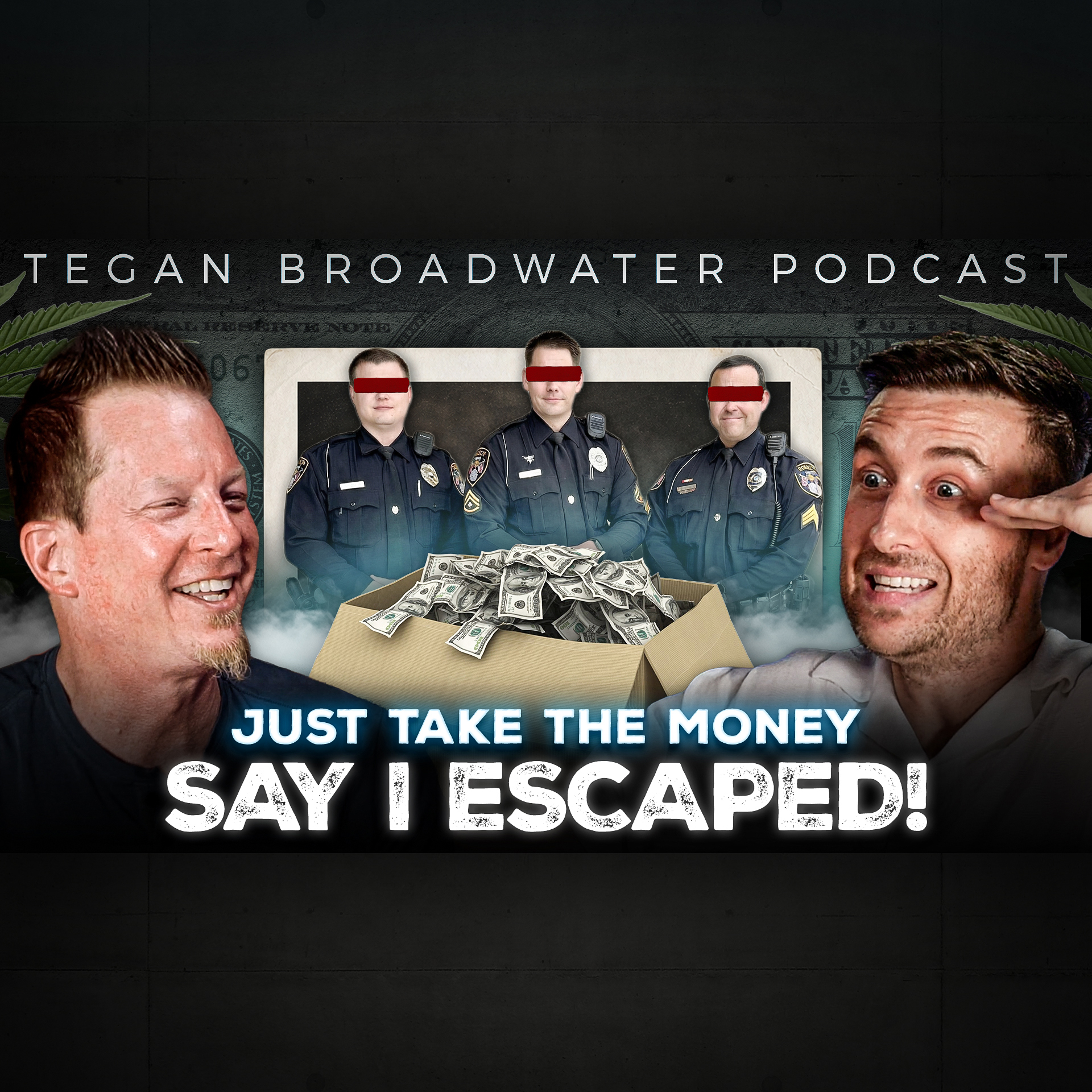
[00:59:15] Speaker B: I'm trying to lie. I'm trying to lie my way out of it. I'm trying to. I tried to bribe these guys. I'm like, look, we're. We're looking at half a million bucks cash right here. And it's three of them. And they got, they don't have nice Nike dunks on. They got shitty fucking running shoes. These are fucking broken. Portland police. I'm not Looking at feds, I'm like, guys, your sergeant's not even here.
Take the dough, Take the dough. And then just say I got away. Like, I'm not, I'm not. I'm not telling you to. You know what I mean? Just say I slipped you.
[00:59:47] Speaker A: You didn't say that, but you were thinking that.
[00:59:49] Speaker B: No, you literally said that like a. And the guy goes. And that.
[00:59:54] Speaker A: It.
[00:59:54] Speaker B: Dude. It pissed him off so much.
[00:59:57] Speaker A: Yeah.
[00:59:58] Speaker B: And I'm like, you Boy Scouts, dude? Yeah.
[01:00:00] Speaker A: Why can't we be in Boston?
[01:00:01] Speaker B: Yeah. This is exactly.
If we were in Providence, Rhode island, you'd have a fishing boat already.
Dorks. So, yeah. You're doing so all this stuff. And, you know, I didn't know how much time I was facing. And. And I'm like, oh, my parents, you know. You know, I was like, how am I gonna explain this to the family? That was like a really big thing for me because I was like, you know, I just, I felt bad. Letting everybody down feels bad.
[01:00:28] Speaker A: Yeah.
[01:00:28] Speaker B: So that's. But that's a good thing because that means you're not going to do it again.
[01:00:33] Speaker A: Right? You have a conscience.
[01:00:35] Speaker B: Not just a conscience. You have a social contract. Like if you're from the hood or if you're from a Mexican drug trafficking family and you get locked up, you feel bad, but it's normal. So the family, there's no shame with it.
You're from a background like me. It's like your father's a lawyer. He's embarrassed because his tennis buddies, he's got to tell them what happened. And. And they were great. The whole community was like, stood behind me. But it's like, you can't go back to it after that because then it's just, you can have all these people turn their back on you.
[01:01:06] Speaker A: Right.
[01:01:06] Speaker B: If you get caught.
[01:01:07] Speaker A: Humiliating and.
[01:01:08] Speaker B: Exactly, exactly. So that's the, that's the, that's the good and the bad part. You know, if you're from. If you're from the hood, unfortunately it's. Or fortunately, if you feel like you want to be a career criminal, you don't have to worry about the stigma.
[01:01:24] Speaker A: Yeah.
[01:01:24] Speaker B: Because this is a normal part of.
[01:01:26] Speaker A: Well, and it's almost a badge too. You come back out, you got a little cred.
[01:01:31] Speaker B: Oh, and you didn't open your mouth, like.
[01:01:33] Speaker A: Right.
[01:01:33] Speaker B: And everybody. While I was down, everybody in the system, because it was very rare that somebody. I was in the state, so it was very rare that somebody at my level of drug trafficking would have been in state prison.
[01:01:47] Speaker A: Yeah.
[01:01:47] Speaker B: But Everybody looked at what I was in for and then the time I had and they were like, oh, you're going back to this shit.
They said you're going to do your time standing on your head. You're going to go right back to this shit. My counselor said that because it wasn't
[01:02:01] Speaker A: a stiff enough penalty.
[01:02:02] Speaker B: Exactly. Oh, exactly. But I was like, this is plenty of time.
I've learned.
[01:02:07] Speaker A: Yeah.
So is there anything that you. Without going through the entire prison experience now, too, is there anything that you learned besides the. The what you're supposed to learn in prison, which many people still don't learn? Is there anything that. That changed you materially in prison, that, that you felt like you came out more sharp?
[01:02:27] Speaker B: I still pee sitting down.
I still pee sitting down. I haven't changed. And I wipe my ass sitting down. I don't stand up. That's. And I sleep with a shirt over my eyes.
It's like it was my Vietnam, you know, like that. That all these years later, I still do that.
[01:02:48] Speaker A: What is the shirt? That's just because it was lit.
[01:02:50] Speaker B: Yeah.
[01:02:50] Speaker A: You didn't have it.
[01:02:51] Speaker B: You're in the county jail. It was mostly a county jail thing because when you're in a prison proper, the lights, most of the lights are off in the cell. But when you're under lights like these, trying to sleep all day long.
[01:03:03] Speaker A: Fluorescent. Yeah.
[01:03:04] Speaker B: I mean, you talk about torture, so that's where that comes from. Everybody rolls their shirt up. You look like a, you know, prisoner of war or something. Looks like deer hunter, you know, shirt wrapped around your. Your eyes.
But I think just like the, I think like the bully mentality, you really see that in prison.
Like the, the predatory nature of.
Of criminals and, and. But also just people in that environment, you really can't give an inch, especially when you're not a gang member.
Like, you kind of have to just. You have to own yourself and you kind of have to be on business all the time when you're an outsider, you know what I'm saying?
[01:03:50] Speaker A: Like a non gang member. Yeah. Outsider, you mean?
[01:03:53] Speaker B: Yeah, yeah, exactly. Exactly.
[01:03:55] Speaker A: So that was kind of. My other question is, is there such a thing? And you. You did state time, which I didn't realize either. I didn't realize it was state time.
[01:04:02] Speaker B: Yeah.
[01:04:02] Speaker A: It's almost worse though, actually, than.
[01:04:04] Speaker B: Yeah, exactly, exactly.
[01:04:07] Speaker A: Is there such a thing as going into a prison and keeping your head down, doing your time and getting out and just leaving people alone? And that doesn't seem like that's a lot of people talk about how that's not even an option.
[01:04:19] Speaker B: Just depends where you are.
[01:04:20] Speaker A: Okay.
[01:04:21] Speaker B: I think it's, I think it's an option more than it's not. But then again, you know, like, it depends what level you are in. Texas is a very brutal prison system.
So I think high level yards in Texas, probably not high level yards of California.
The feds definitely. It's a place where you can just, you still have to racially segregate yourself.
Like you're not going to be sitting with, you know, a table full of black guys or table full of Pisces. Like that's just a natural segregation that the, the inmates do.
So you might even have to sit with gang members. Like I sat with like white gang members at a table to eat, but I didn't program with them.
[01:05:05] Speaker A: Right. But that's almost not keeping your head down and doing your own thing either. You're kind of still having, it is assimilating like you don't want no trouble. Yeah. But you're also being forced to do accommodate some of the, the way things are. I would say you're in there, right?
[01:05:19] Speaker B: Yeah. But not. I was never going to get a swastika. I was never going to go stab somebody. I was never going to do something that they said I had to do. I'm like, I got better odds being alone and if you attack me, I'll attack back and it's self defense, you know. So again, it's not, you know, you're in, if you're in a violent, uber violent place like USP Victorville, you're probably, you're not going to be able to fly solo. But if you're in USP Victorville, your mind is probably not one to fly solo. Like, those are, those are people that should be in prison.
[01:05:58] Speaker A: That makes sense too, you know. Yeah.
[01:06:00] Speaker B: So in a place like Oregon, it was a maximum security prison, you do have to abide by the racial politics. But then I'm going to go play basketball with and guess who's playing ball. It's not, you know, it's not the white guys. So it's, it's. But you have to get a lot of fights. You do have to fight to stay on the main line, which I kind of think is cool.
[01:06:23] Speaker A: But doesn't that add time or is it. Do you have.
[01:06:26] Speaker B: No, if it's just ones, it's not going to add any time.
[01:06:28] Speaker A: They don't usually prosecute for stuff that.
[01:06:30] Speaker B: No, no, no. Not for fist fights and, you know, beat downs. If it doesn't like really Maim somebody. They're not in Oregon anyways. I don't know, maybe if you're in, like, Wyoming, but.
[01:06:42] Speaker A: And you had opportunities to. You've had a couple cellies, and one of which kind of took you under their wing. Slash also manipulated you a little bit.
[01:06:51] Speaker B: Sounds like me. Jimmy was a Hell's Angels biker, and he really, like, ran that yard that I was on. He really had the keys to it. Even though he was past his prime and. And losing some of his power, he actually ended up.
Somebody ended up challenging him with a knife, and he.
He rocked the guy in the face. And I don't know if he snapped the dude's neck or if the dude fell on the concrete, but he killed him.
[01:07:21] Speaker A: Really?
[01:07:21] Speaker B: Yeah. And this was a week after I got shipped out of that prison and said to a minimum security. That happened. Yeah.
[01:07:29] Speaker A: Wow.
[01:07:29] Speaker B: So I actually gave him a character reference to his lawyer because they were trying to give him the death penalty and all this crazy. It didn't work. But. But yeah, so. So Jimmy was.
But Jimmy, like, he had the balloons, he had the guards on, you know, a few of them in his pocket because this is out in a redneck area. So the white guys are going to have more power out there because that's who's working in the prisons.
So.
So yeah. And, you know, he had me doing little things, which is. I look back on it now, and I'm like, it's crazy that I did that, but, you know, I was just trying to, like, get by. And there's certain privileges.
There are certain privileges to being with a guy like that. Like, our cell looked like a 7 11. We had just fucking snacks and soups and Jordan shoes and. And all the coffee we wanted, you know, and it gets expensive in prison. So it was like.
But he really, like, he really looked after me. Like, he really told, like, the white guys that wanted to press me for not playing politics, like, leave this kid alone.
[01:08:35] Speaker A: Yeah.
[01:08:35] Speaker B: And.
Yeah, because I guess he saw.
He saw something in me. And I. And I was. I was writing screenplays in there, and I was. I was doing comedy, and I was. I was trying to figure out. I was like, jimmy, this sounds crazy. I know you've been locked up since 1989, but I want to go to Hollywood and I want to get in the movie business. And he loved it. It. Like, he didn't. Like, that's an og. Like somebody who's not, like, encouraging me to do cry like that. That was a guy that was like, you should do it. Absolutely. Do It.
[01:09:07] Speaker A: You can almost live vicariously.
[01:09:08] Speaker B: Yeah.
[01:09:09] Speaker A: Somebody that you can kind of mention.
[01:09:11] Speaker B: That's a real one. So.
So forever indebted to him for that.
[01:09:17] Speaker A: What do you think needs to change? Is there any kind of. I mean, obviously there's a ton of issues with the way prison systems are run. I mean, most of the ones in Texas don't even have air conditioning.
[01:09:28] Speaker B: I know. It's a human rights violation, dude.
[01:09:33] Speaker A: It should be actual. I mean, you're not sending someone to prison to be tortured, Right? So. But in some cases, you add all this, even just the racial segregation and the way you go in and come out, do you think that's going to help society when these people come out and spend 15 years segregated like that and then learning how to hate? I mean, it's a mess. What can we do?
[01:09:56] Speaker B: Unfortunately, it seems like the pendulum is swinging back to this.
This really low iq, like, tough on crime culture.
Which, by the way, it's no coincidence. It's happening at the same time that we create violence overseas.
Which is true. The more that you normalize violence overseas, the more you're going to have it in your own society.
So, you know, and people are celebrating like, oh, hey, look at. They worked in El Salvador, okay? Fucking El Salvador is a village with the GDP of like, what I have, what I paid for for lunch. You know what I mean? Like, if you want to have an American society based off the principles of, like, liberty in the Constitution, if you don't, like, maybe, maybe America's just headed for something that looks more like a monarchy, you know what I mean? Like, I, I don't with that at all. No, I don't with that, bro. I'm like, I believe, like, the punishment has to fit the crime.
If you want to live in Asia where you get, you know, drug traffickers are. Are get their heads cut off. Does that. Does the punishment fit the crime? No, but. But it does.
There's a lot less curbs it for sure, but.
[01:11:16] Speaker A: But it's not humane either.
[01:11:18] Speaker B: And think about in times of. Do they have free speech? No, they don't. Right? So it's not just. It's not just crime that the government cracks down on. It's liberty, you stupid. Like, what did Thomas Jefferson say? Like, I would rather. Whatever. I'm going to butcher the quote. He would give up liberty for security. Deserves neither.
I totally agree with it. Like, you should want some crime.
You know why? Because it means you're not being spied on and the government's not torturing and imprisoning people at every single turn. You don't live in China. You should want some crime. You should want an imperfect society. But anyways, to address your point, like, you also don't want to, you know, an overcrowded prison system with inmates killing each other.
[01:12:09] Speaker A: And.
[01:12:09] Speaker B: And you also don't want, you know, what we see happening in many cities around, around the country. So. But I think it's got to continue to get worse before it gets better.
The government's going to continue, you know, we're at the last stage of whatever turn in history we're at.
So.
So, yeah, there's gotta be a whole political revolution.
I have no good answers for you. It basically has to be the centralization of the government has to break, and the states and the communities will have to start reorienting the way that they conduct themselves.
And basically it has to be, we can't spend as much money anymore, so we have to be smart about what we do. We have to say, okay, we need to invest more in education so our prison systems are not full.
[01:13:09] Speaker A: Right.
[01:13:10] Speaker B: You know what I'm saying? We have to take away the incentives for prison to be full. Right.
[01:13:14] Speaker A: That's part of the problem. I said, yeah, when you start allocating money or saying you need to save money or whatever or get rid of the fraud would be great too. But I also think it's the lowest priority on anyone's list because you say, where do we need to spend more? And someone brings up the prison system, they're like, you know, f that. I mean, what's. What good is helping the prison system? It's fine. You get into prison, you deserve it, whatever.
[01:13:37] Speaker B: Well, we'll give more money.
Yeah, spend more money on prisons, Put more people behind them, behind the wall, and then give the contracts to the governor's friend. Right, right. Like that's the problem. So the. Things will start to change when the dollar is no longer the world's reserve currency. That's coming, and it's coming, and I hope it comes in my lifetime, because that will mean that a government who actually has to be fiscally responsible, you're going to hopefully eliminate a lot of the corruption, and then you do what is fiscally sound. So if you listen to, like bitcoiners, that's what they all say, or gold bugs, when the money is fixed, it will just incentivize better behavior, and then you'll have less crime. You know what I mean? So.
So to me, that's.
[01:14:30] Speaker A: Or tackle it more efficiently at the very least.
[01:14:33] Speaker B: Right, exactly, exactly. So so yeah, dude, I think that's, that's a tall order. So I think it really.
[01:14:41] Speaker A: Yeah, it's a tall order.
Yeah. Especially with the divide that you talked about earlier. I mean, because that's where a lot of this fraud comes into place.
You eliminate that middle class, then you have more, fewer people controlling more of what these issues are compounded by that. Right. Because they're not going to vote themselves out of those contracts.
[01:15:04] Speaker B: No, exactly.
[01:15:06] Speaker A: So you're talking about, you know, revolutionizing something here almost.
[01:15:10] Speaker B: And it won't, I don't think it'll be sectarian violence. I think in America it will have to be, oh, we are dollars, not worth. We have to lay ourselves off. The way the Soviet Union just dissolved. Not because we beat the militarily. They were broke and they just put up their hand and said we can't.
[01:15:31] Speaker A: Yeah.
[01:15:32] Speaker B: And it could take a politician to do that. Maybe finally get somebody in who the promise of MAGA and America first and, and that fraud from Vivek who was like, I want to cut out 75% of the federal government. I was like, yeah, that's what's up now. Of course it was all a lie. Right. But somebody to actually do that, that's the step in the right direction. Right. It's reducing. The government is parasitic.
Maybe you need some of it. But it's a cancer. And its whole reason for being is to grow and grow and grow and grow.
[01:16:12] Speaker A: Feeding itself the wealth of the people that are donating in order to get them in place the first place. And then it's.
[01:16:20] Speaker B: And they take your money through printing, stealing your money through the inflation tax. Nobody voted for this, nobody voted to go to Iran.
And so why does a 20 year old black kid in LA put a mask on and go with a mob of kids? Well, a. Because it's fun.
There's no consequences.
[01:16:40] Speaker A: Yeah. You're not gonna get shot probably because nobody's carrying. You're not gonna get arrested.
[01:16:45] Speaker B: Exactly. So. But why does he do that? Because. Why? Because it's a quick lick. It's short term thinking.
So our society is infected with short term thinking because we know our money is like an ice cube on a stove. You know what I mean?
[01:17:02] Speaker A: Yeah.
[01:17:03] Speaker B: So that's, that's that kind of when there's more hope, when the money lasts and you're able.
It'll take generations, but people will start thinking more long term, like the Chinese do.
[01:17:16] Speaker A: Well, unfortunately, that's the example I would use is that, you know, because we're all not only not Long term thinking. But you have most of the voter populace worried about how this one particular tax is going to affect their household and the rest of the country be damned.
[01:17:32] Speaker B: With the boomers, oh, hey, ding, ding, ding. We finally got to it. A whole generation has to die. Not go away, not go to Palm Springs, not go to Boca. They literally have to cease.
That will be a huge step in the right direction. And look, I've said this before on podcasts.
My parents are boomers.
I include them in it.
I love you guys, but you could be on the front lines of this trend of boomers dying.
[01:18:00] Speaker A: And that's an interesting take. I still think most of the voters are uneducated. I think the mass populace of voters are undereducated about what they're actually voting for. And so when somebody leveraging AI now can speak to your need specifically for an AI for a particular candidate, then you'll go and vote for them because of your one need that gets fulfilled without looking at a bigger picture about what's the consequence of that one need being filled. Nobody looks at that. There's not enough educated voters to actually look at it. Or the ones that try to be educated also can't get the damn truth from any of the people that are right talking about what they're going to do that nobody's believable now.
[01:18:42] Speaker B: But the only people who believe the government are the Fox News, you know, South Florida people, really. And a little bit of the MSNBC to, you know, the West Coast. I'll call them my parents generation. They're, they're like they are to MAGA in South Florida. What Rachel Maddow and you know, yeah, Bill Clinton are to the Democrats. Right?
[01:19:05] Speaker A: Yep.
[01:19:05] Speaker B: It's, they're, they're just simply irrelevant. But they're the ones with all the money and they're the ones who vote.
So all they have to do, the politician just has to tell you as the voter with the money what you want to hear and they'll just keep getting elected. So, you know, so once that that's all gone, that will, that will leave room.
It's. The whole thing's got to burn down. Basically. 90% of it's got to burn down, literally or figuratively, and it will be revolution rebuilt.
[01:19:36] Speaker A: I do feel we get attacked.
[01:19:39] Speaker B: I don't think we'll get attacked.
[01:19:41] Speaker A: It's not likely. But back to maybe something you might have some insight on putting the terrorist label on the cartels and pretending we're going to go to war with cartels who we've even talked about who already are inside the United States, let alone the fact that they exist on the border.
And we pretend like this is going to be some kind of easily winnable thing, as we did in Vietnam, as we're doing with Iran.
[01:20:09] Speaker B: Right.
[01:20:09] Speaker A: That's bigger than the, the whole of Europe.
[01:20:13] Speaker B: Yeah.
[01:20:13] Speaker A: And then you just think this is going to be an easy trod. So that could be an avenue.
[01:20:18] Speaker B: Ed Calderon, who I just had back on my podcast, good friend of mine used to be a Tijuana federal cop.
He is super tuned in with what's going on.
He does think, and I kind of agree with him, if we can avoid this protracted war in Iran, I do think, and I would have not even told you this six months ago, I do think we are going to turn because we can't win on the world stage anymore. We've kind of proven that we can't even protect the Arab countries.
I think we're going to turn the ferocity of the US Military onto this hemisphere.
And he thinks you'll see us
[01:21:01] Speaker A: working
[01:21:01] Speaker B: in conjunction with the Mexican government. You're going to see us incursions into Mexico to pacify some of these regions. It's still not going to cut out drug trafficking at all, though. I just want to point that out because you're right, of course. There's a kid who grew up in Dallas whose first language is English as much as is Spanish. He's the one who's overseeing the drug trafficking for his dad who's living in the mountains in Mexico. But he's, you know, they own businesses. They probably own some high rises somewhere like that. It's already, that's already done. It's already woven into the fabric of society. If I can send it. I just told you I shipped thousands of pounds of weed through the mail.
[01:21:44] Speaker A: Yeah.
[01:21:44] Speaker B: And just kind of winging it.
[01:21:46] Speaker A: Right.
[01:21:46] Speaker B: Figuring you don't think they're going to figure out a way to get drug. Of course.
[01:21:50] Speaker A: Right. And launching a bomb across the border isn't going to necessarily fix that whole issue. And if you get some retaliation, that's where you might be able to get. My point is, without necessarily a full scale war, even that type of retaliation might justify Americans coming together, you know, like what 911 did.
[01:22:12] Speaker B: Right.
[01:22:12] Speaker A: It doesn't necessarily make you rational, but it at least takes opposing views and puts them on the same page for a moment.
[01:22:19] Speaker B: Yeah. God, I hope that doesn't happen, though. So many differences between we, you know, now in 2001. So many differences. Yeah.
[01:22:26] Speaker A: Well, in Earth there's a bigger gap. Right. It's a trench. Yeah, Yeah, I would agree that.
[01:22:31] Speaker B: I do think though, the military, I do think in Mexico, certain, certain areas, they're sick of being controlled by organized crime. Now many people in, in the most marginalized regions of Mexico benefit from organized crime more than the government, who is. But they're like one of the same practically. Right. So I do think that could. That needs to change. But I'm just telling you right now, the drug routes, they just killed El Mencho, dude. You can get a key in Dallas for like 11 GS, bro. There's more drugs than ever are spilling into the U.S. it's not stopping.
[01:23:12] Speaker A: Yeah. And that's political. And that's the connection between the Mexican crooked government and the US Government backdooring and the cartels running the Mexican government.
[01:23:21] Speaker B: And yeah, there's a couple of white people, there's a. There's some lovely white couples in Dallas that own oil companies that are absolutely. Buying stolen fuel from Mexico connected to the CJNGs. Don't tell me that doesn't happen all the time.
[01:23:35] Speaker A: Yeah, that's bizarre. You talked about that. I heard about that too. That's going to get bigger too.
[01:23:40] Speaker B: Totally. Especially now.
[01:23:42] Speaker A: Yeah, now for sure.
[01:23:44] Speaker B: I was just thinking that with, with oil being over $100 a barrel, you don't think in Houston, the downtown Houston financial district, there's not some guy who still wears a cowboy hat with his suit to work, who knows a couple of really well spoken Mexican guys in Guadalajara that are just perfectly clean dudes that aren't connected to the CJNG that say, hey, we'll just mislabel this fuel coming over. No big deal. Right. To avoid the tax or even further, it's stolen, it's going to ramp up, and there's way more money in that than drugs. Just want to point that out.
[01:24:25] Speaker A: Interesting.
[01:24:26] Speaker B: Yeah.
[01:24:27] Speaker A: But it's just going to exacerbate the problem that we're in. And they're in.
[01:24:30] Speaker B: I agree.
[01:24:31] Speaker A: So who knows?
[01:24:32] Speaker B: Oh, you thought I had a solution.
[01:24:33] Speaker A: We haven't solved anything here.
[01:24:35] Speaker B: Oh, you thought this was a solution?
[01:24:37] Speaker A: Scared the crap out of everybody. Everybody here.
Okay. So I'm also fascinated with your comedic plight. And, and I, and I definitely want to get into the show and when. Where you're going with this too, but I'm kind of an introvert. I've battled that all my life. My son is a serial introvert and just has all these cool ideas. Super smart, loves comedy, loves writing comedy stuff. But, you know, would Never show it to anyone, you know, and it's.
[01:25:06] Speaker B: Those are some of the best comedians, though.
[01:25:08] Speaker A: I know. So that's almost one of his fast. And he got me into. I'm into comedy. I know you say you like Mitch Hedberg and guys like that love stuff like that.
[01:25:17] Speaker B: Yeah.
[01:25:18] Speaker A: That you almost can't emulate. No, it's a guy that's. Delivery is everything.
[01:25:21] Speaker B: Yeah.
[01:25:22] Speaker A: But I'm fascinated with just the sheer balls of just the first time, just getting up and trying stuff that, you know, may or may not make it. And you're. You're honing your craft by humiliating yourself almost. Do you see it that way?
[01:25:36] Speaker B: It's sickening. Absolutely. As I now, because I'm such a. I really am a veteran, you know, I've been doing it over 10 years. That's kind of like the benchmark of, wow. Oh, you're really a comedian. You've been doing this over 10 years.
12 years now.
Yeah. I look at it, I almost enjoy it.
I still. When I'm bombing, doing new shit. Yeah, I almost enjoy it.
Not if it keeps bombing. That's a problem.
But, you know, you do. You do your act and you get it so finely tuned and you just kind of get used to killing. Especially if you do it long enough, like. And you survive it, killing kind of becomes easy.
Like stretching yourself, doing new shit. Bombing. Yeah. It's something new.
And even though, you know, you start sweating and. And you get a little panicked. If you can break through that, if you can just live in it. Like learning to live in the silence, man, it's a powerful thing because if you can stand up in front of like, I try my. Out at the Creek in the Cave. That's the name of the club in Austin.
And I'll go up on like the Saturday night late shows where everybody's drunk. It doesn't matter. It's not like the 8pm on a Friday where it's like couples are there.
You know, it's. You kind of got to do well because they're paying to see entertainment. These are just goblins in the crowd.
[01:27:03] Speaker A: And you're sort of rehearsing, essentially.
[01:27:06] Speaker B: Exactly.
[01:27:06] Speaker A: You're trying out your material.
[01:27:07] Speaker B: It's the. That is the comedian's version of. Of.
Of rehearsing.
[01:27:12] Speaker A: Right.
[01:27:13] Speaker B: So I'm up there and the power of a comedian to be able to just sit in silence where 200 people, these wolves just. Yeah, fail, fail, fail. And you're failing, but you're not letting it get to you. There is no bombing at that Point you've just won.
So I. I find that interesting, and there's something really compelling about that. Now, I don't want to do it all the time. I obviously want to.
My. My ego and my.
The comedian in me that wants to please wants to kill all the time, of course. But the people who kill all the time don't last. And I've been around long enough to where I've seen it, to where it's like, oh, something really had to change in your life to force you to start bombing so you could evolve as a comedian.
[01:27:59] Speaker A: Right.
[01:28:00] Speaker B: But, you know, a lot of people just can't hack it. So almost.
[01:28:05] Speaker A: I mean, like I said, it seems like an incredible feat. And just holding that failure, do you have to frame it differently? Do you feel like, okay, well, I'm failing, but I'm holding the stare of all these bastards that are booing or not laughing or whatever. Do you. Do you. How does that turn into a victory in your mind? What are you framing that as?
[01:28:25] Speaker B: Well, the victory is climbing out of it actually on, like, actually getting them back. Like, figuring out, staying in it.
Because I don't write jokes word for word anymore. I just come up with the premise. Like, when I'm trying new shit, I just have one funny thought.
[01:28:42] Speaker A: A bullet.
[01:28:43] Speaker B: Exactly.
[01:28:43] Speaker A: A bullet.
[01:28:44] Speaker B: And then, so the.
So the.
The excitement is actually finding the funny after it's shot and miss, shot and miss. Boom. And hits the target. The best sets for me are not the clean killing end to end. It's winning the crowd back. And by the end, you fucking got them and you're killing.
It's like defeating them.
[01:29:06] Speaker A: And that's also ironic because I usually, you know, when you talk to people about going up and speaking on stages or whatever, to whatever civilian version of being a comic would be most.
And maybe it's just my introversion, but I'm mortified for you when you go up there. I, like, do not want you to fail.
[01:29:26] Speaker B: But I'm nervous when I'm in the crowd. I'm the same way. I want people to do well. Yeah.
[01:29:31] Speaker A: And that's kind of a good thought to hold if you, you know, just need the gumption to go up and do it. Just know, hey, there are people out there that are mentally wanting to laugh really bad.
[01:29:41] Speaker B: Right, Exactly.
[01:29:42] Speaker A: Give you a few concessions here.
[01:29:43] Speaker B: Exactly. And I. And I have to remind myself of that, you know, is like, yeah, they want to laugh. So the job is hard, but it's also very easy. Your job is only to.
It's an exercise in release of emotion. That's it. You don't have to be political. You don't have to, you know, in fact, I don't really like a lot of political humor. Some of it is incredible. But.
And unfortunately now you kind of have to be in these times we live in as a comedian. But I love.
[01:30:15] Speaker A: Yeah, because aren't you still losing an audience a lot of ways?
[01:30:19] Speaker B: But if I go up on stage and we just started bombing Iran, I gotta say something about that. Or Trump just appeared.
Say I'm doing a show in. What's Trump country. What's the most Trump city in Texas, do you think?
[01:30:35] Speaker A: Oh, shoot, I don't know. You got an idea. Like, like not Austin, but I know Austin.
[01:30:42] Speaker B: Like we'll say Dallas, you know.
Yeah, yeah, whatever. Just, just like if I'm going up in front of like 55 year old people that go to Walmart. Okay.
Who really love Trump, you know, these are, these are fucking retards. Let's just be honest.
And, and Trump was just in the Epstein files.
You're getting political in a way. You know what I mean? Even if you're not picking a side, you still, it would be weird to not bring that up if I have a. You know what I'm saying?
[01:31:16] Speaker A: Yeah.
[01:31:16] Speaker B: Because it's not everybody's mind. We've all been looking at the same news. And now I'm going up on stage, like, to me that's comedy should be like a singular experience. Even though you have your act.
Right. You have your. When I go on headlining, I have my 45 to 50 minutes of like written, rehearsed, polished material.
15 to 20 of that is. We're going to be talking about events of the day. We're going to be talking to the crowd. We're going to be, you know, it should be like, it's one singular. You're here in Dallas in 2026 and this is.
[01:31:52] Speaker A: Yeah.
[01:31:52] Speaker B: It helps to feel natural for you. Exactly, exactly.
[01:31:55] Speaker A: And then. So you, you don't necessarily feel like you lose a lot of the crowd either because of perhaps the licensure that you have as a comedian, which I think should remain sacred, by the way.
[01:32:05] Speaker B: Yes.
[01:32:06] Speaker A: A lot of people that are pushing that.
[01:32:08] Speaker B: Yeah.
[01:32:08] Speaker A: And putting that on the table as a, as a chopping block item, which again, this is the whole thing. It's just.
[01:32:14] Speaker B: Yeah.
[01:32:15] Speaker A: Saying the stuff out loud. You're too, I mean, half the time that's all you're laughing at. You're like, I can't believe you said that out loud.
[01:32:20] Speaker B: Exactly. That's the whole point. Why else would.
[01:32:22] Speaker A: Right.
[01:32:22] Speaker B: What else makes it funny? If you could just say this at the water cooler. What the fuck is this? Why do we even have this art form? But a lot of comedians now do dig into a side because it's what feeds the Internet.
So, so, so there's, there's conservative right wing comedians who just do that brand of humor and they found an audience because the algorithm just feeds people what they want to see.
And so now they go out on the road and they sell tickets to people that all think like that, agree with them politically and think like them.
And that's cool, but you don't.
It makes you soft as a comedian
[01:33:03] Speaker A: though, because you're not being challenged anymore.
[01:33:05] Speaker B: Exactly, exactly, exactly. So the best comedians are like, I look at Louis ck, who was an inspiration.
I look at, I look at guys like Anthony Jeselnik, guys who, who know how to, who, who know how to balance it, who know how to toe the line, who know how to give their opinion even, but without alienating another side. You know what I mean?
[01:33:34] Speaker A: Yeah.
[01:33:35] Speaker B: Because it all just serves the punchline, that's all. It's just the laugh.
[01:33:39] Speaker A: I almost think that's the only medium you could do that in because you almost. It's so difficult. I even avoid it like the plague. I write a lot and I'm, you know, turn in articles every week and I'm just. I avoid sounding like I'm taken aside at all because I'm trying to look at a deeper issue. But it would be easier for me to demonstrate it if I could just say, look at this. This is complete bullshit. Now let me explain why this is easier to go deeper.
[01:34:05] Speaker B: Right.
[01:34:05] Speaker A: But as a comedian, I can see where that's a little easier to, to be able to take a couple shots and run, still survive that, but without having a yes man. I think that's appreciable, man.
What part of that life are you taking forward now that you've. I've heard you mention that you're thinking about. I don't know if you're going to retire necessarily, but doing something with the show, you've been doing it for a long time.
[01:34:29] Speaker B: Yeah.
[01:34:30] Speaker A: I think a lot of your life and my life have the common thread is that I get into something, I'm super myopic, everything else goes away, I dump everything into it until I'm completely exhausted. And when I'm exhausted, I want to go do that. And then this just gets tossed. Right.
My question to you is not just what you're going to do. But you've leveraged smartly a lot of your experiences through your life, which is another thing that I've done too. But I try to become something new.
What do you think your identity is at this point? And is your new endeavor going to involve.
I know it'll be creative, but is it? Who are you when you step out of the connect? Because right now that's kind of who you are, right?
[01:35:14] Speaker B: I know. I know it's. And I didn't plan on this, you know, I just did it because I thought it was something that could work, you know, and it did, thank God. Because, you know, nothing had really worked for me in show business at that point. So you kind of just got to give what the game gives you, right? Kind of in life, but especially in the media space, you. If you hit something, man, you gotta just milk it. And not that I don't love doing the show. I. I do.
But I do feel like probably we're entering a transitional phase pretty soon to where that could be me doing more journalistic content. It could just be me doing less interviews. I don't know what it's gonna look like, but I do feel like we travel a lot too, for our shows. Like, I was just down in the Dominican Republic because these are where a lot of these kingpins who I interview, a lot of them are deported.
I'm going down to Panama next month. This guy can't get back in the country, but his story is so good. I'm, like, addicted to chasing it.
So I feel like that's going to be cost prohibitive because everything's going up. We're heading into, like a mass before the deflation will be a mass inflation on everything. So I feel like that will cause it to just change. But who I am is a comedian.
I'm kind of taking this year off of standup to just focus on the Kinect and just really make it as tight as it can be. And I have dreams about doing standup and I forget all my material. They're nightmares. I'm in front of a whole theater of people and I go out there, everybody's cheering for me, and then I can't get the words out.
[01:36:54] Speaker A: And they didn't realize you just did your routine in tighty whities. I didn't do that exactly.
[01:36:58] Speaker B: Yeah. And it's. It kind of feels like that. And so that's where I'm like, yeah, I have to figure out, even if I continue doing this show, it'll probably be like a spin off into something comedic. It could also be political. It could also be news related. Like the Kinect might turn into like the Kinect interviewing these people in the Zeitgeist. Like the Chinese professor, like you know, somebody that Tucker Carlson would have on his show. Like not yes, political but more like current events.
[01:37:35] Speaker A: So it's like skill adjacent still to what you're doing.
[01:37:40] Speaker B: Exactly.
[01:37:40] Speaker A: Averaging the audience. You have to try to, I mean you take a Tom Bilyeu or something that had right successful show and then he just took a sharp left because he decided he wanted to do something else.
[01:37:51] Speaker B: Yeah.
[01:37:51] Speaker A: You're going to get criticism, but you're doing your thing.
[01:37:53] Speaker B: Exactly, exactly. It's just about jumping in and accepting it for whatever, whatever comes. Because when you, you have an audience and they know you for this thing and you, you make a left man, they're gonna hate, they hate that. People hate it. I, I'm the same way. I'm like, when I see a comedian who's doing political now, I'm like, oh, this. What the is he doing? But I'm like, wait a minute, that's. That's me just being a hater. Like that's just, it's natural. Or your favorite artist when they go off and do some other shit.
[01:38:25] Speaker A: Yeah.
[01:38:25] Speaker B: You know, let them grow. Yeah.
[01:38:27] Speaker A: If they're growing in a different direction than you, like just exactly at it.
[01:38:30] Speaker B: Exactly.
[01:38:30] Speaker A: Well, I was super curious because you, I, you know, I would support anything you do. I'm. Thanks, brother. I appreciate. And there's a lot to having the skill set that you have. So I think no matter what you do, it'll be successful. But I think it's a, it's a big. I think you have a brand more than you think that is attached specifically to the Connect because of the, I mean, look at the.
I mean, I'm asking you about cartel stuff that you wouldn't have known even dealing with people affiliated when you were a dealer.
[01:38:59] Speaker B: Right.
[01:38:59] Speaker A: Because what you've learned now, you've become more of an authority based on the experience you had. You've taken yourself to here. The comedic thing gives you a key to a lot of different things.
[01:39:08] Speaker B: Totally.
[01:39:08] Speaker A: So I think you kind of are sort of your own brand. You could do whatever the hell you want and you would take a lot of that audience with you. I'd come with you.
[01:39:15] Speaker B: Thanks, man. Well, we gotta, we gotta have you back. You know, we got to figure out a way to have you back on the Connect.
It's been, it's changed my life for sure. I mean, it's.
Yeah, it's. It was an unexpected. It, it kind of saved my life in many ways. It saved my life in show business.
And it's pretty wild because now something is as successful as I was in the drug game because that was my whole mentality was like, I could never let it go.
Even when I got out of prison. I was very, very typical. Bitter, depressed, down on yourself.
And I was like, I gotta make this up to myself. And it took 10 years, but I'm glad it took that long. I'm glad for the struggle and because I learned so much and it led me to comedy, which led me to this.
And it, you know, I finally now make as much money as I did when I was, you know, moving 50 pounds a week as a cartel, you know, so.
Well, wait, not that much money. We're close, you know, that's okay.
[01:40:22] Speaker A: You don't have, you don't have to change your time in exchange your time for this.
[01:40:26] Speaker B: And when you look at a long term, I'm going to make way more because now I've developed the long term mindset where it's like, I can just buy bitcoin and wait. Like, I'm okay with waiting.
But when you're 24 and you're making that kind of money, you're like, I'm going to be old in a few years.
And it's that kind of.
That's just the youth, though, that will never change. The youth is wasted on the young.
That will forever be.
That will forever be a truism. It doesn't matter how good you make your society, young people will always be dumbasses.
[01:40:58] Speaker A: That is true.
And it's fortunate that the part of you that came out that you were able to persevere and spend time building a business like you did too, because of the experience you had flash panning your way up to making a million bucks.
[01:41:13] Speaker B: Right, right.
[01:41:14] Speaker A: I mean, you think that that mindset, if you couldn't get that mindset out, you'd end up right back where you started.
[01:41:20] Speaker B: Totally. Totally. And I don't understand, you know, I talk to kingpins often and when I say kingpins, I mean, like, they were really making like, I'm talking a million, $2 million a day in the 1980s, right. In New York selling coke and shit.
And they get out of that life and then they just kind of fall flat.
And so I'm like, I never wanted to and show businesses the same way. Right.
It's all about can you evolve?
That's the trick. Is the get back. Can you get. Get back?
[01:41:54] Speaker A: Well, and the evolution is only in your mind and soul, though, you know, because that's where they get stuck. They're like, I have this story that cannot be surpassed.
So what's the point of doing some little business where I buy a coffee shop and hire my family and it's a success, and that's how I live my life. I can't go on a show and talk about that. But you actually could, right? You know, but a lot of people just dismiss it, and that's.
[01:42:21] Speaker B: But, you know, what they're getting caught up in, I think, which we all do, is identity.
[01:42:26] Speaker A: Right?
[01:42:27] Speaker B: Like, oh, I am this thing when, you know, you're not.
[01:42:30] Speaker A: Well, that's why I asked you, I said, how do you. What is your identity? Moving out of the connect. How do you see yourself? Because you've. You've moved through these morphs.
[01:42:40] Speaker B: But it. I've learned to let go of that. Like, just because I am a comedian, it doesn't mean I'm not other things.
[01:42:48] Speaker A: Right?
[01:42:48] Speaker B: It doesn't mean I'm not other things. And so I've. Because of this show, it's forced me. One of the hardest parts has been, like, being away from comedy and not being a traditional comedian who just. That's all they do. They give their whole life to it. They're.
They're every waking moment is how to be funny.
It was tough for me to get away from that, but now I see that this is. This is who I am. I'm just, you know, I get obsessed with one thing, and then I'll go to the next thing. And that's kind of. I think that's how life is meant to be lived.
You know, it's more of a journey, and it's doing what you love, but not letting it be your identity, not caring about that. And so that's kind of where I'm arriving at with comedy. I just. It's what I want to always be doing, but it's not.
I don't have to worry about, like, a title.
[01:43:40] Speaker A: Yeah. I don't know what you're talking about.
Yeah, yeah. I mean, I was a professional musician for 13 years, and I was like, Abbey Road. Yeah. Lived on the road and everything else. And then I have friends who still, you know, play for giant bands and do other stuff all the time. But I had to come to terms with accepting the fact that I don't actually covet riding in a bus around the US I don't actually want to do that. Anymore.
[01:44:06] Speaker B: Right.
[01:44:07] Speaker A: And for the ones that still struggle, I certainly don't want to be struggling. Right. So. And I think it's fortunate that if I need a new piece of gear, I just go get it and I can just have fun. Even if it's. Most of the fun is by myself.
[01:44:19] Speaker B: That's it.
[01:44:20] Speaker A: Who cares?
[01:44:21] Speaker B: You know, Creation.
[01:44:22] Speaker A: Yep.
[01:44:22] Speaker B: And the fact that you can now make. You could do whatever you want with it. You can put it on YouTube, you can. You can put your own music out. I mean, there is a.
The Democrat. The democratization of art and, you know, energy, which is electricity and the Internet.
It's bad for the consumer in a way because you. They have to wade through so much dog to get to what they really want. But for the creator, it's the best time ever.
I really believe that.
[01:44:55] Speaker A: Especially once you find a way to establish a baseline living.
[01:45:00] Speaker B: Yeah.
[01:45:00] Speaker A: Doing something that you appreciate doing, obviously.
[01:45:03] Speaker B: Exactly. Exactly.
[01:45:04] Speaker A: So, yeah, I think you're in a good spot, man. I look forward to what you do next.
[01:45:07] Speaker B: Thanks, bro.
[01:45:08] Speaker A: I do have. Before you go, go, since you already have a. You already have a book.
[01:45:15] Speaker B: Oh, I did write a book. I forgot about that.
[01:45:17] Speaker A: Yeah.
[01:45:18] Speaker B: And by the way, I gotta republish that. I didn't want to republish my book.
[01:45:21] Speaker A: Didn't even know about that, first of all. Or else I would have read it and asked you something about that. But I'm fascinated by that. So, yeah, we've got a. Do you sell it online at least anymore?
[01:45:30] Speaker B: I. I've had people. I have people that hit me up and ask, where can I get it? I have to get it back into print. You know what? I'm going to fucking do that this year. I had like a deal. I published it independently, but I had a, you know, a fulfillment house.
[01:45:43] Speaker A: Yeah.
[01:45:44] Speaker B: And that contract expired. I wrote the book over the pandemic. It's called Days of the Trap. And it's just a fictionalized, thinly fictionalized account of my story.
I'm going to re. Put that back out. So just follow me on Instagram. I am at. I am Johnny Mitchell, you know, the connect on YouTube. And yeah, I'm gonna. I'll put that out. And I gotta get the website back up, so that would be great. But yeah, I am gonna put that back out because you're like the millionth person that's asked me about that. So I am gonna do that. Yeah.
[01:46:13] Speaker A: And just put it online at the very least, because I had a distributor too, but, you know, bookstores went out and some of the major distributors went out, too, and so mine went under, and I was like, yeah, I'm just
[01:46:23] Speaker B: gonna sell it on Amazon, though. Because people want it.
[01:46:25] Speaker A: Exactly.
[01:46:26] Speaker B: They can get it a couple of bucks. It. Why not?
[01:46:28] Speaker A: And if not, it's. Again, it kind of helps support your story. And I know you do some writing and stuff, too, so. Yeah. You got product out there now.
[01:46:35] Speaker B: Hey.
[01:46:36] Speaker A: So. All right, you don't drink, so.
[01:46:38] Speaker B: No, I don't really drink.
[01:46:39] Speaker A: This is still. That's not unfortunate, sir.
[01:46:42] Speaker B: I know. No, but it's fun. Drinking's fun. And it's gay that I suck at it.
[01:46:46] Speaker A: No, no, no, no.
So this is Jyoti Garcia's salsa. I don't know if you've been to Jyoti's yet, but you're in Fort Worth. I don't know where you. Wherever you're going with your bro tonight, that's one of the staples of this city.
[01:46:58] Speaker B: Oh, wow.
[01:46:59] Speaker A: It's. It's just a little bitty Mexican restaurant that started in the 40s and then blew up into this thing where it's about, what, 500 yards long with an outdoor patio.
The food's okay. Salsa's amazing.
[01:47:12] Speaker B: Okay.
[01:47:13] Speaker A: The margaritas are amazing.
[01:47:14] Speaker B: All right, I'm gonna get this. We'll. I'll ask him if we can go here. He's kind of bougie, but I'll. I'm gonna. At least with this at home there's plenty of bougies.
[01:47:23] Speaker A: Yeah, yeah. And the chips. This used to be a client of ours, too. They. Cardona's. Makes their own chips and flour tortillas.
[01:47:30] Speaker B: Chips. Hilarious.
[01:47:31] Speaker A: Those are Fort Worth made, too. You see them labeled Fort Worth, son.
[01:47:35] Speaker B: This is amazing.
[01:47:36] Speaker A: And the bag you get it in is a matte Tedder bag. Matt Tutter's old. What do you call them? Americana, maybe. Artist from here. Anyway. Amazing. There's a bag for you.
[01:47:45] Speaker B: Way better than a bottle of whiskey, dude.
[01:47:48] Speaker A: Well, you won't have a headache from that.
[01:47:49] Speaker B: Exactly. Exactly. Man, this was fun, dude. Yeah, we could make it happen.
[01:47:54] Speaker A: Me too. Anytime you're in town, man, holler. I'll show you around or buy you dinner or whatever. Let me know when you're in town.
[01:48:00] Speaker B: Let's go up some gang members.
[01:48:02] Speaker A: Come on, dude. That sounds fun. Bring the camera.
[01:48:05] Speaker B: I would have been such a dirty. I would have gotten so many write ups if I was a cop. Like, you just can't give a. Like me power, you know? And these fucking kids. I mean. I mean, God bless you because the. We talk about police brutality Now I'm just like doing bits, but for how, How?
Just pieces of shit these fucking young kids are. Cops actually have a lot of restraint, dude.
[01:48:32] Speaker A: Dude, you would have fit right in. Because the stories that I collected around the era when I worked, and this has been a while ago too, was more comedic stuff. Getting away with stuff like that more than ass whoopings.
[01:48:46] Speaker B: Right, right, right.
[01:48:47] Speaker A: You know, to just say, you know, hey, you know, you walk up on a couple of gangster looking dudes that are out in the park and, you know, all of a sudden your partner pipes up and says, we shot a report of a couple guys that were playing with each other with their pants down out here.
You know, stuff like that.
[01:49:02] Speaker B: Like that, dude.
[01:49:02] Speaker A: You know, and then you're just cracking each other up or daring each other to do this or that. You know, it's all in fun, but nobody's getting hurt.
[01:49:08] Speaker B: Hurt, of course, Exactly.
[01:49:09] Speaker A: You thrived.
[01:49:10] Speaker B: That's the best, is when cops let the small slide.
[01:49:15] Speaker A: Yeah.
[01:49:15] Speaker B: And they're, they're just cool cops that are cool criminals that they haven't caught yet.
Dude, it's the best happy medium to be in.
[01:49:24] Speaker A: Yeah, it's maturity, maturity process. Like anything else you get young cops, especially these days, I. I'm afraid for the police now. I mean, because they're lazier.
[01:49:34] Speaker B: Yeah.
[01:49:35] Speaker A: And that's going to cause more problems because it forces you to do more than you need to in order to fix problems and. Right.
Well, I'm glad I have the experience from a long time ago. That's all I got for sure, but. Well, thank you, my friend.
[01:49:48] Speaker B: Hell yeah, brother.
[01:49:48] Speaker A: Talk to you later, man.
[01:49:49] Speaker B: Anytime. Peace out, guys.
[01:49:50] Speaker A: Go get your thing.