Episode Transcript
[00:00:00] Speaker A: Robert Hanson has gone down in history as certainly the most damaging spy in the FBI's entire history, and quite possibly the most damaging spy in U.S. history. But back then, I was 26, 27. His narcissism just wouldn't let him believe that the FBI would pick somebody that, you know, had only been in the Bureau five years to go undercover to catch him. So we had an asset down there in the firing range, and he texts me and says, target is in pocket. And I run over to his bag, and I find the Palm Pilot and a data card and a floppy disk. And I grab all three things, I run down three flights of steps, hand it over a tech team, and as they're downloading it, I get another text, and it says, out of pocket, coming to you. And he's on his way back up, and I'm three floors down on the sixth floor, and, you know, I grabbed the stuff, I ran up to the office, and I get into his office, kneel down in front of his bag, and I realized that I have three devices, and there are four identical pockets. And I was in such a rush, I have no clue which pocket I pulled the things out of. And as I'm trying to try figure it out, I hear him coming through the door. So I just dropped all three things. You know, best guess possible, he comes through my office, glares at me, goes into his office, slams the door, and I hear, of course. Zip. And honestly, I truly thought that now is the time that I die.
With the.
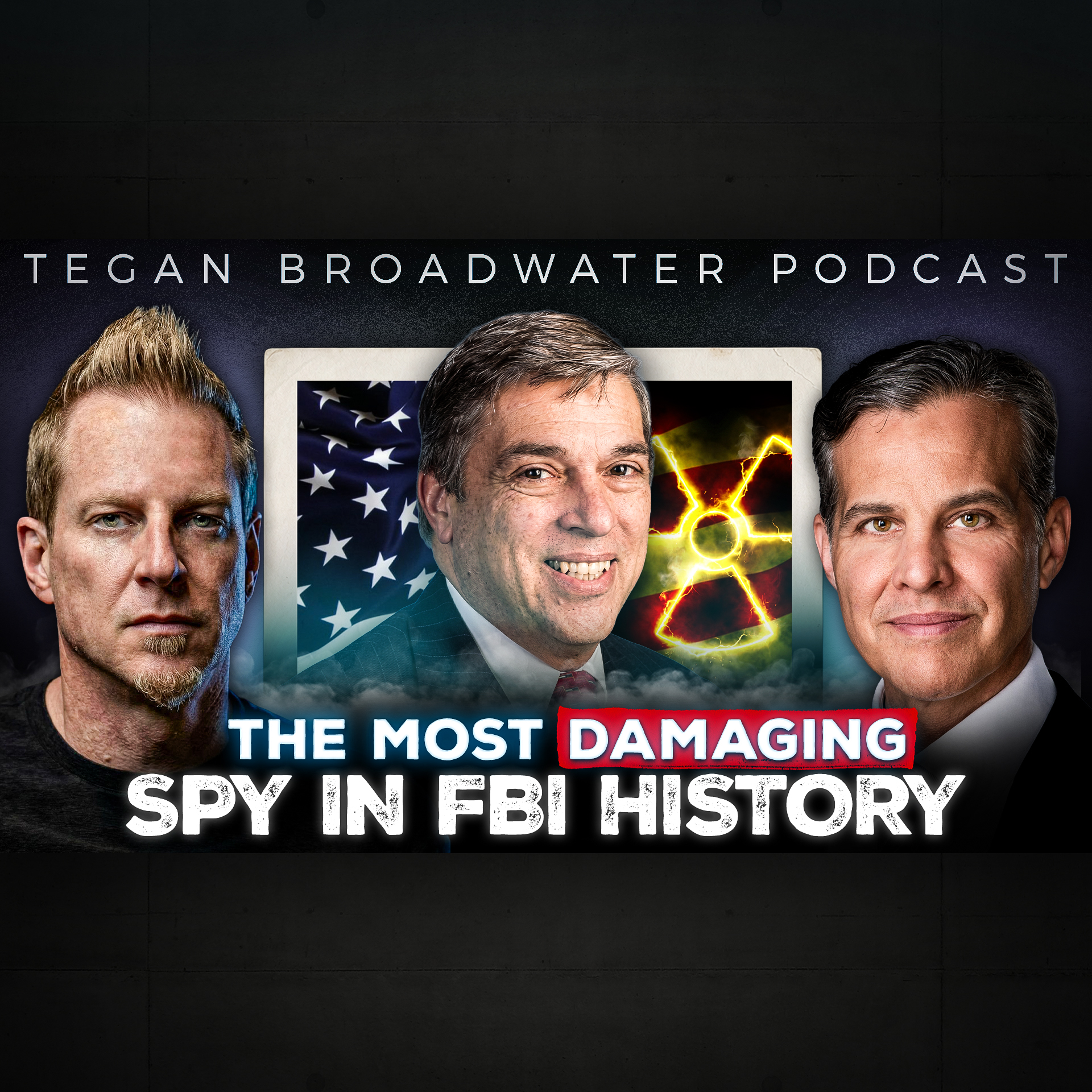
[00:01:48] Speaker B: The FBI handed my next guest one of the most dangerous assignments in their history.
Go sit next to one of the most prolific traitors of our time, a man whose betrayal cost lives on a scale we're still calculating. Earn his trust and don't get shot doing it. The damage the spy caused is almost too big to explain. Nuclear secrets. September 11th. American assets executed. My guest stopped all of it. And Hollywood told his story in the film Breach. Today I have Eric o'. Neill. And our conversation goes everywhere, from his harrowing undercover op to. To modern spycraft and war strategy, the dark web and AI threats and moments no one has ever asked him about. So don't go anywhere. I guess I'd like to start with, you know, you've got aerospace slash naval academy slash FBI. And being the FBI called back first, is that all just serendipitous? Or was that kind of something that you had hoped would be the first to go?
[00:02:48] Speaker A: Well, I. I didn't have an early plan to go into the FBI. My plan was to go into the Navy. And that was the way I was raised. I have a father who was a naval officer. He served on two different nuclear submarines. And then I've got a bunch of uncles who were naval officers. My grandfather was a naval officer. And it goes way back on both sides of the family.
And I applied to the Naval Academy. I didn't get directly in. And so my idea was to go to Auburn University, study aerospace engineering for a year and then transfer into the Naval Academy and basically start over. But I would have that full year of engineering under my belt. And after a year at Auburn studying aerospace, you know, the way life goes, I ended up not continuing with aerospace, not leaving Auburn, staying there. I had a great group of friends and I really enjoyed the school. And I transferred from, from aerospace to architecture to pre med to pre law to finally psychology and political science, which meant I had to go find a job. And when I graduated, I worked for a year as a consultant. Didn't enjoy that at all. And I looked for something that was going to give me that life experience that had drawn me to a service academy in the civilian world. And I applied to the FBI, da, Secret Service, nsa, CIA, everything I could apply to. And, and it was the FBI by one day over the dea. I just decided whoever gives me the training spot first, they win. They get me. And it was the FBI one day over the dea. And I, I, I, you know, in my first book, Gray Day, I write about how that DEA agent recruiter was. I, I've never heard such colorful cursing. After I told them that I had already accepted the, the FBI's appointment, you know, only like eight hours before he called me.
[00:04:45] Speaker B: Hey, that's on them, right?
[00:04:47] Speaker A: Yeah, yeah, you gotta be fast. But he, he said you were our top recruit. And I can't believe this, and this is such, you know, and he just cursed for a long time.
[00:04:54] Speaker B: Yeah, that's funny. And so your actual position in the FBI, if you don't mind distinguishing what you, what your role was and what your training was like going into that role, as opposed to a typical special agent role.
[00:05:09] Speaker A: Yes, certainly. And the good news is the, the bad news for me, the good news for everybody, is that the first, first people to read either of my two books, right? Great. A Spies and Lies and Cybercrime was the FBI. Which means that everything in it I can talk about. And for a long time, no one could talk about what I did in the FBI. It was very classified. They declassified a lot of this information. So as I'm talking to you Teagan, the door's not going to burst open right there next to me, and these guys in black suits aren't going to jump in and drag me out of my chair. And I was an investigative specialist. That's the official title, the nom de clor, or also known as were the G's or the Ghosts.
And what we were were a very specially trained law enforcement position that 100% conducted national security investigations, so either counterintelligence or counterterrorism. And the heavy training was on surveillance, investigation techniques, forensics, building a case against an individual with the objective to never really be seen.
So if I was seen, I was typically using disguise training, so I could change my appearance at any number of times a day that I needed to in order to continue to follow my target, to surveil the target, to track the target until they did something that led us to decide, you know, we need to make sure that this person is taken down. Then we would call in, you know, special agents, SWAT or HRT or different groups who would come in and make those arrests.
[00:06:37] Speaker B: Sir, and why. Why do you think the FBI had that kind of a distinguished thing that wasn't actually put through the typical agent program, as opposed to making you an agent and giving you that same training?
[00:06:52] Speaker A: Yeah, I actually talk about the history of this in. In Gray Day. So the FBI realized at some point that agents were pretty bad at surveillance. And there's a reason, unless they spent a great deal of time learning the trade. I mean, this very specific expertise, you know, they. They just were getting beat by particularly foreign intelligence officers operating on our soil like the Russians and the, you know, who are excellent at it. Right. And that's how we all cut our teeth chasing Russians.
And so what the FBI decided is they needed to create a elite group that specialized in these kind of undercover investigations and didn't spend a huge amount of time on all of the things that a typical special agen needs to learn, like, for example, all of the legal requirements to make an arrest. Right. Because we didn't make arrests, that wasn't part of our mandate. We didn't have to learn all that. And we could completely focus on investigative work. And so when you look at counterintelligence, counterterrorism, national security investigations, the real field work is being done by ghosts, while the. For the most part, and a lot of the analytical and operational work, you know, where you're going to go, what you're going to do, you know, take someone like me and point me at a target is done by the Special agents out of the field office.
[00:08:15] Speaker B: Got it. That makes sense too, because it's so specialized, there really isn't a reasonable amount of time to train up somebody, even if they're given that assignment. Because I think historically, if I'm mistaken, let me know. The FBI is kind of a. A Swiss army tool of investigators anyway, even as special agents, because they.
[00:08:34] Speaker A: That is true.
[00:08:35] Speaker B: Yeah.
[00:08:35] Speaker A: They have to learn. They have to learn a lot now. We had to learn an immense amount as well in the.
Also a graduate of FBI Academy. Ghosts have badges and credentials for the most part.
You know, if you're an investigative specialist, you're not armed. There were some projects where investigative specialists or some of us were armed. You know, the idea being that let's say we follow our target and that that individual is a Chinese spy, right? We follow them out of the embassy. They go into a bank, and while we're set up around the bank waiting for this guy to come out, a van pulls up and a bunch of guys in masks and hoodies jump out and go rob the bank. Now you've got it surrounded by FBI people who can't respond, right.
So they decided we might want to have some of them armed. But the firearm became a huge liability because we had to be nimble and fast and you couldn't.
I mean, what do you do with your weapon when you need to clandestinely go into a place? For the most part, we were trained never to show our badges or never to show our credentials.
So we would use a lot of social engineering and pretext in order to get into places like businesses or organizations or nightclubs or wherever we had to go where we didn't want to show that we were law enforcement and it
[00:09:52] Speaker B: made it easier just not being armed. You didn't even have to worry about it. Did you ever have that conundrum where you were faced with being issued a weapon for any reason where it was difficult to get in or out of a place you were surveilling?
[00:10:04] Speaker A: Personally, no, I was not armed while the time while I was at the FBI. And that meant I could go into an airport and not have to worry about it or go through any, you know, secure build building and not have to worry about explaining to the security guard why I was carrying a firearm.
Because you never wanted to say, I'm FBI. Because you never know who's watching. A lot of our targets had counter surveillance, and if they see that, they know now, okay, now I've got an FBI guy trying to follow me here. And they would draw you through places like that, just to see.
[00:10:34] Speaker B: Yeah. And civilians. It's unappreciable to most civilians, too. I mean, what a pain in the ass that is. You get up to a place and the law enforcement person there is to check you, show them id they pull you aside. They make this big deal out of stuff. Sometimes it could take five, ten minutes, so.
[00:10:49] Speaker A: Yeah, exactly.
[00:10:50] Speaker B: That would definitely stop you down.
[00:10:52] Speaker A: Now, that did mean it was a little bit more dangerous, you know, chasing particularly terrorist targets when you can't fire back or.
Or even just being in bad areas of cities where the biggest threat was actually like a carjacking.
So we had to be very aware all the time of our surroundings.
[00:11:12] Speaker B: Interesting point.
If you're in a bad position, but usually if. If they end up turning on you, it's because you screwed the pooch, Right?
[00:11:19] Speaker A: Yeah.
[00:11:20] Speaker B: Because you were supposed to be the ghost.
[00:11:22] Speaker A: I mean, the good news was there weren't really a lot of adversaries who could operate on our level.
So you had to make sure you weren't complacent, and that could kill you.
You couldn't ever let guard down your guard. But our training was such. And just. And not training at Quantico. I'm talking about our operational field training was such that we were the best in the world.
[00:11:44] Speaker B: Yeah. That's amazing.
And before we go into the. To the setup, I think it's. It's not talked about often enough about what your code name was, which was Werewolf, right?
[00:11:55] Speaker A: That's right.
[00:11:57] Speaker B: So we're just setting the table here. If you want to give us a little. A little backstory on that going into
[00:12:01] Speaker A: this career, certainly when you're operating undercover, particularly when you're using field radios and you're worried that potentially some adversary could find a technical tool to listen in, you don't want to use your real names because you never want the adversaries to know your real names. You don't really want anyone to know your real name. So when you're working deep cover, you're given a code name, and it depends on the field office in Washington. Field office, we were given actual names. In some other field offices, it's just numbers. Right. But names are kind of more memorable and kind of cooler.
Think back.
You want a cool field name, like you're watching the show GI Joe. You don't want just some number where everybody's like a prison inmate.
[00:12:50] Speaker B: Unless it's 007. Right.
[00:12:51] Speaker A: Unless it's 007. But, like, everybody's going to fight over that. No one's going to get it. So what happens is you don't get to pick your code name. Just like in the military. You don't get to pick your code name when you're an aviator. Right.
It's something you do. And there's one bar on the entire Quantico Marine Base, which is a dry base, except the FBI is allowed by, you know, the kindness of the Navy to have their.
To have the training facility there for. For the FBI at the FBI Academy Aquatico.
And they have a bar called the Boardroom. And the Boardroom just sells wine and beer and, you know, bad pizza and nachos and that kind of stuff, just to kind of a place to go rest and recharge.
And it was right after we had taken our final exam, and the next morning we were going to graduate, and I was there with my entire squad. And the Boardroom kind of is an English basement type thing with these windows at the top that sort of can't open.
And you could. As we're looking out, we could see the moon. And it was bright and full. And for whatever reason, maybe it was one beer too many. I decided to stand up on the table and howl at the moon. And then I was forever known as Werewolf.
It's not that I'm super hairy. It's that. Yeah. Or.
[00:14:09] Speaker B: Yeah.
[00:14:10] Speaker A: Or.
[00:14:10] Speaker B: I mean, I just seemed counterintuitive based on what I know about you and your personality. It just seems, you know, you're kind of this high and tight cat, and then we've all had our moments, so I just thought that was an interesting aspect of you coming through the ranks.
[00:14:24] Speaker A: Yeah, you know, it just seemed. Seemed like the thing to do. The names are crazy. It just depends. No one gets to pick their own. And that one followed me forever.
[00:14:33] Speaker B: So if you wouldn't mind taking us through. Some people have heard, but I think I've got an audience who doesn't really know your story. And if you wouldn't mind kind of taking us through Hanson's background and who he was and then kind of pick it up, you know, where you were called into that role.
[00:14:53] Speaker A: Certainly. Well, here's the Cliff Notes version to a very long story that was the basis for my first book, Gray Day, and a great movie by Universal about me called Breach. So I would read the book first or listen to the audiobook. I do it and then watch the movie, if you want to do that. But here's the Cliff Notes.
Robert Hansen has gone down in history as certainly the most damaging spy in the FBI's entire history and quite possibly the most damaging spy in US history.
Over 22 years of his 25 year career, he meticulously and systematically gave up some of the most damaging intelligence ever given to a foreign power, which was Russia. He spied so long, he began spying for the Soviet Union and continued to spy for the Russian Federation after the collapse of the Soviet Union. Which means that he is a very unique spy because he spied for three distinct intelligence agencies, the kgb, the gru, and then the svr, which was the reformation of the KGB after it was disbanded.
So he was an exceptional spy and lasted 22 years. And through this period where we were catching all of these old Cold War spies because their former KGB intelligence officers who were suddenly out of a job would steal information and sell it. They wanted to make a buck. But we never caught Hanson. And that was for a few reasons.
First of all, Hansen was one of our first cyber spies. He was stealing information from computer systems at the FBI that were never built to defend from a trusted insider, someone already within the work circle of trust. And he was also a hacker when the, you know, there weren't a lot of hackers back then, like old school 1980s hackers.
He also was incredibly careful in his espionage. He would try and steal from agencies other than the FBI.
So when we did have our assets in Russia saying, yeah, you have a mole, we're getting information, they didn't know where it came from. He never let the Russians know his identity. They only knew him with two code names through his entire two decades of espionage. The first was B, which I think he at some point realized stood for boring. And so he changed it to Ramon Garcia, which is, you know, what I call his sexy spy name.
[00:17:05] Speaker B: And that's an interesting point too, right, that they didn't know who he was, but that was because he kind of maintained control of his identity because he's the one that approached them. Is that correct?
[00:17:16] Speaker A: That's right, Tegan. He volunteered his services.
He was never recruited. They had no idea who he was.
His first act of espionage was to send a letter to someone who we knew was an intelligence officer, but followed this, didn't know that we knew he was an intelligence officer. So right there, that letter was his first act of espionage. And then he said, these two people, two of our top spies in Russia, these individuals who work for the Russian military who were passing us information, he said, these two people are spies, are working for us.
And they were flown back to Moscow and executed.
So his first act of act, I mean, he came out about as hard as you can as a spy. He didn't go light. He didn't, like, give a phone list or like a little asset. I mean, he got two people killed and revealed that we knew that one of their highly placed people was an intelligence officer. I mean, that's. That right there. An entire career could be built around that.
[00:18:16] Speaker B: That's unbelievable. Yeah.
[00:18:18] Speaker A: And he didn't make any money for that, so. And then he continued to spy, but he called all the shots. He said when he'd make drops, when he would set signals, how it would all work, made sure he was never in the same place in the same time as the Western intelligence officer who would have to service the drop or set signals. And so they never knew his identity. And that protected him more than anything else for over two decades of espionage.
[00:18:42] Speaker B: And, I mean, he got countless people killed throughout this period of time, too. Because you're talking about. What was it, 79 to 2001. Is that about right?
[00:18:51] Speaker A: Yes, to 2001 to February 2001. Yeah.
He shares a lot of those deaths with a CIA spy named Aldrich Ames. And when he was providing information about our assets completely separate from him and without either of them knowing about each other, Ames was sending information about the same people. So now if you're. If you're the spymaster in Moscow, if you're the Russian intelligence officer there, you're looking at very strong source information from two separate sources, you know, run by. Run by two separate groups. And to them, they were like, that's golden intelligence. And between the years of 84, you know, somewhere in the middle of 84 and 85, which is right smack in the Cold War, we lost every single one of our intelligence assets in Russia. All of them. We were completely blind. In fact, if you think about it from a counterintelligence standpoint, the US Was really losing the Cold War.
We didn't beat the Russians with intelligence. We beat them because we outspent them. And had we not done that, they might have eaten our lunch. Because we were blind. Completely blind. While they had developed some of the most powerful spies in American history.
[00:20:05] Speaker B: Yeah, not to mention. I mean, it takes a lot of work and effort on the American side to recruit spies. I mean, we have an entire agency dedicated to doing so.
[00:20:16] Speaker A: That's right.
[00:20:16] Speaker B: And it's just getting undone in a single moment. And you're also putting the recruiters at risk. You never know what's going to happen. Do you think he ever thought about that before he did it?
[00:20:27] Speaker A: I'm sure that he. He was incredibly intelligent and hypervigilant. And I am certain that he knew that those people would die. He knew he was destroying careers. He doesn't care.
You know, there's another little twist to this.
At one point, the FBI went to the top analyst in the FBI against the Soviet Union and Russia back in, I think it was the Soviet Union at that point, and asked this individual, look, we're looking for this mole. We know we have a mole. We've known that we've had a mole for some time.
This person's highly placed in the intelligence community. Their code name is Gray Suit. And would you help us, because you know the Russians so well, provide a list of all the individuals that could possibly be to focus our investigation. And, and. And the individual made a list of 100 names. The FBI went on years and years of wild goose chases. The guy who made the list was Robert Hansen. So he was in the catbird seat. I they. So technically, the FBI, the premier investigative agency in the world, went to Hansen the spy and asked him to catch himself. And I mean, it just doesn't get better than that.
[00:21:34] Speaker B: No, I mean, and it's. It's very myopic of them in retrospect. Of course, we can always, you know, Monday morning quarterback, but it seems like you've got to have checks and balances, which weren't there at the time.
[00:21:46] Speaker A: There certainly weren't. I mean, one of.
Part of the reason that he got away with it because. Was because he was so good.
The other reason he got away with it wasn't just that he was lucky. It was that the FBI just wasn't looking. There was this institutional bias where the FBI just wouldn't believe that it was a FBI person, that it had to be someone in the FBI, in the CIA or the nsa, and all of their focus was there. In fact, there was a. There's a supervisory special agent who. Who just doggedly for years was certain it was this guy in the CIA, even though everybody knew that this guy was not the spy. Right. And just wouldn't let it go. Just wouldn't let it go. And, you know, that was one of the reasons that Hansen was able to continue. I mean, he saw this case happening and just had to laugh to himself and know that, you know, I'm safe as long as they're after that guy.
[00:22:39] Speaker B: Until such time as Dr. O' Neill got the case. You want to tell us about how you got introduced to this?
[00:22:48] Speaker A: Well, you know, I was introduced to the case as the undercover asset. So what happened to back up from that is before December 2000, the FBI had convened a joint task force between the FBI and the CIA.
And the goal of the task force was to recruit a Russian. Russian asset that could provide information that would point to this CIA guy that. That the FBI was certain was the spy. And we had tried all these things, false flag operations, everything, and this guy just.
Just wasn't biting. He was an individual named, an intelligence, a case officer for the CIA called Brian Kelly, named Brian Kelly.
And Brian just was. They would try to give him diamonds. They're like, what are you doing?
They sent a fake person to go recruit him. And he reported obviously wasn't him, Right. But they were so certain that they sent this task force to Russia to recruit a source. A source said, hey, I think I know who this person is, and I'm ready to retire. I want to retire somewhere warm on a beach. I'm bringing my family. You put me in witness protection, because Putin will just feed me a plutonium muffin in the morning if. If I'm not. If I'm not disappeared. And.
And they paid him millions of dollars. And he hands over a slim envelope, and in the envelope is trash bag, some letters and a cassette tape.
And you wouldn't think you could build an investigation with that, but this little tiny squad of people takes it to a room in headquarters in Washington field office, and they open it, and their hearts fall, completely fall, because they can run prints. The Russians can't do it. And when they run prints, they get a partial match on the trash bag that that handsome would wrap his drops in when you would put them under a bridge in Foxstone park in Vienna, Virginia.
And then they listened to the tape, and it was Hansen's voice. The one big mistake he made, he called the Russian consulate, saying, where's my money? You know, he had dropped his secrets. They. They'd recovered the drop. Then they. He'd set a signal. He'd set his signal. They set their signal. He saw the signal. He went to go pick up his money, like, 50 grand under a platform in an amphitheater not too far away from his home.
And it's not there. And so he calls them, saying, where's my money? And they say, did you check, like, the northeast corner of the amphitheater? And he's like, I'll get back to you. He looked at the wrong corner. But they recorded everything because they were also trying to figure out who he was, because if they ever figure out his identity, then he's a spy for Life. Once they figure out who you are, you never get to retire. You never get to stop. You always keep going. And. And they had his voice, but that wasn't useful to them other than to save it somewhere. And this former KGB guy had stolen it all when he lost his job and sold it for a rainy day. And then the final thing was letters he had written to the Russians as Ramon Garcia.
But, you know, while he obviously didn't sign his name, some of the pattern recognition analysis and his writing suggested that it was Hanson, or at least reinforced the fingerprint and the voice print.
And one of the guys in the room recognized Hansen right away. Just, that's his voice, you know, Chicago accent way, that sleepy, quiet way he talks, everything. And their hearts fell because this was the guy that they had gone and asked to help catch himself. So they, so they created the, the best mousetrap, this, this incredibly sophisticated, ingenious operation to trap Hansen. And they had a few problems. One, it's December, he's about to retire. His mandatory retire in April. Right. Two, they believe he's the spy, so they know he has to be incredibly suspicious. And three, they had thrown him into a do nothing liaison job at the State Department just to write out his retirement because everybody was sick of the guy.
He was a difficult person.
He was poor at managing people. And he had gotten himself in trouble with HR a few times because of his inability to manage people.
So now they're going to give this guy, they need to get him back to a job at the FBI where he's going to continue, because usually these investigations take one to two years minimum. So they wanted to find a job that can give him a role that would convince him that it was critical that they have him continue his employment, extend him past the mandatory retirement deadline. And they also promoted him to executive service. So he's getting more money. And money was very important to Hansen. They're going to give him a section, which makes him a section chief. So a huge promotion. He was going to get staff.
And this was the kicker, the thing that was most interesting to him. They were going to have him build cybersecurity for the FBI.
So they put him in charge of the information assurance section, gave him this really big, big office in room 9930 at FBI headquarters, you know, where they brought him to executive management at FBI headquarters.
And they gave him staff. The problem was what staff were they going to give him? And this is where the FBI had a huge problem.
They were giving him access to information that could Be devastating.
He's a hacker, and they're putting him in charge of cybersecurity. They needed to find somebody in the FBI who knew how to catch a spy and also knew how to turn on a computer. And that ended up being me.
That ended up being only me. And it was a huge risk for the FBI because I was never trained to go face to face with a target like this.
But sometimes, hey, you got to take a big risk in order for a real reward. Even though I think half the squads who were running this thought I was going to be the point of failure and this was never going to work, I proved them wrong.
[00:28:46] Speaker B: Yeah. And in the book, you did mention that. It was one of my questions, too, about how that made you feel. Because I'm sure in the beginning you had some sense of questioning whether or not you could pull this off or not, and that couldn't have helped. What did that feel like when you were hearing that your peers are just calling failure before you even get launched?
[00:29:05] Speaker A: Yeah.
It can do two things, right? It can motivate you because you're angry, or it can make you feel like this is already impossible and nobody believes in me. Right. And it can pull the rug right out from under you or take the winds out of your sail, whatever analogy you want. It did all of that, right? At first, it made me feel like I. I'm, you know, I'm in here risking my life. This guy is kind of violent, and nobody thinks I'm going to win anyway, so maybe it's a good idea to just walk away.
On the other hand, you know, I am half Irish. I'm a little stubborn, and it made me think, like, you know, screw those guys. Like, you know, I'm going to win now.
And. And then a third part of me, the future lawyer in me, right, because I was in law school at the same time, was also like, look, none of this really matters. The most important thing is the investigation. And the investigation wins or loses by following the facts. Right. Maybe this guy is a. Is creepy and a jerk and isn't a spy. Right.
So my job really, at the end of the day, was discover those facts that were going to lead us to a conclusion to the investigation, whether we caught them or not.
But I certainly didn't want to fail.
And a lot of my effort was in just not failing in the beginning, at least. And I think part of that was because of that negative information I'm getting right from the squads. And then as I moved into the case, I realized I'm Never going to win if all I try to do is not fail.
You can't win anything. All you can do is status quo. Unless I start taking some calculated risks, I will never win this case. I will sit here forever, and I'll never get out from under this miserable case. So that's what I started to do. I started to take some risks. I started to challenge Hanson a lot more, and I started to win.
[00:30:58] Speaker B: And so was there anything else about your profile? Because I know there are things that serendipitously fit together in terms of his. His church going habits and all that kind of stuff. Was any of that part of the process ahead of time when they considered who they wanted to stick in?
[00:31:16] Speaker A: Certainly no. They, you know, they, they would never say your religion paid a factor into our picking you. But it was absolutely critical to, to the, to the case that I was a Catholic.
He would have never talked to. He would have never opened up or talked. We wouldn't have had this whole avenue for discussion and building trust if we didn't share the same religion. Because one of the very ironic things about Hanson was even though he was one of the most destructive spies in the history of this country, he was also a very religious person, an incredibly religious person. And the way that I describe it to people who just can't wrap their minds around it is that he truly believed his faith. He just didn't live it. He couldn't live it, and it tortured him. Right.
So if we couldn't talk about that, if we didn't have that, at least that connection right there, then that cuts off an immense amount of opportunity for discussion and having dialogue. And that's what you need in order to gain someone's trust. And that's what you need for what was essentially an elicitation investigation. I'm trying to draw facts out of him without him knowing that that's my goal.
Look, I've always been fond of computers and systems. I was an old hacker in the 80s, too.
I was just one of the good guys, right? And I had written programs for the FBI. I had developed databases for the FBI. So I had some street cred in the FBI as kind of this maverick guy who writes his own code. And it fit this role, but also fit, you know, the history of Hansen, like the things he had done as well. So this is something we can talk about.
And even, even these weirder, a little bit more esoteric things. I was in law school, so it gave me a reason for coming off of field operative work and then being in an office. Like, I wanted to make it to school every night. That was part of the deal. Right.
And I was a male. He just had no real respect for women.
You know, to your female audience, I'm very sorry. I have complete respect for women. If you ever met my. My wife, you would. You would know that. But he just didn't.
You know, he. He. I believe he loved his wife and his daughters, but. But he just. That respect didn't seem there. He was certainly very focused on men do this and women do that, and never, you know, none of that should ever change.
[00:33:41] Speaker B: He's old school. Yeah.
[00:33:43] Speaker A: He was as old school as old school can be.
[00:33:45] Speaker B: And they knew that in advance of that as well. Or is that just something you discovered along the way?
[00:33:51] Speaker A: They. They would have known a lot of this in advance. They would have done their own quick psych profile. I mean, the FBI is incredible at this, and then looked through the ranks to find that perfect person to stick in there with him. I think it was also critical that I was very young compared to him. I mean, he's probably. He was probably my age now. Right. But back then, I was 26, 27.
And so, you know, his narcissism just wouldn't let him believe that the FBI would pick somebody that, you know, had only been in the Bureau five years to go undercover to catch him. Right. That. That. That. That. This wasn't. That the fact that they didn't throw in this highly trained agent, Right, Who's. Who's. Who's trying to play a. A different cover role to. To go undercover to. To try to investigate him certainly made him feel like there's no way this guy, you know, who's. Who's bumbling around and making all these mistakes could possibly be investigating me.
[00:34:51] Speaker B: And at that time, was this. Prior to the FBI creating their undercover training program or.
[00:34:59] Speaker A: I think so. Yeah. I think so, but because that would
[00:35:02] Speaker B: have been another thing. They would have found that. Or he would have found that.
[00:35:05] Speaker A: This was such a unique role. Like a crazy unique role. And one of the biggest problems the FBI had was they needed someone who could talk shop about computers and security and cybersecurity and programming and code and, like, interviewing vendors and talking to the data center and talking to the different IT folks at the FBI. Right? Then, you know, there was this disconnect between security and it, and that was one of the biggest problems the FBI had, and we were actually trying to work to combine it. Like, the sad thing about this whole.
This whole situation is that in another world, in an alternate universe. Hanson was a good guy who had all of these brilliant ideas about making the FBI more secure, and the FBI listened to him, and he wasn't a total asshole. And he did the job right, and the FBI became stronger. Right. You know, as it turned out, he was all those other things. And despite him, the FBI had to become stronger, but it had to go through this crucible of being completely undermined in every way possible by this damaging spy, and then by catching the spy and interrogating him, learning everything he did and rebuilding from the ground up to be more secure.
[00:36:17] Speaker B: And I know how finicky the FBI is on their paperwork and all that kind of stuff. So it must have been an extraordinary experience going to law school and then having to write up all your stuff, your DAR daily reports or whatever that you had to submit.
How much of that.
How much leverage did they give you to kind of lead your own case? Did you feel like you had a little bit of autonomy in terms of what direction you took the case and things like that? And talk about, too, with the difficulty in managing the extraordinary level of paperwork they do to use the restroom and everything else they want you to write?
[00:36:55] Speaker A: Yeah, the FBI is definitely a miserable bureaucracy. And I use the word miserable kindly. I mean, it's everything. I mean, to the point where when I proposed to my wife, I got in trouble for not filling out a form before I did it. Right.
The case was very much run by a team of agents from Washington field office. I had my marching orders. There was a special agent, a decorated, amazing special agent named Kate Alleman, who was in charge of essentially making sure I didn't screw up. Now, she was very kind, and so her. She would say she was in charge. She acted as my handler. I'm in charge of making sure that you're safe, that you're secure, that you know what you're doing, that we. That. That you have the right tasking, that you're trying to pursue the right avenues, you know, but really, her job was to make sure that I didn't screw up, because, yeah, I could be. I was the single most likely point of failure. I'm the one who has to talk to him eight, nine, ten hours a day.
But I. When I was in that room with him, it was complete autonomy. I. There was no one to reach out to and no way reach out to anyone in the moment and say, what do I do? Which was very unlike all of my FBI experience to that point. I worked in teams. I usually had some sort of field ready, even Here, talking with you. I've got the little. The little wireless thing in here because it's just what I'm used to doing.
And so I was able to reach out to a team leader, to an associate, to a colleague and say, hey, this is happening. What do you think? Right. Real time.
Unless our radios all failed, which happened all the time, we used kind of sign language. But here when I was in that room, 99, 30, it was just me. They could wind me up and they could set me to go do whatever, but I had to figure out how to do it. And that was incredibly difficult. And it made me feel very uncertain a lot during that investigation. And part of what I had to do to win the investigation was to build up my confidence in myself.
And I think that those sort of struggles, those trials that we go to, you know, sometimes in our life, and fortunately, very rarely in our life, those trials can build you into something bigger and stronger than you ever were before.
[00:39:13] Speaker B: Yeah, that's an interesting. That's an interesting point because again, if you're not confident in yourself, there's no way you're convincing somebody at that level of intellect that he can trust you. Right? I mean, it's. You're. It's a trial by fire.
[00:39:26] Speaker A: And in undercover work, that's certainly true. And that was the most critical thing for me, was to gain his trust. If I don't gain his trust, he's never going to open up, he's never going to say anything, and I'm not going to find anything that's going to lead my investigation, my investigation, which was the face to face part of this whole thing, to some information that is going to let us catch him.
And so I had to gain his trust. I had to. I had to figure out a way to gain his trust. And you know, the way I did that was realizing that in his entire career, what he really had always wanted was to be a mentor. He wanted to. To mold and to create a path for someone, and it had just never happened. Part of the reason was because he was really difficult to work with. Nobody wanted to fit that role.
He could be incredibly demeaning. I mean, he had a lot of nicknames for me, which include like, jackass, idiot, you know, those kind of things. I mean, you're like, dude, it's werewolf.
[00:40:22] Speaker B: Come on.
[00:40:23] Speaker A: I know, right? And. But, you know, at the end of the day, there was nothing. There was no jerk. When I went to go work for a big law firm that could. Could even come close to him. So I was able to work with every partner, right? But here I had to find a way to work with him. And I realized that, okay, you know, he really needs this. He wants to be. He wants to be, you know, the Batman to some Robin, right? He. He wants to. He. He really. I could tell he really, really, really wanted to impart all this wisdom. Not, you know, as a senior FBI agent, but as a spy. I knew. I felt, as in my gut, in every fiber of being, that this dude desperately wants someone to understand his brilliance. And. And I knew he's never going to come out, right out and say it, but we can get close to it. If I danced around with dialogue, if I just raise sort of topics like old spies or talk about, hey, do you think that a spy could crack into the system this way or that way? Like, I was giving him an opportunity to, in innuendo and sort of side talk, get right at what he had done all these years and give him an opportunity to talk about his brilliance, even if it was by using a strawman, right? And. And he did. He bit right on it. He loved it. And I knew that this guy, this. What. What is killing him is he's this immense narcissist, and he spent 22 years being the best buy ever. And he can't tell anyone, ever. He can't tell anyone. So he thinks of himself as this brilliant person who no one else will understand his brilliance. And I realized I can be that person. I can be that person. And to the point where I was.
I was held back at the office late one night, and everybody cleared out, and I was told to stay.
And this. This senior special agent rolls in who I'd never met before. I now know his name, but I don't list his name in the book because I never got permission.
And he sits down across from me. And after telling me that I'm. I am going to be the failure in this case, right? And. And it was. It was difficult conversation, like. Like, why do you lead with that, buddy?
He says, you're being recruited and Hansen's recruiting you, and we want you to make it happen.
Whatever you have to do, make it happen.
We want him to recruit you and turn you into a spy and make it happen.
And I was kind of floored by that.
And that's what I started doing.
I started doing everything I could to give Hansen those opportunities.
Even in the things we talked about, he would say he was very upset that my wife and I didn't have a child. And I said, we've only been married Three months, buddy. Like, you know, three months to the day, I get thrown in here with you, so let us have a little bit of a honeymoon. He's like, how is it possible that it's three months and you. Your wife isn't pregnant yet? And I'm thinking, like, do I got to go through the birds and bees with you? And, like, how to keep that from happening? It's like. And then I realized there's a reason he's got, like, six or seven kids. Like. Like, then I ever wrapped that rascal like, he. For him, it was all about having kids. And what I did is I used that as an opportunity to say, well, you know what? We can't have children, because my wife and I can't afford it. We live in a tiny little apartment. It's got one bedroom. Where are we going to put the kid? You got to walk sideways to get into it. It doesn't even have heat in the winter, though. That doesn't work. And forget air conditioning.
And I don't make any money. I don't make any money. I can't pay for schools. I can't pay for a Catholic school, a private school for my kids. And, you know, it's just down the road, maybe years from now. And this really upset him, and he started saying, well, there's a way. And I said, well, if you get away, let me know. And he said, well, God will help you find a way. And. And I knew we were getting close. Right. And a lot of conversations like that.
Yeah. And so if. If I was going to let it happen and it got close, I could tell that it was. That he was very close to recruiting me, to explaining, you know, what he did. I. You know, I know I was invited over to his house, Juliana and me. It gave the FBI horrible heartburn because they would have had to read her into the case, like, juliana is my wife. And he got arrested before that could happen. But I really felt like maybe at that moment, right in his home over there for dinner, you know, the wives are talking over here. I'm over there with him in his office or something. He might have. He might have pitched it to me.
We just never got there.
[00:44:54] Speaker B: I can see that. And I don't know if you get asked enough about this aspect either, but your relationship with your wife was fairly new. You were newly married, and here you are doing all this work that she hasn't been read into, so you cannot share, and then going to law school at night, which is insane. So you basically don't see Her. So how is it that you managed to juggle that? And one of the more interesting aspects of your case is that you were actually working undercover as you, as you, as yourself.
[00:45:29] Speaker A: So, yeah, it was.
[00:45:30] Speaker B: When you mix that together, you're almost you. You're. You're essentially taking your family with you to work and putting them in danger. Right, because there's. There's no arguing that he knows who you are and where you live and everything else. So how did you juggle that whole aspect of the case?
[00:45:46] Speaker A: Not well. I mean, my whole life went sideways. You can't do everything I did, and it's just not sustainable.
The problem was that we were very fresh in our marriage. We hadn't figured each other out yet. And like I said, we were only married three months when I got put on this case.
And suddenly I'm gone more often. I was clearly lying to her. It's very difficult for me to lie to the people that I care about.
I could do it when I was undercover, when I was working, I could spin up a lie at a second. Didn't matter, right? It was all good. But to the people that I care about, to the people I love, I've always had a huge amount of difficulty. I've never successfully done it right. So I just don't. Because I'm going to get caught. So what.
[00:46:25] Speaker B: What kind of lies, if you don't mind me stabbing in here about?
What would you lie about? It was. It wasn't the type of thing where you say, I just can't talk about my work. You had to actually make up a different ruse.
[00:46:36] Speaker A: I had to make up. I was. I was directed to make up an excuse. And so what we came up with was that I had been.
I had been brought to FBI headquarters to work a computer job in IT to help with a brand new server that had intelligence capability. And that's why I was brought in. And, you know, you know, my wife looked at me and she just was like, why? You. You. You mean you're not an IT person? You don't have a degree in it. You have a degree in psychology. Like you play around with computers, you know, but why, why would you. And she's right. Like, why? I don't know. I did. They just brought me in. The FBI is a mess. What am I supposed to tell you, right? It is clear that there's something missing there. And at some point, I just can't talk to you about this, right?
And I, and I couldn't tell her I was undercover, so. And of Course it snowballed. Like, well, why were you at the office? Why? You know, because I would go and I work, and then I go to law school for hours, and then I'd go back to the office when they had to do searches and those sort of things because I had to be there for chain of custody. And then I'd be, you know, rolling into our apartment at like, 10 at night. And you should say, like, where were you? I'd go back to the office. The server failed. Like, why does that server fail all the time? It's the FBI. You know, you think they'd get a good server. And I think maybe I'm just not good at my job. And I. You know, it just.
It was. It was terrible. It was absolutely terrible. And it was. It was heartrending to do.
And it was the biggest part of the whole thing that I fumbled. And of course, that was the most important part of everything to me, which was my life. This person that I'd fallen in love with and had married and wanted to build this life with. And I felt like that part of my life had been put on hold for this case that overcomes everything, that overwhelms everything. When you're working undercover in a high profile case like that, it's first, before everything, before everything. And like you said, Tegan, and I mean, very astute.
I was undercover on myself, so the risk was very high. How do I know he's not going to drop my intelligence? He's going to get away with it somehow. I'm going to miss it. And now suddenly my information is in the hands of the Russians. And in fact, it's a really good thing that we did catch him in that last drop because one of the articles of information that he provided was my name and all of my information with a note that I would be a very good person to recruit. Really?
[00:49:05] Speaker B: Oh, I didn't know that. That's interesting also. So tell me about them. I mean, this is going to kind of jump ahead historically, but we can get back into. Into how you wrap this up. But since we're on the topic of your. Of your family, how.
I mean, tell me about the experience when you had to come out and explain to your wife, by the way, this is really what's been happening and how she handled that. How did you even approach that?
[00:49:34] Speaker A: Well, it's one of my favorite chapters in the book is that moment where I tell Juliana, my wife, everything that's been happening and in the story and what happened.
There were two different arrest profiles.
I had found the information, you know, I found the smoking gun in the case. We'd won. We had everything we needed to arrest Hansen. We knew that he was going to make a drop, or we had this high degree of likelihood that he was going to make his final drop to the Russians in February of 2001.
We even knew the time and night he was going to do it. And we were ready out there ahead of him. Right. So we're going to catch him red handed making a drop. And if the drop happened, there were two arrest plans. One was arrest him right there on site. Right. Which I advocated strongly against.
Everything we'd learned about Hansen, the entire psych profile I'd built was don't arrest him in the moment. Let him feel that, that sense of elation. Let him feel like he's won. Give him the weekend to feel powerful about it. And we, we can.
We have a better chance of catching the intelligence officer. We'll be able to try to figure out where the money gets dropped. Maybe we can even get him, you know, capture him collecting the money, like all these things. That would have been great.
And then we would arrest him on. This would have been the Sunday before President's Day. Monday was a holiday, so we would arrest him on Tuesday. And the plan was that I would drive him to Quantico, park in the middle of the parking lot on, you know, some pretext, park in the middle of the parking lot, just abruptly get out of the door and walk away. And a very senior agent would. Would come across, get in the. The driver's side seat where I was, just look at him and shake his hand and say, we got you, Bob. We know that. We know what you did. And I felt like that right there. Which would have. Have made him feel respected, right? Might have let him open up and say everything.
That was my plan. But. But the FBI was really mad, right? And the Director knew that this was the end of his career, that, you know, everybody had said it was the CIA, and suddenly it's the FBI, not like our top Russian analyst. It's incredibly embarrassing. So they put his face in the ground right after he walks out of Falconstone park, and he lawyered up and it became this big fight.
So that's where we. We ended up going. And, you know, I still think that if we had gone with the, with the arrest plan, that I thought would have been better, you know, maybe we could have saved ourselves some time. But at the end of the day, I'm going to get to the Juliana story. I know this is a roundabout way to do it, but at the end of the day, that's the way they chose to go.
So. So this means I didn't know whether on Sunday it was going to ha. It was going to happen, or I was going to go back into the office on Tuesday and go with plan B. And so that entire weekend, I was with her, and she's even.
She does very few interviews, but in one interview, she said that he was. He was a complete mess all weekend and wouldn't say why, and was completely distracted and had his phone on him.
Not his phone phone, but his FBI phone on him, 247 on his hip, looking at it all the time, just waiting.
And then finally we had gone away for the weekend. I just needed that break.
And on our way back on Sunday, and I know it was raining, we're on one of the highways leading into D.C. it was like 50, the Route 50. And my phone rings, and I looked, and it was Kate. And I was so stressed, I had to pull off the road. So now we're on the side of the highway on, like, the shoulder. You know, these big trucks are barreling past us. The Jeep Cherokees is rocking back and forth. She's like, what's going on? I pick up the phone, and it's Kate. And she says, it's done. We got him. He's been arrested. So then I knew that it's done.
We finished. We got him. I wasn't going to have to go back in the office and do the whole arrest plan for Tuesday.
And I. And the only thing I asked her was like, can I tell Juliana? Right? And she said, just. Just her and like your close family, nobody else. We're still trying to catch the intelligence officer. We're still keeping in classified. And that was good enough for me. And so just sitting there on the side of that road, I turned and I told her everything, start to finish.
And I. You know, the. And the most amazing thing she could have said was exactly what she said. She just looked at me, paused for a minute, and then said, now I understand.
And, you know, we hugged it out and we drove home. And, you know, I told her more and.
But. But, you know, she didn't leave. She didn't get out of the car. She didn't say, get me a cab. She didn't say, drop me off at a bus station. Right.
So, yeah, that is definitely a keeper.
[00:54:24] Speaker B: Another thing we have in common. You married up.
[00:54:27] Speaker A: Yeah, I definitely did. She's way more intelligent than I, and that's one of the reasons that it was so hard to lie to her.
[00:54:35] Speaker B: Yeah, it had to be. That had to be so difficult. And so back to the.
This case you had. This guy was trying to be a mentor. He was, he was appreciably smart and intelligent and also was essentially a murderer.
And, and I think you wrote that was an eloquent way to, to, to switch the arrest up. I think it would have been better your way anyway. They could have plugged that straight into the movie because you kind of.
[00:55:03] Speaker A: That's.
[00:55:05] Speaker B: Even though it does make more sense that cooler heads prevail. You want to get. If you're going to take the head of the snake, you got to get away with some more intel and build on that thing. But I'm surprised that they let it become so emotional.
[00:55:18] Speaker A: It was very emotional. People in the, in FBI headquarters were crying when they, when they found out it was him. I mean, people realized that their entire careers had been a waste of time. Yeah, that just betrayed. Just been undermining everything they were doing for an entire career. You think that you're doing this great work and you realize that none of it made a difference because the guy sitting right down the hall from you was just giving it all up. So that's.
[00:55:44] Speaker B: It leads to my next question for you, which is, you know, they, they talk about people that can hold two opposing truths in their mind.
You had a general, if not more significant respect for the man in terms of his capabilities and certain aspects of him and then the religious aspect too, that that had to be exploited. How did that affect you and the way you view religion in general and your religion or your. Did it do anything to, to the way that you view the church and the different things too? Because I know he had come out later and said that he'd even confessed some of these things and, and people just let it go by that, that he confessed it. And then the priest never said anything. And I keep thinking, are you kidding me? I'd be up there, you know, with having to at least a man to man with this priest until I figure out why in the world would you not put this together?
[00:56:41] Speaker A: And yeah, hey, you know, as the pre. As the priest explained it later to the FBI because they interviewed him, he recant. He decided that, you know, first of all, Hansen downplayed what he had done. Right.
And the priest first told him, you have to confess and then came back and said, you know what, if you confess, you'll destroy your family, you'll ruin the lives of your children, your wife will Be destitute. You'll won't be able to do the good works that you've done. And so you have to recommit yourself to your faith. You have to return all the money you stole and swear never to do it again. Um, and Hansen agreed to all that. And of course, immediately it was a lie. Right. Because he wasn't ever going to leave espionage. And he did actually return the money. They were able to show that he did donate the money, not return the money, but donated the money to the little sisters of the poor.
So they were able to. So he, he did at least follow the spirit, if not the letter of, of what the priest said.
You know, it does. It didn't. It didn't change anything for me as far as my religion. It's very internalized for me. It' mine. My relationship with God is my relationship with God. And whatever Hansen.
Whatever Hansen's was or wasn't, it didn't have any effect on me. Right.
I. I pitted his failures and his inability to.
To. To follow the morality that he wanted everyone to believe he did. Right.
While he had this incredible dark side that, that, that threw all of that in. Into the face of the religion he professed.
And look, you know, there were parts of him to bring up something you said earlier that I did respect. He was. He was a brilliant strategist. He was an incredible analyst. He was a incredibly adept at synthesizing a lot of information into that one nugget of actionable intelligence that could have won cases or for. And, you know, in his case, broke them.
And he was brilliant in his ideas for computerization and cybersecurity. And in fact, the things that I learned from him as a very young person in cybersecurity led to a lot of the thought leadership that I have today as an expert in cybersecurity and someone who lectures all over the world on the issue and wrote two books about it and runs a cybersecurity company.
So those theories on bringing counterintelligence to computerization and cybersecurity are something that I took from him and then have developed and carried forward. So there will always be that little bit of Hanson that shines through in my work and in my mind. That's a way of taking some of that darkness and using it for good.
[00:59:28] Speaker B: I love it. Yeah. Because that was one of my questions that I wondered what kind of lessons that you actually took from that relationship with him. Was there anything else that you took from. From that experience from him specifically?
[00:59:44] Speaker A: Yeah. You know, one thing is after winning that, I don't think there's anything I can't do. I, I don't let myself be limited. I, now that might mean that I try some things that aren't the smartest. Like I'm a little bit of a thrill seeker. But at least in, in, in those things in business and those things in relationships and those things and in trying to win an account or, or build something new or a new startup, you know, I, I, I just, I just don't limit myself, which I think is a good way to go around the world. I mean, and you're going to have disappointments, but that, that doesn't mean that you, you know that in the future it's not going to come your way as long as you just continue to work hard.
[01:00:24] Speaker B: Right? Yeah, it's a glass half full. I, I love it. That's great.
[01:00:27] Speaker A: Yeah, I'm a very, very, everyone who knows me knows I'm always a very glass half full person. I will always see the positive spin on, on anything.
[01:00:37] Speaker B: I love it.
You know, this guy ultimately ended up even giving up stuff to the Russians that was Al Qaeda based and everything else leading up to 9 11. I mean he, I mean it was catastrophic the information that he gave up. So I guess I would be remiss if I didn't ask you to tell before we wrap up this section on Hanson, how you actually caught him, because I know we've discussed that he was caught and all that kind of stuff. Would you, would you go over that story in a quick nutshell for us?
[01:01:07] Speaker A: Sure. So the quick nutshell is that criminals have routines. And so what you want to look for is there's things that they do over and over again. We all have routines. Right. And routines protect information or intelligence.
And Hanson's was that he had a Palm Pilot which is the precursor to the smartphone. It's the pda.
It's a, what does it stand for? A Professional Data Assistant. Right.
And he, I'm old, I remember, kept, he kept his Palm Pilot. And for those, for those who are not Gen X and older, the Palm Pilot was basically this big clunky device. It was fat and thick and you flipped it open, it had this plastic cover and you took out a plastic stick that we called a stylus. And you tapped it a lot and you got the information and he kept in his left back pocket. And what I noticed was anytime he sat down, it immediately came out of his left back pocket and went into his bag. And when he stood up, like clockwork, he'd reach down, grab it with his left hand without even looking and put it in his pocket. Sometimes he'd put it in the breast pocket of his suit, but it was really thick, and he liked it in his left back pocket because then he knew where it was at all times. When I asked him about it, he told me he had written the encryption on it himself.
And you don't encrypt things unless you want to protect the information on them.
So I knew we had to get this thing away from him. The problem was it was always on his person. So we had to hack Hansen. So I sat down with Kate Alleman and, and with Richard Garcia, who was the section chief. And the only two people that I knew knew about the case for sure and that I was working with. And we came up with a plan. And the plan was, while we were both sitting at his desk, while where he couldn't see, I would send a text. They would know it's time to go. And Rich Garcia would come in with an assistant director. We'd read into the case, the guy that we knew Hansen absolutely hated, which would totally throw him off. He didn't like Rich much either, and challenge him to shoot, which, you know, these guys go down and they shoot all the time. There's a. There's a range in the sub basement of FBI headquarters, which was great because we're on the 9th floor at 99 30, and it's actually all the way downstairs in the other building. There's actually two buildings in FBI headquarters, and they're only bridged at the ground level, the seventh floor. And I think. I think that's it. There might be one more floor, but if you're not on the right floor, you can't get from one side to the other. And the seventh floor, by the way, is the director's floor. And you don't want to be wandering around there unless you're supposed to be there.
So we do this. They come in unannounced, challenge him to shoot. He's really upset by this. He doesn't like either of these individuals. He doesn't like to be challenged. He doesn't like to be interrupted. And they've done all these three things, but he really likes to shoot. And he wants to show them up, and they bet him 20 bucks that he can't beat them. And he grabs his firearm, his ear, his ear protection, eye protection, and stumbles down the hall after them.
And I learned in this case, prepare for everything and anything. So we had an asset down there in the Firing range. And he texts me and says, target is in pocket. He had gone down there, and they'd sent their target down range. They're getting ready to shoot. And I run over to his bag, and I find the Palm Pilot. It's there, right, because he had forgotten to grab it for the first time because he's so thrown off his game. And a data card and a floppy disk. And I grab all three things. I run down three flights of steps, handed over a tech team, and as they're downloading it, which it's all encrypted, he wasn't lying, I get another text, and it says, out of pocket. Coming to you. And so he has started shooting, and then I just abruptly turns around, leaves, and he's on his way back up. And I'm three floors down on the sixth floor, and, you know, I grabbed the stuff. I ran up to the office, and it's, you know, it. I had a few minutes. I get in, I slam this big vault door to the main area. I go into his sub office that's right off of the main area where I was, which would only have a staff of one. We would never have another person. And I get into his office, kneel down in front of his bag, and I realized that I have three devices, and there are four identical pockets. And I was in such a rush, I have no clue. I have no idea which pocket I pulled the things out of. And as I'm trying to figure it out, I hear him coming through the door. So I just dropped all three things, you know, best guess possible, zipped it all up, ran to my desk, put the best poker, poker face right there. He comes through my office, glares at me, goes into his office, slams the door, and I hear, of course, zip.
And that was a point, Tegan, where I had to think I should probably run.
I blew it. There's no way I got this right. The odds are totally against me. I'm, like, literally so stressed on working the math in my head. And he's the most meticulous person on earth, and this is his baby. And if I'm right, then it's the most important thing that he owns.
But on the other hand, I knew that if I wasn't there when he came out, he might move so far from suspicion to paranoia that he cuts his losses, maybe shoots me in the head and then disappears. Never makes that final drop, runs. And maybe today he would be roommates with Edward Snowden in Moscow. I don't know.
But in. But in my mind, it was my failure to fix. And so I had to do something. I had to own it. I had to do anything I could to make it work. And I couldn't do anything if I was running down the hall. So I stayed and I was going to take whatever came to me and I was just going to roll with it.
And sometimes when you're undercover and you're. You're improving your entire way through an investigation, that's what you have to do.
I didn't think I was going to do it successfully. I didn't think I was a win. And honestly, I truly thought that now is the time that I die. And he comes out of the office and of course, leans right over my desk, and the first words out of his mouth were, were you in my office?
And so cool as a cucumber.
I looked right back at him and I said, yeah, I was in your office. I put a memo in your inbox.
And he pauses and he holds that stare for this long, uncomfortable moment and then finally just says, I never want you in my office. And he leaves for the day. And it was, it was just days later. This is how fortunate we were that we were able to get this to work. Just days later that he's on that bridge and he makes that final drop to the Russians. And we caught him.
If we had not, if we, if we had waited, if we hadn't got this right, if we hadn't done it, if I hadn't thought that Palm Pilots, the smoking gun in this case, he might have gotten away with it. Because you never know whether surveillance is going to be successful against somebody that is that hyper aware to, to, to take him all the way to the drop. He could have gotten away with that drop, and then we would have had nothing.
[01:07:53] Speaker B: Yeah, not only your, your hunch that, you know, your intuitive sense was great there, but also your improvisation skills were important too, because had you left and left him with some suspicion that you were on to him or someone was on to him, he certainly wouldn't have made that drop either.
[01:08:11] Speaker A: No, he would have never made it. It was, you know, that that was what caught him, and that was what allowed the, the prosecutors to convince his attorney. He had the top attorney for spies. This guy used to represent all the spies, a attorney named Plato Kocheris, who was just phenomenal at it. And he would have got off on maybe conspiracy to commit espionage 25 years. He would have just clammed up and probably served it quietly like a monk reading the Bible or whatever and, and never said a word and that would have been devastating to the FBI, because the most important part of this was not to punish him. I mean, everybody wanted to punish him. There were lines of agents who were just standing there, like, if I could just get five minutes in a room with this guy, right? But.
But more important than that was figure out what he'd done. Because until we figured out everything he'd done, we couldn't fix it. And we had to know all the ways he broke security so we could build it better. We had to know all of the operations that he had compromised so that we could disavow those that he had compromised that were still running and causing complete misinformation and come back to us. So it was critical not just to arrest him, but to put enough pressure on him. And that meant the death penalties, yanking his pension from his family, like all those things in order to get him to talk. And because we had him so dead to rights with a smoking gun, which never happens in cases, we were able to put that pressure on him.
[01:09:42] Speaker B: So you did get information afterwards, you just didn't get a chance to actually you personally talk to him because you probably would have gotten maybe more out of him than somebody else. Do you think?
[01:09:53] Speaker A: No, I don't know. I'm not really trained to do that. He would have probably run circles around me and something like that when all the cards were on the table, right. And no one was trying to hide the ball.
But I do think, I do think that if I had the opportunity to go in and no one ever let me, that was the problem.
Have I had the opportunity to sit across a prison table from him, then he might have told me why he did it. And he has never told a soul. And he died in June of 2023 and took that to his grave.
[01:10:24] Speaker B: Yeah.
Anything about him you genuinely miss?
With him deceased now, you know, it's
[01:10:31] Speaker A: not that I miss him or our relationship, which was always very complex, but when I found out he died, it was. It hit me emotionally.
I felt a sense of loss. I wasn't just like, yeah, the witch is dead, right. I actually felt a sense of loss. I.
I learned a lot from this guy. I mean, he was, even though he is more like a nemesis, right. Than a mentor, was one of the most instrumental people in my life.
I mean, I was very young when I went undercover in this case, this case, this FBI case, this incredibly high profile case, changed my life in ways that I could have never imagined before. It happened. It opened numerous doors, it led to an incredibly successful speaking Career, which I had never thought I'd ever do. It never crossed my mind that I would ever be a public speaker. It wasn't something you go from being an undercover, you know, an elite undercover asset to standing on a stage in front of thousands of people.
But for this case, I would have never learned that. That's one of the great joys of my life.
I will always gonna write a book, but I wouldn't have written a memoir. Right.
You know, you gotta have some crazy big story to do that. And it opened the door to my second book and now I'm writing my third book.
So it opened so many doors. But more than that, it really changed the way I think about the world, the way I think about security, the way I think about counterintelligence and how critical it is to protecting our nation.
And I owe that all to Hanson. So, you know, in a. I wrote a letter, I do a weekly newsletter that I hope your audience will check out.
Only comes out on Tuesday.
It's really fun. And I write a long form story in the beginning, like the way I write in my books. And then sort of the cybersecurity tip of the day, the cybersecurity breach of the day and things about it. And it's cool. It's also called Spy Size and Cybercrime. But around his death, I wrote the letter to Hansen that I'll never send. And it's a really cool issue of the newsletter and it's a long letter to Robert Hanson. And it's just real and raw and emotional and, you know, it'll bring a tear to your eye. It brought a tear to my eye, but it was in a way, talking about the relationship between two people that led to so much of who I am today.
And in. In a sense thanking him for that.
Something I'll never get to do face to face.
[01:13:01] Speaker B: That's amazing. And. And we'll definitely want to get those links, you know, to your website and to the. The mailing list, because that sounds like really valuable information. Certainly, people.
[01:13:11] Speaker A: Yeah. Nice thing about the newsletter is it allows me to extend my new book, Spy Size and Cybercrime, which is all about protecting yourself in this often dizzying world of cyber attacks. It allows me to extend the book that's locked by the editor right into a update every week with things that you absolutely have to know to save yourself from getting breached.
[01:13:32] Speaker B: Yeah. In a subject area that has new updates every week anyway because of just modern technology and the rate at which it's improving. Right.
Well, you're I mean, your whole transition into this. Tell me about, you know, how you essentially got into what you're doing now. And I'd love to get some of your thoughts on, on AI and deep fakes and things like that, and whether that maybe even motivated some of what you did in terms of your living that you make now.
[01:13:59] Speaker A: Certainly I didn't plan to go into a career in cybersecurity. In fact, I was, I did graduate from law school, I left the FBI, I took a job with one of the biggest firms in the world.
And at the same time I was thinking about what comes next. And as soon as they started wanting to make me partner, I decided I don't want to be a partner in a big law firm. And so I started my own company that did corporate investigative and diligence work, essentially finding ways to help corporations trust those they work with.
It was a big investigative firm. And it got back to the things that I did in the FBI, which it turned out I really missed working as a high profile attorney.
At the same time, I started a company, I was asked to be the general counsel for a company that does humanitarian work all over the world. That was my big pro bono client. And I thought like this, it's kind of great to be doing this part time while I'm starting a company. You know, startups can be difficult. I had children by then and I didn't want to, you know, throw all that risk there.
And as I did that, I. I started speaking publicly. Breach had led to that. The movie Breach, the Universal movie about me. I was expanding my speaking past, just talking about catching Hansen into what that meant. And I started speaking about cybersecurity because I had this theme, this idea that we worry too much about some kid in a basement. But what we really have to worry about is these very sophisticated espionage groups that are coming after our data. And I was thinking on the national level, and I started getting asked to speak at all these cybersecurity companies. And one hired me.
They hired me as a part time national security strategist to bring the idea of counterintelligence to their technology. And that was a company called Carbon Black. So now I'm doing the same thing I was doing in the FBI, right? Instead of just working one job, I'm running a company, I'm part time general counsel for a multinational charity and I'm the national security strategist for one of the top upcoming cybersecurity companies. And you know, my life is now still like all over the place, which I just do to myself. And. But it makes things fun that you
[01:16:12] Speaker B: made a Red Bull sponsor.
[01:16:14] Speaker A: Yeah, no kidding. That would have been fun to add. And as I'm doing all this, I'm coming up with more ideas about cybersecurity. And I wrote my first book, Gray Day, which is the inside look at the Hanson investigation. Throw my eyes like some of our conversation, but all of it.
And at the same time, I talk about the evolution of espionage and how espionage has changed and how those old spies like Hanson are gone, and the new spies are all cyber spies.
And I'm speaking all over the world about this.
And then I wrote Spy Size and Cybercrime thinking I really want to lean into what's happening in the world of cybersecurity. And the thing that matters most for you and me and most business isn't spies. Right? We're not. We, you and I aren't worried that Russia or China. Well, maybe you and I might be, but most people aren't worried that Russia or China, you know, North Korea, Iran, are coming after us personally or their businesses. We're worried about cybercrime. And cybercrime has grown to the fastest growing business on earth. It is massive. And there's so much cybercrime out there that it's really not a matter of if you'll get attacked, it's when it's going to happen.
So you need to be ready. And I wanted to write the definitive book that not only teaches counterintelligence tactics I learned in the FBI and all my theories on counterintelligence and cybersecurity to make sure my readers recognize every attack before it hits you in the face, but also teach you the tools you can use to block that punch before it hits you. And the book is doing exceptionally well because it does just that. When you read it, you feel like you just went through Quantico and you got that training as a spy hunter, but it also teaches you to not get. Get screwed over by scams.
And then, of course, the newsletter carries it forward.
And it's been so fun educating my audiences about it.
[01:18:05] Speaker B: You're a very creative writer, too. I like your writing style. I mean, even just the intro of that book in particular, where you jump back in between the stories and the explanation where you're showing. Displaying the. The cave experience with going onto the dark web and then, you know, using a lot of that alliteration. I love it. So I will. I will subscribe for one to your newsletter. So I will look forward to that.
[01:18:31] Speaker A: You know, I was a. I was be. I've always wanted to be a writer. It's been number one on my bucket list since I think I was seven years old. Right. Write a book, right. And I've done it. Got two now. Now I've got the bug, and I just want to keep going.
But I was a stage speaker, a storyteller on stage before that. And so. And how do you make something like cybersecurity interesting to a general audience?
Well, one thing you don't do is sit there with a lot of PowerPoints and facts and figures and statistics and bore them to death. What I do is I tell stories and I relate things you need to know in cybersecurity to things that matter to us in our lives. And so when I'm talking about the Dark Web, my intro to that, like you said, was going spelunking, which is something I used to do because I'm terrified of enclosed spaces. I'm claustrophobic. So, of course, because I'm afraid of something and I don't like being afraid of things, I go down underground where it's really dark, and I crawl in these caves. And my idea was it felt to me like going down into the Dark Web is like spelunking down deep into these caves. That's. That's the feel, Right. And I want my readers to feel that so they can, without having to go into the Dark Web, feel that pressure, that stress, that fear that it actually brings. It's a scary place. It's like a marketplace for any depraved thing you want to buy.
But it's also a very dangerous place for the uninformed to go.
You can get everything from a destructive cyber attack that hits you to a hitman for hire could be sent after you, just if you're trying to be a tourist down there.
So here what I wanted to do is use storytelling to write a book about cybersecurity that people will remember and learn from and feel like they just read a really cool spy thriller.
[01:20:14] Speaker B: Yeah, well, for a fellow claustrophobe, your prelude did the work, so I'll tell you that.
[01:20:22] Speaker A: That's good.
[01:20:23] Speaker B: I'm interested, too. For someone who is a novice in terms of the Dark Web, how would you explain the Dark Web?
How could anyone get to the point where they can actually go explore it to. To gain that kind of context? Or is that ever going to be something you would ever advise someone?
[01:20:42] Speaker A: Is there anything. Yeah. In the book, I'm pretty clear that people should not try to go into the Dark Web because It can be a dangerous place. At a minimum. At a minimum, if you don't know exactly what you're doing, you will lose all your data. Whatever computer you're using is going to get compromised. And so in the book, I take a chapter and my good friend Tom is a Dark Web spelunker. It's a term that I coined, but I think it fits it perfectly. Using my cave analogy. Someone who goes down into the Dark web and has the tools and the equipment and the know how to go down safely or as safely as he can and find all the bad stuff so it can be reported and we can, we in cybersecurity can prepare for it. Right?
And so I spend a chapter and I write over Tom's shoulder after he explains his rules for going into the Dark Web. I take my readers in there, show them some of the most depraved places on earth that, that are living digitally in that, in that system of networked, anonymous computers, you know, like the Body Parts Bazaar, where you can buy hands and feet and eyes and a liver and a heart and even some shady doctor that will transplant it for you. Or these, these clearinghouses where you can buy people's passports or Social Security numbers, or even Netflix and Google accounts, their logins and their passports to everything in between. It's the biggest arms market, it's the biggest drug market. We show examples of all the different drugs you can buy. And he explains they will ship it to you in coffee cans so the dogs can't smell it through FedEx and normal mail. Right.
All those things and why you shouldn't try to go down there. Even Tom, with all of his know how and his expertise, his virtual machine, which is like a virtual computer that you create on your computer so it gives you this extra layer of protection. Crashed three or four times in just a few hours that we were doing this. And he has to reinstall the whole operating system and start over.
So it's not where you want to go as a tourist. It's be a lot better to just read my chapter about it.
But if you want to, literally anybody with a little bit of Googling can learn how to go there. You just have to download a particular browser and know where to connect. And that might be the hardest place. There's no, there is no Google for the Dark Web. There's no like Dark Web there. There is a dark web search engine that'll be the first thing you find, but the entire thing is just a trap. So as soon as you, as soon as you load it up and you start searching. They're scanning your computer and they're finding how to load ransomware. And then you get destroyed.
So you have to be careful. You gotta know where you're going. And I do not recommend anybody play around.
[01:23:23] Speaker B: There are most of the people down there that are doing sophisticated operations, whether it be dope or any of these, you know, body part marketplaces. Are they already compromised or they've just been doing this for so long they figured out a way to be compromised and then reestablish some kind of identity that can't get stolen. How did that work?
[01:23:42] Speaker A: Well, what they're doing is they're creating their own dark web websites and marketplaces that they control. So, you know, some of them are legit and some of them aren't. And the, the trick is what's legitimate as far as, you know, criminal enterpr. That actually is going to send the drugs to you and what's illegitimate, where it's just going to steal your money and you're never going to see anything.
Those who spend their time on the dark web understand that the different URLs, like www.ericoneil.net is how you get to my web space. It's just a long string of characters and numbers that ends in a dot onion. That's the address for the particular website or web browser.
If you don't know the right one, then you can be compromised. So there, the bad guys, all they know, they trade these and they trade them in different places in other marketplaces, over different exchange websites. Right.
You know, just chat rooms and those kind of things.
And normally they're in countries with no extradition to the US they might be here in the US and just so you know, there are just as many people in law enforcement that are, that are running around there as bad guys. It's this huge fight. It's where the biggest fight in cybersecurity is happening between the good guys and the bad guys.
Right.
[01:25:03] Speaker B: Which brings me to my next question, which is how much of things like, and this is kind of a modern, a modern take on it. How much of the Iranian conflict do you think is actually happening there in terms of that type of spy craft and stealing information to try to get intelligence?
[01:25:23] Speaker A: Yeah, certainly. And the Iranians have been very good at this for many years. This isn't anything new. Iranians attacking the US They've been doing it for over two decades. Iran has been deep in our power grid for a very long time. In my first book, I talk about it and then in my second book, I expand on it in a few chapters on critical infrastructure attacks. It's something we have to worry about. I have chapters on destruction. Right. All of the different spy techniques are in there. Destruction is one of them. And I do talk about Iranian, Chinese and Russian attacks on our power grid in particular, and water and other telecommunications, finance, anything that's critical infrastructure. Iran is focused on power. And actually today, right now, as we're recording this, every once in a while I wonder if the lights are going to pop out because if they're ever going to launch those attacks. They've been doing these probe attacks for years. Now's the time, guys, to. You're not going to be around maybe next week. So, you know, I worry that that could happen.
It's in a chapter that's titled what Keeps Me up at Night. Right.
But they've also launched, you know, attacks to learn intelligence goals of the US to steal critical technology and everything in between. And the Iranian Revolutionary Guard Corps is excellent at this. They have spent a lot of time developing their offensive cyber capability.
Of course, it's not just the U.S. you know, the majority of their attacks go right at Israel, who has one of the most powerful defensive cyber capabilities. So they've really trained themselves on them, and Saudi Arabia, who they hate just as much and have been in the cyber war with for years now.
[01:27:04] Speaker B: And a lot of it's happening way outside of. Well, most of this stuff happens outside the public's purview anyway just because we only get, get limited media coverage of all this stuff that's happening. But I mean, I've seen you talk about literally people witnessing the war as it's happening because they're able to, to get into, you know, traffic camera systems and different things like that. Is there, is there a, a real war happening down there between people or a sharing of information that is compromising to the US as we do operations over there?
[01:27:38] Speaker A: Yeah, certainly. I mean, every, every war, every war for the last number of years, any military action, take the war in Ukraine right now, a good majority of that wins and losses is because of successful cyber attacks. There is a massive cyber war happening right now in Iran between Iran and Israel. In fact, as a precursor to the whole military action, there were of course, large scale cyber attacks by Israel against Iran.
When we attacked Venezuela, the precursor to that attack was a critical infrastructure attack that knocked the lights out before we went in. So there was chaos. And then of course we came in and we had shut everything down. All the early warning before we sent anything in. So cyber is now indistinguishable from kinetic warfare. In fact, what we talk about is that in warfare, there's warfare and cyber is a massive component. It's never going to go away.
It's actually going to get stronger as our warfare, warfare systems all over the world rely on that connected component.
If you can disable that, if you can cause some problems in there, then you that wins wars.
[01:29:01] Speaker B: And do you see crypto being kind of the payment of choice there? And is it easy to move in and out and pay off people, et cetera?
[01:29:11] Speaker A: Yes, the Dark Web exists because of cryptocurrency. But for cryptocurrency, the Dark Web would not be anywhere near this big, and it would be much easier for law enforcement to take it down.
So cryptocurrency payments are the payments du jour for Dark Web cybercrime.
That is how you're going to pay to get out from under your ransom attack. It's how you buy things on the Dark Web.
You know, if you see a place on the Dark Web to buy something with your credit card, they're just trying to steal your credit card and your identity, and you'll be the next victim of identity theft.
The Dark Web currency is crypto, all sorts of different cryptocurrency. And that means that you do have to, you have to understand how to use crypto and own crypto and how to under understand how to have the keys and wallets that are anonymous in a sense, and that can't be easily tracked by the FBI.
You know, a normal person isn't going to be able to do that. So if you decide you want to go buy some bad things off the Dark Web and the FBI learns about you, you're probably going to get caught.
The Dark Web cybercriminals are adept at moving things, what's called mixers. It's like laundering money. You can launder cryptocurrency using anonymous wallets so that it's harder to see where the keys go and or identify the individual by their wallet. And you know, when you're looking at forensics and cyber forensics, what a lot of people don't understand about cryptocurrency is it's all on this big transaction called the blockchain. So you can see every single transaction for every single bit of cryptocurrency across the entire blockchain. It's all completely in the open for everyone to see. What you can't see through a lot of it is who owns the wallet that has the key to the specific cryptocurrency. Right.
So when you get a cryptocurrency wallet, the cryptocurrency all lives on this big thing called the blockchain, which is like infinite lockboxes in a big bank. Right. And only you have the keys to certain parts of that blockchain which represent cryptocurrency, which only has a value because we give it one. Right.
And as you move those keys, wallet to wallet, law enforcement will try to follow. And once you hit a wallet that actually is connected to a legitimate bank or something like Coinbase or some way to take that cryptocurrency and turn it into cash, otherwise it's just theoretical.
That's where law enforcement is going to try to follow through those wallets and catch you when you try to cash out your bitcoin into dollars and actually be able to use it. Interesting.
And that's why there is a currency conversion on the dark web. They will trade the bitcoin, but eventually, if a criminal wants to use it, they gotta turn it into cold, hard cash.
[01:31:55] Speaker B: Yeah. These days, anyway.
[01:31:57] Speaker A: These days.
[01:31:58] Speaker B: That's fascinating. That's fascinating. So it's unappreciable that you. First of all, spectacular career. I appreciate that you've leveraged your successes. And even though your book was written after the movie, tell me a little bit about the. The experience of making a movie. And how closely related do you think the. The creative process is from. From hanging out with your actor counterpart. Was it Ryan Philippe then?
Yeah. How much. How much of UC work and acting have a similar creativity to them? And tell me about that whole experience of the movie.
[01:32:36] Speaker A: Yeah, that's a great question, Tegan. In fact, that is a question that Ryan and I, Ryan Phillipe, who plays me in the movie Breach, we started talking about that on set way back when we were filming Breach, and we had this ongoing discussion that we just kept going for years, and it's essentially, could an undercover operative be a Hollywood actor, and could a Hollywood actor be a spy hunter? Right. And do the skills. How, how much.
How, how much. How different and how connected are the skills?
You know, and we. We played around with it and we've. We've become good friends. And, you know, decades later, I don't know, a couple months ago, we sat down at his place and we just recorded that conversation. We sat there for, you know, an hour and a half, just like this, two guys sitting in his. In his beach house, and we set it all up ourselves. There wasn't Anyone there for that weekend? And we just recorded that conversation, and it is amazing. It's one of my newsletter issues. It's just that conversation.
You can read the transcript, which I wrote, like a Rolling Stone article, or you can listen to the whole YouTube video.
And at the end of the day, the feeling was they do translate a lot of the improvisation that you have to have. Working undercover is the same as working as an actor. That ability to just completely become a role is important to both. Right. Because it's what makes you so real when you're acting, but it's what protects you when you're undercover. So it's a fascinating conversation, and I encourage your listeners to check it out.
The process of creating the movie Breach was amazing from start to finish. And part of that is because I was incredibly lucky to have it in the hands of great people from Adam Mazur and Bill Rocco, who wrote those early drafts of the screenplay, to Billy Ray, who was the director, and then sat down with me and we wrote the screenplay again, and then he had directed it to. All the actors were amazing. I got to see all of the different parts of a production, from props to costume to the Armory, who brings in, like, armorer brings in a ton of freaking guns. Right? And I went through. I'm like, that's the gun Hanson would use, and that's what the SWAT team should be using. Right. And working with them. I worked with everybody, and, you know, I had my own little director's chair with o' Neill on the back, and it would confuse Ryan, like, which one's mine and which one's yours? Because the actors all get the name of the character, not their name. Right.
[01:35:15] Speaker B: Okay.
[01:35:16] Speaker A: They're supposed to become the character.
So it was an incredibly rewarding and amazing once in a lifetime experience that, you know, I don't think there'll ever be another movie made about me. So that was my shot, and it turned out to be a really, really good movie. Critical acclaim. And so it's not embarrassing in any way, shape, or form.
[01:35:39] Speaker B: Oh, yeah, that's great. And congratulations, too. I mean, that is quite an accomplishment that you have a story worthy of telling like that. And obviously, you have enough people to agree that they put their money behind it. That says something.
[01:35:51] Speaker A: Yeah, certainly. And people are still watching it. I mean, it's still. I mean, it's taught in every intelligence school in the world. Parts of it. When you get to the part of your intelligence school and, I mean, I'm talking everywhere in the world, everybody writes me, like, I just went through, you know, the intelligence school in Yugoslavia and we saw a clip. Right. It's because it really is the quintessential story about catching a trusted insider, which is something in the intelligence world that is so deadly and so dangerous even in business, that the tools to understand how to spot a trusted insider and how to catch them are so critical. And everybody looks for these great examples to use when you're teaching. And Breach just has them in space, like all of them are just packed into there.
[01:36:35] Speaker B: Yeah. And obviously they take a little artistic license in any movie, but how much if you had to put a percentage on it, about how much of it is pretty true to the story. The people who are,
[01:36:49] Speaker A: they take a lot of artistic license. That's why I tell people, read my book first and then go watch the movie. And you'll be able to see where Hollywood changed things.
The core of the movie, a good 50% of it, right. Is the story of two guys in a room. All of that is pretty much almost frame by frame, you know, line by line, how it happened in the real story. They add a lot on the outside. And most of that is these connections between my family and Hanson's family that just didn't happen in real life.
You know, he never comes to my apartment. He doesn't, you know, we don't actually go to church with his whole family. I went to church with Hansen multiple times.
And then, you know, there are other scenes that were completely created to hype the tension, but really what people key on in that movie is the two guys in the room. And that's tense enough. And that was pretty much exactly the way it happened. Fun.
[01:37:43] Speaker B: Yeah. I mean, you're taking a book that would take you seven hours to read and then cramming it into a three hour movie or two hour movie rather. And that's, that's a really difficult thing to do. So is there anything that we haven't covered that, that you wanted to mention? I definitely want to share the links with the audience and everything else, but I want to be respectful of your time as we're getting close. So anything that I've missed?
[01:38:06] Speaker A: Yeah, well, I don't think you missed anything. It's been a great interview and a lot of fun. Fun.
You know, I, I do hope people will check out both my books and especially my new book which just came out, Spy Zeiss and Cybercrime, which is cybersecurity tactics to protect you from scammers and hackers and attackers of all sorts. I, I really do want to make People safe from cyber attacks. You know, we, we talked about the dark web and one of the problems is that every time we lose, the bad guys make money and every time they make money, it encourages more people to go join the ranks of cyber secure cyber criminals.
So the only way that we win and we dry up the dark Web is by not succumbing to cyber attack. So, you know, think of my book is not just this sort of fun, fun spy thriller or true crime story, but, but a battle manual to protect yourself. And if there's a, if there's a PSA I'm going to do, it's that because I truly want people to, to, to not fall victim to cyber crime.
[01:39:06] Speaker B: Well, that's great. And I will encourage everybody also to get on the mailing list and, and we'll share your links in the episode. And it's been an honor to, to meet you, sit down and chat with you. Sorry I'm not in person and I'm sorry for the delay up front, but it's been an honor.
[01:39:21] Speaker A: No worries. And hopefully in the future we do it in person. You do have a pretty cool studio. I've been watching your YouTube videos and it was really good to talk to you and draw out some of this, some of this information that I don't normally get to speak about.
[01:39:34] Speaker B: Well, good. I'm, I'm honored to hear it and I look forward to the next time. Then maybe it'll be in Virginia though. I come out that way or you're in D.C. or whatever.
[01:39:41] Speaker A: Come out there. I'm right around the corner from Virginia, so if you're in Virginia, we need to book it.
[01:39:46] Speaker B: Okay, let's do it. We'll talk to you then.
What's it take? What you gonna do? What you're gonna do Success around the
[01:39:55] Speaker A: sand Watch second grade rules A confident
[01:40:00] Speaker B: fake to make you do to make you do what they want when they won't A diplomatic base is the one to see it through don't let those bigots take you off your game or just let him loose Just sit here in the front seat Baby, ain't that sweet Take a little honey from the money bee but don't pay the fool Are they political? Full magical potion A missing piece at the end of the game A slow roll See the truth of soul motion never found a 60 frames like
[01:40:45] Speaker A: between
[01:40:46] Speaker B: blurry lines if you gonna call on me.